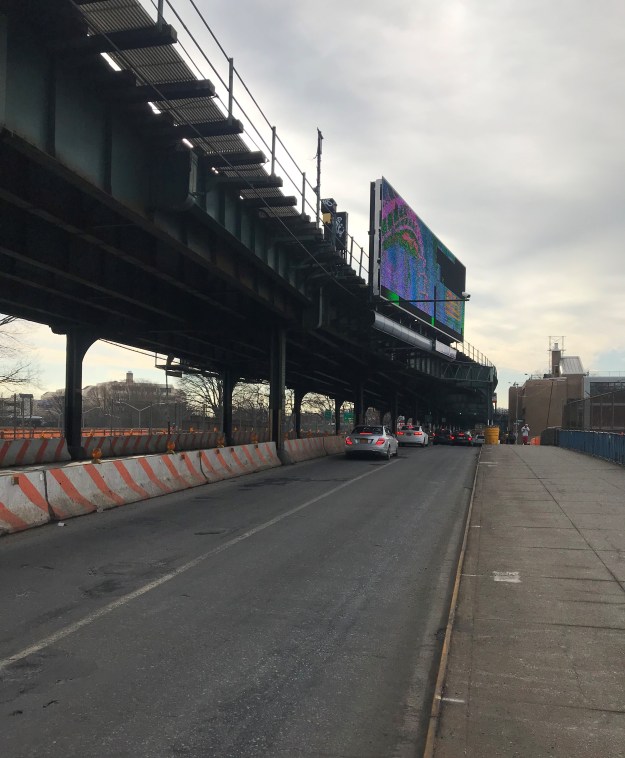
Category Archives: my city and neighborhood

what NYC is made of


taking No. 5 train downtown to my favorite spot on Wednesday afternoon

a woman gets on at 42 Street and makes a long speech asking for support and financial help

finishing, she begins to walk from one end of the car to the other, hoping someone will donate

a crowded car; she brushes past me; I manage to step aside

“Sorry, Sir,” she says politely

“That’s okay, No problem,” I answer firmly but softly, wanting to be as polite as I can

“God bless you,” she said

It’s moments like this that make life beautiful and momentarily obviate doubt and cynicism


posted by Roger W. Smith

   February 9, 2022

Barbara Grizzutti Harrison, “Joan Didion: Only Disconnect”


Barbara Grizzutti Harrison’s Essay “Joan Didion: Only Disconnect” is online at

https://www.writing.upenn.edu/~afilreis/103/didion-per-harrison.html

It complements my post

Joan Didion and NYC

Joan Didion and NYC


— Roger W. Smith

Joan Didion and NYC


Joan Didion – Saturday Evening Post 1-4-1967


Reading Joan Didion’s obituaries this week, I was reminded in particular of an essay of hers I had heard about. I don’t think I have read it before. (It is posted here above.)

Joan Didion

“Farwell to the Enchanted City” (subsequently republished as “Goodbye to All That”)

Saturday Evening Post

January 4, 1967

I desired to read it. I wanted to see what she thought about New Yok City when she first moved there from California, in the late 1950s. About ten years later, I myself first relocated to New York and settled there.

What things about the City attracted and delighted her? Repelled her?


*****************************************************

When I moved to New York, it both fascinated (I found it intoxicating) and overwhelmed me with a sort of fear or numbness (emotional deadness). Meaning that it was so impersonal; the buildings were so tall, dominating the streetscapes; there was no nature; the people were all in a hurry and seemingly cold and impersonal, too busy and goal oriented to talk to you.

Everything depended on having money, of which I had very little.

I had been to New York a very few times before. The first time was in 1954 when my parents took me to visit the City for a few days. We stayed in the Edison Hotel in Times Square. (Rooms were four dollars a day. We must have been able to park our car.) I could not get over the experience of the Empire State Building. Being on the observation deck on the top and looking down at the cars on Fifth Avenue, which seemed like toy cars. The Automat. The little windows where you would put a dime or nickel in a slot and get a piece of pie. My mother wanted to see Greenwich Village. We drove around the crooked streets. I don’t think we ever got out of the car. I recall the cobblestones and that the car was jolting.

We took the Staten Island Ferry to cool off. It was July or August and one of those sweltering NYC hot spells.


*****************************************************

As a young man and adult, I grew to love and appreciate — so much — New York. See my post

“I went to the school of New York.”

“I went to the school of New York.”

for one way in which this was true.

The art movie theaters. The bookstores. Libraries. Most of all, the intellectual energy and appetites of the people I got to know.

In Massachusetts, as a young man, I would have been embarrassed to go to a movie by myself. In Connecticut, where I worked briefly, I was once asked to leave a folk music coffee house because I was sitting at table by myself. In NYC, no problem. I went to movies almost always by myself. Good way to spend an evening or a Sunday afternoon if you felt lonely.

Sit at a restaurant table by oneself? No problem. It was the same with half the other customers.

I would go to Central Park on Sunday afternoons and sit on a park bench feeling a bit lonely but like I was an amorphous participant in something. The bars were an oasis. A glass of beer twenty cents. Every third one free. The bartender was your and everyone’s friend.

One day in a subway station, I asked some people a question of some sort (maybe directions). They answered politely and helpfully. I told a friend of mine from college who lived in Flushing, Queens about this.

“Someone was actually nice to me in the subway,” I said.

“New Yorkers are people, too,” he replied.

Indeed.

Wonderful people. So full of energy. So interesting. Except when I first came the people on the subway all seemed so pale and sickly to me.

So what was Joan Didion’s experience?

Read her famous essay (attached).

It’s really about her — instead of, at bottom, the City. It is very self-centered. It is surprising how much it seems to be built upon – – to be a tissue of — generalities. Of musings, inner thoughts. It does not convey much INFORMATION, substance.

You learn hardly anything about what New York was like when she was there.


*****************************************************

“Joan Didion: Only Disconnect”

From Off Center: Essays by Barbara Grizzutti Harrison

I do not find Joan Didion appealing. … I am disinclined to find endearing a chronicler of the 1960s who is beset by migraines that can be triggered by her decorator’s having pleated instead of gathered her new diningroom curtains. … more …. of a neurasthenic Cher than of a writer who has been called America’s finest woman prose stylist. … her subject is always herself. …

Didion uses style as argument. … for Didion, only surfaces matter. … Didion tells us, many times, and in many ways, that her mind “veers inflexibly toward the particular.”

To what in particular?


*****************************************************

Enough said. Read Joan Didion’s essay if you feel like it.


— posted by Roger W. Smith

   December 25, 2021


*****************************************************

Facebook comments

December 25, 2021


Pete Smith

Interesting thoughts. But don’t most writer’s thoughts relate largely to themselves? Think of Truman Capote’s short stories, like Dazzle. Or Melville, talking as himself (Ishmael) throughout Moby-Dick. I don’t object to your objecting to Didion but were she still alive she might have the same complaints about those of your posts, including this one, that borrow heavily on your own experience. I think this is what makes your posts interesting, and don’t see why it wouldn’t also apply to Didion’s writing.


Roger W. Smith

Barbara Grizzutti Harrison’s essay is dead on. You should read it. You are wrong about my writing. Of course everyone writes about and from the perspective of themselves and their own experience. This post insofar as it relates to me is built on experiences I had that readers can relate to.


Pete Smith

Roger, I think your reply was hidden for some reason but you missed my point. I was not criticizing you for writing about your own history or own perspective; I was basically saying that that is what everyone usually does and that I found it odd that you were criticizing Joan Didion for doing so — and I was acknowledging that this did not mean you had to like her writing. . . .


Roger W. Smith

I was criticizing her writing — from a certain point of view (view of her writing); which of course does not mean that writers should not write about themselves. Harrison’s essay articulates what I was trying to say; I had not read it before. By the way, Melville created a character, Ishmael, that was sort of his alter ego, but to say that amounts to writing about oneself is not correct. I guess the best way to put it is that Didion’s writing seems overly self-absorbed and there is something missing content- or sustenance-wise that a reader wants to be able to take away. I read some Didion before, including one of her novels. I was sort of impressed then, but now have come to the opinions of my post.


Pete Smith

All I meant was that Melville’s writing, like Truman Capote’s and like much of yours, was based on his own personal experience — in his case, whaling. I can understand your comment about Didion’s self absorption but when she’s writing a book all about the tragic and terrible year of her husband’s death, I would guess it would be difficult for any passionate observer to accuse her of self-absorption.


Roger W. Smith

I have not read [Joan Didion’s] The Year of Magical Thinking. I began this post with one essay of Didion’s which disappointed me and, based upon which, I drew inferences about her writing which seem valid. She always wrote about herself in a way that Melville didn’t.


Pete Smith

Got it, but of course you understand that I wasn’t suggesting in any way that Melville and Didion wrote about themselves in the same way.


Roger W. Smith

No, I don’t think that (your first sentence).


Ella Rutledge

I’m no fan of Didion’s either. The only thing of hers I have read is The Year of Magical Thinking. (I think a negative review at amazon.com called it “A Lifetime of Magical Thinking.”) She is a member of the NY literati and so they all praise her writing because she writes from their point of view. You, Roger, on the other hand, document and record NYC life from an “everyman” perspective. I hated that book. So shallow, so limited, in its view of grief, grieving, loss, death, faith, belief in anything other than the material world, of which she constantly reminded us with references to the best hospitals (reached by helicopter), the best doctors, Brooks Brothers suits, Hollywood and the Beverly Hills Hotel. Death is final and any tendency to hope for anything beyond is “magical” (or in her view deluded) thinking.


Roger W. Smith

Thanks very much for the incisive comments, Ella, What you say about The Year of Magical Thinking confirms what I have said. I based my comments (mainly) on the essay I read this morning and on Harrison’s devastating article about Didion. And, yes, I did see what I felt was a distinction between my own writing and hers — or do now — it wasn’t my main point, and I was thinking about her writing, not mine, but when I read her essay about leaving New York, I felt empty; and I realize now, in retrospect, that that is more or less how I felt years ago when I read “Play It As It Lays.”

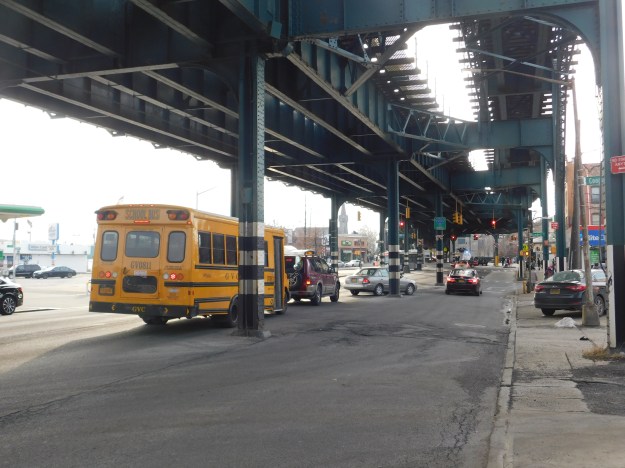
This is what Robert Moses did to the Bronx.


photos by Roger W. Smith


These photos of mine illustrate that the affected areas of the Bronx are not “walkable.”  As I experienced in a walk from Pelham Bay Park in the Bronx all the way back to Manhattan’s East Side.

Imagine if Moses had managed to do the same thing (he came very close to succeeding) to the Village and Soho, ruining much of Lower Manhattan. I shudder to think of it when I contemplate how much I enjoy walking from the Battery uptown, or walking downtown along Broadway.


*****************************************************

The Cross Bronx Expressway was the brainchild of Robert Moses. But historically it has been blamed for bisecting the Bronx roughly in half causing a migration of middle and upper class residents to the north and leaving the south portion to become an underserved slum of low-income residents. It displaced as many as 5,000 families when an alternate proposed route along Crotona Park would have only affected 1-2% of that amount. Robert Moses is accused of favoring “car culture” placing an importance on building highways instead of subways in order to grow the city. The construction of large highways like the CBE shelved greater NYC Transit projects including the Second Avenue Subway. Not only did it have these ill effects, but to this day the expressway remains a headache for commuters with stacked and entangled roadways such as the Highbridge and Bruckner Interchanges.

The Sheridan Expressway [in the Bronx] is the work of Robert Moses as well and to this day remains unchanged from its original construction. Not only has it become an eyesore for the Hunts Point community which falls directly under several lanes of highway overpass, but according to a recent NYC Department of City Planning report, its surrounding areas are “congested, confusing, and unwelcoming.”

5 Things in NYC We Can Blame on Robert Moses


*****************************************************

Jane Jacobs was the key figure in organizing opposition to and defeating Robert Moses’s plans to extend Fifth Avenue through Washington Square Park in Manhattan; to designate the West Village as a “slum,” which would have meant essentially razing the neighborhood; and, most importantly (and most frightening), to build a Mid-Manhattan Expressway that would have destroyed the character of much of Lower Manhattan and, in the final analysis, of Manhattan itself. It was the beginning and then the apotheosis of Moses’s downfall.

As one film critic has observed, “Jane Jacobs was the David to Robert Moses’s Goliath.” She succeeded against what seemed to be impossible odds.

from a previous post of mine

good riddance to urban renewal

good riddance to urban renewal

In my opinion, [Jane Jacobs] is up there with some of the great thinkers and writers who very simply take a fresh look at prevailing opinions and wisdom, go back to square one — or “first principles” — and, in plain language, without overtheorizing — looking with their own eyes — get us to see the world anew. It’s sort of like an Emperor’s New Clothes phenomenon.

How did she manage to defeat Robert Moses? At the outset, I am sure it would have been regarded as quixotic to try. If Moses had rammed an expressway through the Village and Soho, it would have ruined Manhattan — is the word rape too strong?


— posted by Roger W. Smith

  December 2021

why New York is one of the greatest (in my opinion, the greatest) cities in the world


The water has a lot to do with it. It is a city surrounded and bathed by water: the Hudson and East rivers, the Atlantic Ocean. New York Harbor is one of the largest and most beautiful natural harbors in the world.

All five boroughs have shorelines and ocean or river views.

Having river and ocean boundaries prevents urban sprawl. It makes the City, as big as it is, contained.

It is a city made for walking. Sidewalks are wide, and pedestrians are seen everywhere at all hours of the day. Cars do not dominate. Many streets are clogged with traffic, notably at the bridge and tunnel crossings and on cross streets in Manhattan. But, elsewhere traffic is relatively moderate. This is true on major thoroughfares such as Fifth and Park Avenues.

It has a world class transit system that runs 24 hours a day, every day.

It is a city seemingly devoid of nature, one where nature doesn’t matter, where a rain or snow storm is a nuisance. This is true. And yet, there are ample parks everywhere; and some of them are magnificent. No other city has a park to match Central Park.

It is a city of neighborhoods: the Lower East Side, Hell’s Kitchen, Soho, Inwood, Astoria, Ridgewood, Williamsburg, Park Slope.

The admixture of races and ethnicities (in a polyglot city), the visibility and importance of the immigrant population, the concentration of people of varying educational and income levels who have many opportunities to interact continually is notable.

Show me a city that has richer cultural offerings. Take music. Several major concert halls (not just one, as is the case in most American cities), and this doesn’t count concert venues in museums, churches, etc.  Splendid concerts almost daily by the best musicians.

And art museums and galleries — I can’t keep track of them.


— posted by Roger W Smith

   July 2021

Suffer little children …


I am in our living room this afternoon, thinking about going out.

Beautiful day. My wife was out.

A light tapping at the thick front door. Not a knock. Tapping. So faint; rare. Almost never occurs. Usually they ring bell. My wife will knock loudly sometimes if she’s coming home with groceries.

I open door and there are three little girls probably age seven to eight to preadolescent standing there. So cute and innocent looking — true is it not of most kids?

They live next door. A family from Yemen. One of the older girls had a head scarf. The father runs a deli/bodega on the corner that his father started.

There are a few adult women living there whom I rarely see. It seems that Muslim women remain indoors unless business calls them outside.

One day I encountered them standing on the front steps. They had head and face coverings. I thought they might not be willing to speak to me. Instead, they returned my greeting politely with friendly smiles.

The three girls explained to me that they had lost three (!) balls on our garage roof. I often hear them playing (rare with kids in NYC … music to my ears) in our common back yard or in the narrow space between our house and theirs.

Is there any way we could get access to the garage roof and retrieve the balls? I thought we could, but wasn’t sure.

If we can’t do that, they said next — before leaving — if, by any chance, we have a tall ladder, they would be willing to climb up it and get the balls themselves.

I told them I would see what I could do. They said thanks and left.

Except the youngest girl hesitated. She stood there with a fixed gaze, so innocent. Beautiful black eyes. Then she said bye and left too.

The world of childhood. Psychoanalyst Selma Fraiberg called them “the magic years.”

What preoccupies them. Their lack of guile. Their innocence.


— Roger W. Smith

   May 17, 2021


the music of languages


This morning.

Russian among the barbers and employees of the barber shop. Spanish, spoken rapidly and with a distinct “New York” accent, on the sidewalks.

Only in New York.


– Roger W. Smith

  April 10, 2021 (my father’s birthday)

Walt Whitman, “Our City”


Walt Whitman, ‘Our City’

Our City

NEW YORK is a great place — a mighty world in itself. Strangers who come here for the first time in their lives, spend week after week, and yet find that there are still hundreds of wonders and surprises, and (to them) oddities, which they have not had a chance of examining. Here are people of all classes and stages of rank — from all countries on the globe — engaged in all the varieties of avocations — of every grade, every hue of ignorance and learning, morality and vice, wealth and want, fashion and coarseness, breeding and brutality, elevation and degradation, impudence and modesty.

Coming up Broadway, from the Bowling Green, an observer will notice, on each side, tall, quiet looking houses, with no great aspect of life or business. These are mostly boarding houses; and notwith­standing their still look, they no doubt contain within their walls no small number of occupants. Here the sidewalks and the street pre­sent hut few passengers. After passing Trinity Church, however, the crowd thickens, and the ground stories of the buildings are prin­cipally occupied as shops. Along this section of Broadway are sev­eral crack hotels. If you pass at the latter part of the day, you will see little groups of well dressed men, picking their teeth lazily, and enjoying an after dinner lounge. Near here, there are two shops which deserve especial notice. Judging by their capacious windows, they are for the sale of knicknacks, and fancy articles of all descrip­tions, from a chess board or an escritoire to a toothpick. From a glance at these treasures, a person can hardly help reflecting how many thousand wants, altogether imaginary, one may he led to have through the refinements of civilization.

Directly afterward, you will notice two crowds gazing at the prints in the windows of a book store. This is Colman’s. If you chance to stop there for the same purpose as the rest, look out for the contents of your pockets. We mean this in a double sense; for if you are not incited to purchase some of the alluring literary beauties to be had at Colman’s, it is quite possible that you may he otherwise relieved of your cash by some of the swells who there do congregate.

Then you come to where the Park thrusts out as a kind of wedge between Broadway and the beginning of Park Row. If you take the left, you have to make way against a great current of fashion, idleness, and foppery. Suppose you turn to the right.

Down you walk — first stopping to gaze a moment at St. Paul’s, which, with its steeple the other way, seems as if it wanted to walk off from amid so much tumult and din — and at that very respectable small city, the Astor House. A few rods, and you are in front of an ambiguous structure, of a dirty white color, and which you internally set down in your mind as the most villainous specimen of architecture you ever beheld. This is the Park theatre — or, as some of our people, with a very untasty habit of copying whatever is foreign, term it, the Old Drury. You will not wonder, when you hear that the manager has been very unsuccessful of late, maugre all his ener­getic and liberal catering. What benignant spirit could ever plume his wings on the top of such a temple?

By and by, you arrive at an open space, whereabout, if you look sharp, you will behold the name of one of the wonders of the city — that is, the “New York Aurora.” In all probability your ears will be greeted with the discordant notes of the newsboys, who generally muster here in great force. A door or two further is Tammany Hall, the Mecca of democracy — the time honored, soul endeared holy of holies, to all who go for anti monopoly, and the largest freedom of the largest number.

The City Hall on the left, with its redundance of marble tracery and ornament, will not probably strike you as being anything very extensive — so pass we on.

Now you come into the region of Jews, jewelry, and second hand clothing. Here and there, the magic “three balls” hold out hope to those whose ill luck makes them grasp at even the smallest favors.

Passing the Pearl street crossing, and the Chatham theatre, you are in the large triangle which people call Chatham square. In the middle are dray carts, coaches, and cabs: on the right loom up small hills of furniture, of every quality, with here and there an auctioneer, standing on a table or barrel top, and crying out to the crowd around him, the merits of the articles, and the bids made for them.

Then up the Bowery, which presents the most heterogeneous melange of any street in the city: stores of all kinds and people of all kinds, are to be met with every forty rods. You come by and by to the Bowery theatre; this is one of the best looking buildings in the city.

If you keep up the Bowery, you will lose yourself at last in the midst of vacant squares, unfenced lots, and unbuilt streets.

If you turn to the right, you will come into some of the dirtiest looking places in New York. Pitt, Ridge, Attorney and Willett streets, and all thereabout, are quite thickly settled with German emigrants.

If you wind your steps leftward, you will have a chance of promenading to suit any taste you may he possessed of. You can lead off into some of the most aristocratic thorough-fares, or some of the lowest, or some of a medium between both.

— Walt Whitman, The New York Aurora, March 8, 1842


*****************************************************

Walt Whitman’s 1842 walk took him from the Battery (where I often start my walks) — the southernmost point of Manhattan — uptown to the area of Delancey Street on what is now the Lower East Side. I have walked the same route so many, many times.

I take the same delight — and experience the same perpetual wonder — in the City that Whitman did. He is my Doppelgänger. I feel such kinship with him.


— posted by Roger W. Smith

   November 2020

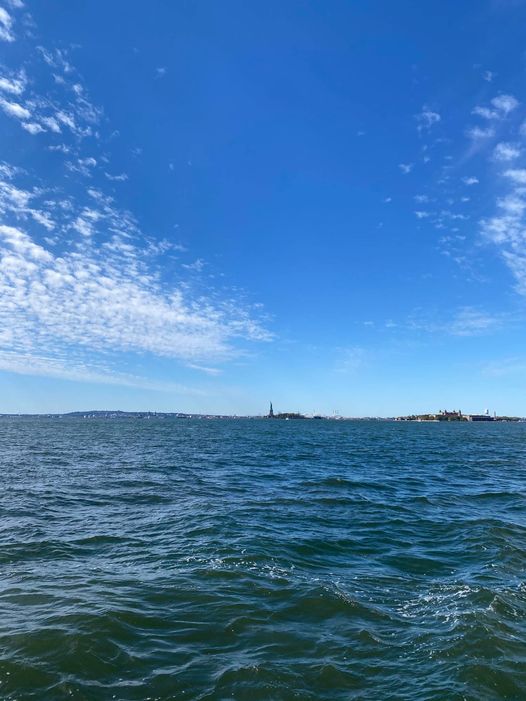
“Beautiful — the water is so calming to me.”


New York Harbor, September 20, 2020; photo by Roger W. Smith

I had the following exchange on Facebook with Barbara (Harris) Churchill yesterday. Barbara was the kid sister of my best friend Johnny Harris when I was growing up in Massachusetts. Barbara lives in the Midwest now.

Barbara Churchill:

Beautiful – the water is so calming to me.

Roger Smith:

Me too, Barbara. When I am downtown, in this part of the City, I often feel such peace. It is surprisingly uncrowded, especially on weekdays. Wall Street is nearby, but no one seems to go a few blocks more downtown. A lot of the activity and people are further uptown and in Midtown.

Barbara Churchill:

Your photos always amaze me. I know nothing about NYC really, and subconsciously think noisy, crowded, city, and you capture so much beauty and green (and blue) space!

Roger Smith:

Barbara — When I first came to NYC from Mass. — a long time ago — I experienced a sort of “street shock”: everyone seemed in such a hurry; the people on the subways looked kind of pale and pasty; no one seemed to have time for you … It was all cement and steel: high rises and crowded sidewalks. Slowly, I got to like it. It turns out that most of the people are really friendly and will go out their way to help you. And, then I discovered how enjoyable it was to explore the City; and the beautiful parks and the river, etc. I don’t think most people, even many New Yorkers, appreciate how much natural beauty (i.e., nature) contributes to making New York so great — they don’t know it’s there, right in front of them, so to speak; and then the people are another “natural resource.”


— posted by Roger W. Smith

  September 21, 2020

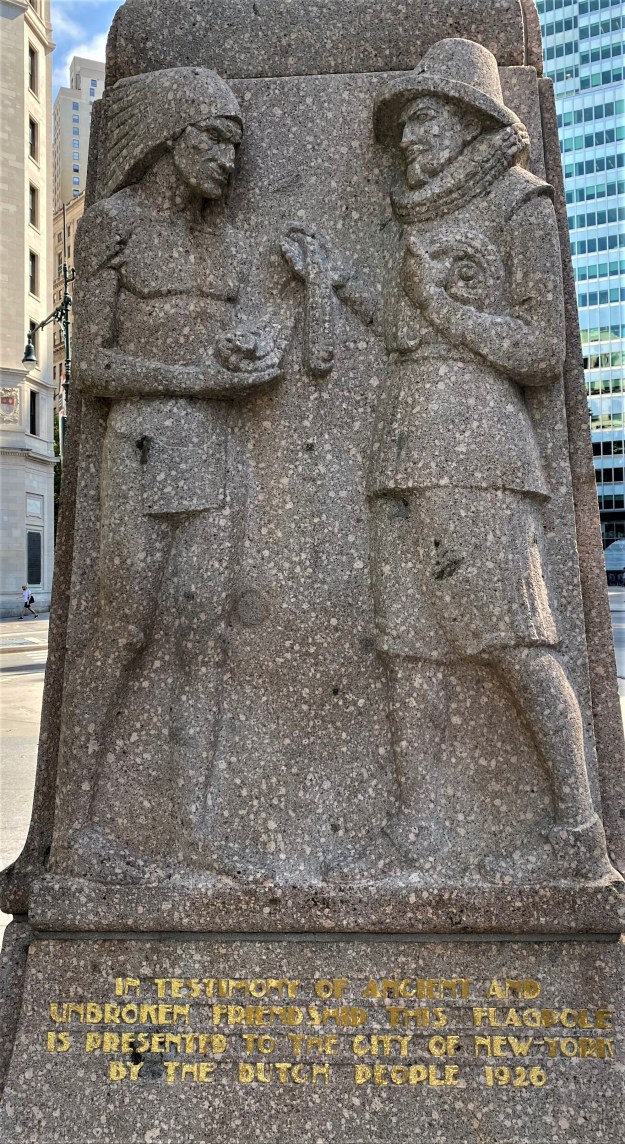
“In testimony of ancient and unbroken friendship this flagpole is presented to the City of New-York by the Dutch people”


monument, Battery Park, New York City

The following are the inscriptions on the above-pictured flagpole monument in Battery Park in Manhattan. The monument was erected in 1926, the tricentennial of the founding of New Amsterdam by the Dutch.

In testimony of ancient and unbroken friendship this flagpole is presented to the City of New-York by the Dutch people 1626.

 On the 22nd of April 1625 the Amsterdam Chamber of the West India Company decreed the establishment of Fort Amsterdam and the creation of the adjoining farms. The purchase of the Island of Manhattan was accomplished in 1626. Thus was laid the foundation of the City of New-York.

Nadat de Kamer Amsterdam der West Indische Compagnie op 22 April 1625 last had gegeven tot den aanleg van het Fort Amsterdam en tien bouwedten daardnevenes heeft de koop van het Eiland Manhattan in 1626 dien aanleg bevestigd welke de grondslag werd van de stad New-York.


— posted by Roger W. Smith

  August 2020