Category Archives: Walt Whitman

Walt Whitman (again)


from ‘There was a child went forth’


The streets themselves and the facades of houses, and goods in
the windows,
Vehicles, teams, the heavy-plank’d wharves, the huge crossing
at the ferries,
The village on the highland seen from afar at sunset, the river
between,
Shadows, aureola and mist, the light falling on roofs and gables
of white or brown two miles off,
The schooner near by sleepily dropping down the tide, the little
boat slack-tow’ d astern,
The hurrying tumbling waves, quick-broken crests, slapping,
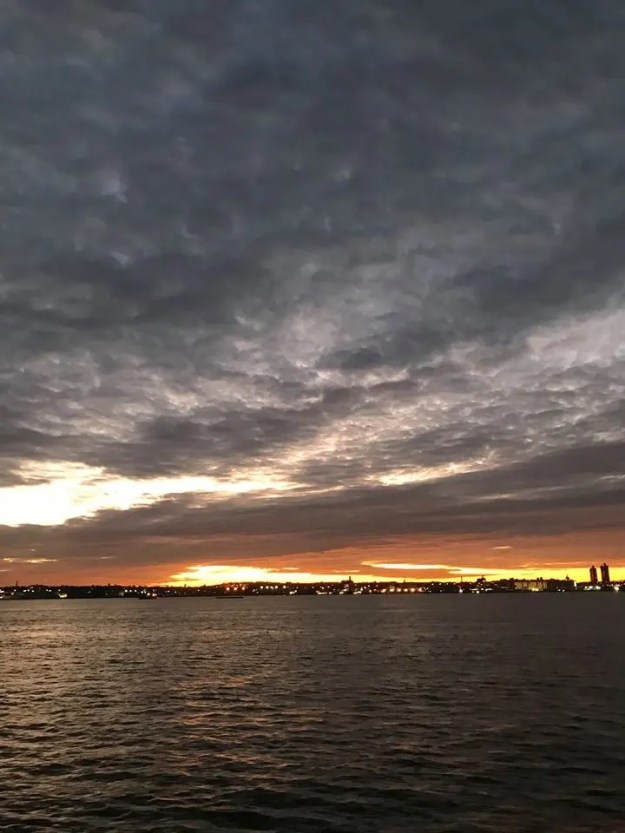
The strata of color’d clouds, the long bar of maroon-tint away
solitary by itself, the spread of purity it lies motionless in,
The horizon’s edge, the flying sea- crow, the fragrance of salt
marsh and shore mud,
These became part of that child who went forth every day, and
who now goes, and will always go forth every day.

— from Walt Whitman, “There Was a Child Went Forth” (1855)


*****************************************************

As noted by James Perrin Warren in his monograph Walt Whitman’s Language Experiment, “This passage catalogues the scenes of New York and Brooklyn, scenes that will become central to later poems like ‘Crossing Brooklyn Ferry;’ ‘Out of the Cradle Endlessly Rocking;’ and ‘As I Ebb’d with the Ocean of Life.’ ”

The beautiful passage evokes images and thoughts of New York City which I can relate to.


Roger W. Smith

   August 2020

Walt Whitman … profoundly a New Yorker


In his sprawl, his vaunting ambition, and his humanity, Walt Whitman was profoundly a New Yorker. His poetry bore no little resemblance to the “mettlesome, mad, extravagant city” that he called home, and to the end of his life, he remained “a Manhattanese, free, friendly and proud.”

Whitman was born in the small community of West Hills in Suffolk County, and he returned often to the rural scenes of “fish-shape Paumanok,” as he called Long Island. But he grew up in Brooklyn, at a time when it was growing explosively, and proudly called himself a “Brooklyn boy.” Like his father, he found occasional work in carpentry and contracting, and that may have affected the way he thought about his poetry–with “the preparatory jointing, squaring, sawing, mortising, the hoist-up of beams the push of them in their places, laying them regular.”

New York’s expansion resembled Whitman’s own during the “seed-time years” that preceded Leaves of Grass. He later claimed that the poems “arose out of my life in Brooklyn and New York from 1838 to 1853, absorbing a million people, for fifteen years, with an intimacy, an eagerness, and an abandon, probably never equaled.” Although he moved to Washington during the Civil War and then to Camden, New Jersey, he never stopped revisiting the New York of his imagination. In a letter from 1868, he wrote, “I sometimes think I am the particular man who enjoys the shows of all these things in New York more than any other mortal–as if it was all got up just for me to observe and study.” [italics added]

– exhibit label, “Walt Whitman: Bard of Democracy”; exhibition at the Morgan Library, New York, NY


*****************************************************

CITY OF SHIPS.

CITY of ships!
(O the black ships! O the fierce ships!
O the beautiful sharp-bow’d steam-ships and sail-ships!)
City of the world! (for all races are here,
All the lands of the earth make contributions here;)
City of the sea! city of hurried and glittering tides!
City whose gleeful tides continually rush or recede, whirling in and out with eddies and foam!
City of wharves and stores—city of tall façades of marble and iron!
Proud and passionate city—mettlesome, mad, extravagant city!
Spring up O city—not for peace alone, but be indeed yourself, warlike!
Fear not—submit to no models but your own O city!
Behold me—incarnate me as I have incarnated you!
I have rejected nothing you offer’d me—whom you adopted I have adopted,
Good or bad I never question you— love all—I do not condemn any thing,
I chant and celebrate all that is yours—yet peace no more,
In peace I chanted peace, but now the drum of war is mine,
War, red war is my song through your streets, O city!

Leaves of Grass (1881-1882)


*****************************************************

But I was a Manhattanese, free, friendly, and proud
I was called by my nighest name by clear loud voices
of young men as they saw me approaching or passing,
Felt their arms on my neck as I stood, or the negligent leaning of their flesh against me as I sat,
Saw many I loved in the street, or ferry-boat, or public assembly, yet never told them a word,
Lived the same life with the rest, the same old laughing, gnawing, sleeping,
Played the part that still looks back on the actor or actress,
The same old rôle, the rôle that is what we make it, as great as we like,
Or as small as we like, or both great and small.

— Walt Whitman, “Crossing Brooklyn Ferry” (excerpt)


*****************************************************

The house-builder at work in cities or anywhere,
The preparatory jointing, squaring, sawing, mortising,
The hoist-up of beams, the push of them in their places,
laying them regular

— Walt Whitman, “Song of the Broad-Axe” (excerpt)


*****************************************************

The exhibit label is vague about where Whitman actually lived during his years in what now comprises New York City. (Brooklyn and Manhattan were separate municipalities when Whitman lived there. Jamaica, Queens, where Whitman was a schoolteacher briefly, was then part of Long Island, where Whitman was born.) He grew up in Brooklyn; and, in the years of his adulthood prior to the Civil War, he resided in both Brooklyn and Manhattan at various times. When in Manhattan, he lived downtown in boarding houses in or near what is now the Financial District. When he was residing in Brooklyn, he often took the ferry to Manhattan. He was a regular at Pfaff’s beer cellar in Manhattan, which was located on Broadway near Bleecker Street.

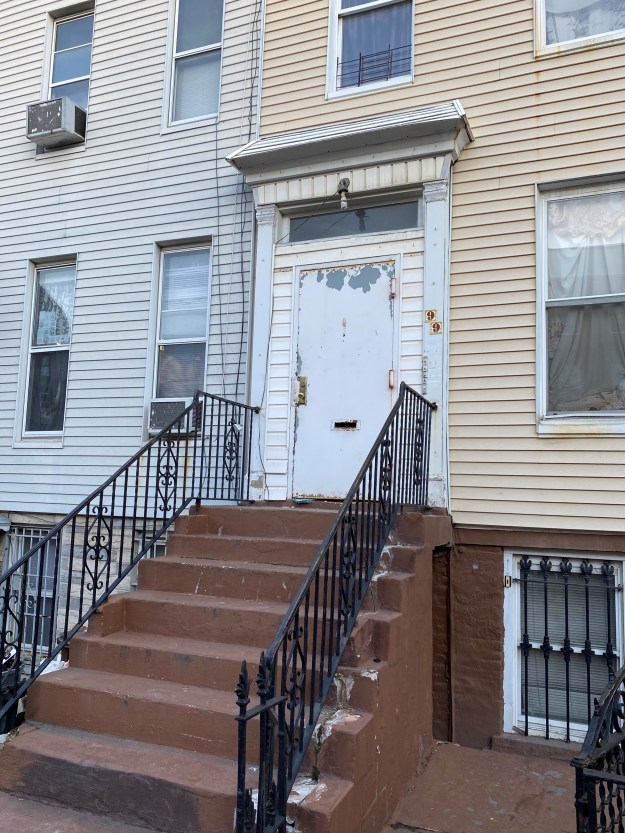
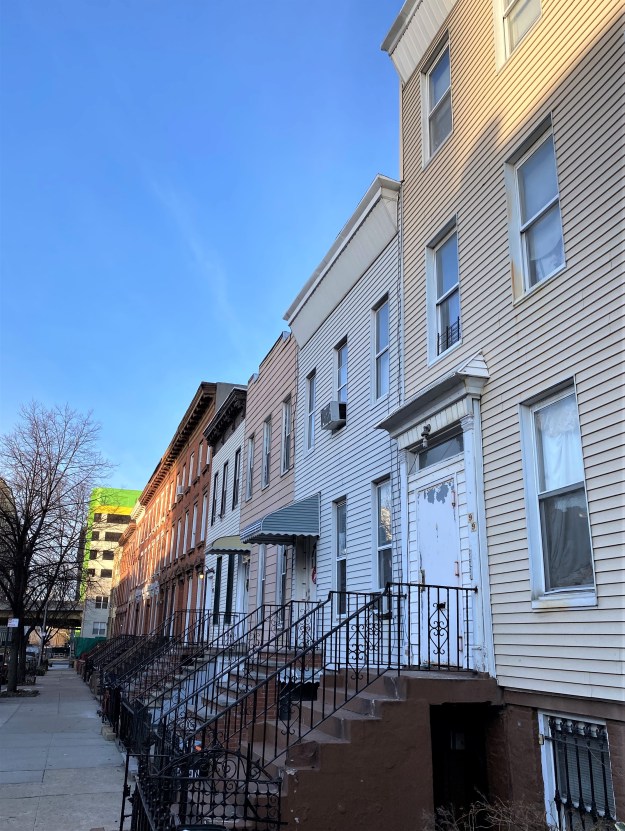
Whitman lived on Ryerson Street in Brooklyn in the 1850s.


*****************************************************

photos by Roger W. Smith

former Whitman home, 99 Ryerson Street, Brooklyn (Clinton Hill Section)

99 Ryerson Street


*****************************************************

See:

“Should Walt Whitman’s House Be Landmarked? It’s Complicated: The city does not think so, and the building’s owner agrees. Then there’s the matter of whether the poet should be honored in such a diverse neighborhood.,” By Jane Margolies,  The New York Times, December 24, 2019


‘Should Walt Whitman House Be Landmarked’ – NY Times 12-24-2019


— posted by Roger W. Smith


*****************************************************

Addendum:

In 2017, University of Iowa Press published a lost Whitman novel (its existence was unknown to scholars):  Life and Adventures of Jack Engle, which was originally published by Whitman in 1852 under a pseudonym and was serialized in a New York newspaper, the Sunday Dispatch. Zachary Turpin, who wrote an introduction to the 2017 edition, made this remarkable discovery.

If one reads the novel, which is set in Manhattan at around the time of Whitman’s boyhood — i.e., the early nineteenth century —  one can readily perceive Whitman’s familiarity with the City, which provides a setting and backdrop for the events and gives the story verisimilitude.


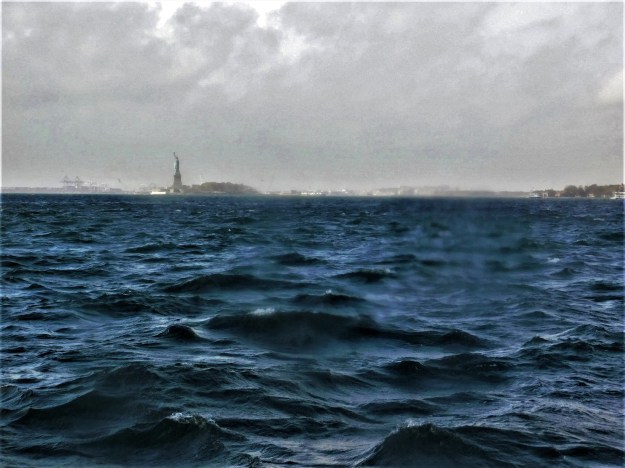
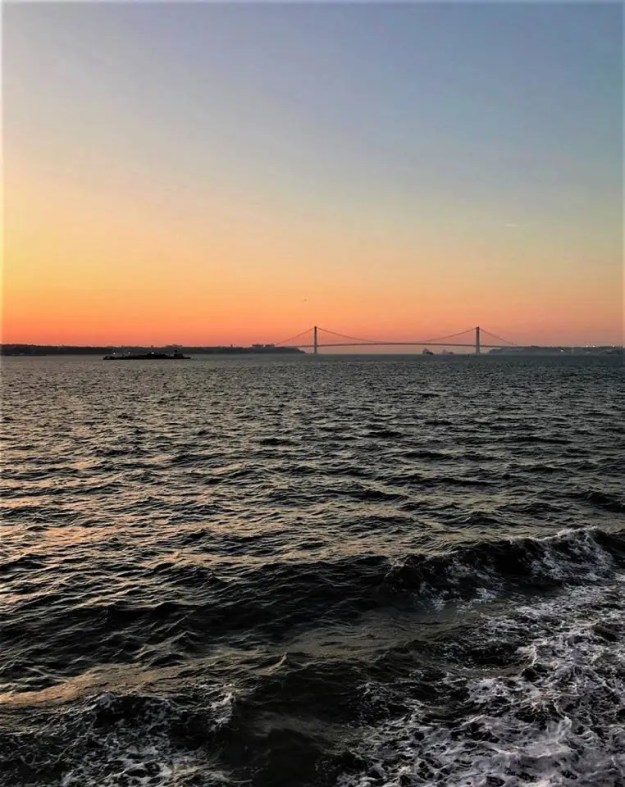
the ferry


photographs by Roger W. Smith


*****************************************************

The glories strung like beads on my smallest sights and hearings—on the walk in the street, and the passage over the river;
The current rushing so swiftly, and swimming with me far away;

Just as you are refresh’d by the gladness of the river and the bright flow, I was refresh’d;
Just as you stand and lean on the rail, yet hurry with the swift current, I stood, yet was hurried;
Just as you look on the numberless masts of ships, and the thick-stem’d pipes of steamboats, I look’d.

I too many and many a time cross’d the river, the sun half an hour high;
I watched the Twelfth-month sea-gulls—I saw them high in the air, floating with motionless wings, oscillating their bodies,
I saw how the glistening yellow lit up parts of their bodies, and left the rest in strong shadow,
I saw the slow-wheeling circles, and the gradual edging toward the south.
I too saw the reflection of the summer sky in the water,
Had my eyes dazzled by the shimmering track of beams,
Look’d at the fine centrifugal spokes of light around the shape of my head in the sun-lit water,

Look’d on the haze on the hills southward and southwestward,
Look’d on the vapor as it flew in fleeces tinged with violet,

The scallop-edged waves in the twilight, the ladled cups, the frolicsome crests and glistening,

Now I am curious what sight can ever be more stately and admirable to me than my mast-hemm’d Manhattan,
My river and sun-set, and my scallop-edg’d waves of flood-tide,
The sea-gulls oscillating their bodies, the hay-boat in the twilight, and the belated lighter*;

Flow on, river! flow with the flood-tide, and ebb with the ebb-tide!
Frolic on, crested and scallop-edg’d waves!

Gorgeous clouds of the sun-set! drench with your splendor me, or the men and women generations after me;
Cross from shore to shore, countless crowds of passengers!
Be firm, rail over the river, to support those who lean idly, yet haste with the hasting current;
Fly on, sea-birds! fly sideways, or wheel in large circles high in the air;
Receive the summer sky, you water! and faithfully hold it, till all downcast eyes have time to take it from you;
Diverge, fine spokes of light, from the shape of my head, or any one’s head, in the sun-lit water;
Come on, ships from the lower bay! pass up or down, white-sail’d schooners, sloops, lighters!

— excerpted from Walt Whitman, “Crossing Brooklyn Ferry”

* A lighter is a flat-bottomed barge used to transfer cargo to and from ships in harbor.


— posted by Roger W. Smith

   January 2018

Walt Whitman, “Jaunt up the Hudson”


“Jaunt up the Hudson”

June 20th.—ON the “Mary Powell,” enjoy’d everything beyond precedent. The delicious tender summer day, just warm enough—the constantly changing but ever beautiful panorama on both sides of the river—(went up near a hundred miles)—the high straight walls of the stony Palisades—beautiful Yonkers, and beautiful Irvington—the never-ending hills, mostly in rounded lines, swathed with verdure,—the distant turns, like great shoulders in blue veils—the frequent gray and brown of the tall-rising rocks—the river itself, now narrowing, now expanding—the white sails of the many sloops, yachts, &c., some near, some in the distance—the rapid succession of handsome villages and cities, (our boat is a swift traveler, and makes few stops)—the Race—picturesque West Point, and indeed all along—the costly and often turreted mansions forever showing in some cheery light color, through the woods—make up the scene.

— Walt Whitman, Specimen Days


*****************************************************

This is vintage, typical Whitman. A man who loved every minute of his life — savored it. Reminds one of this as it applies to our own lives. Knew how to express this beautifully. Felt and appreciated things keenly as few do.

jaunt (noun) — a short excursion or journey for pleasure


— Roger W. Smith

   August 2017

Walt Whitman on Manhattan (plus my own impressions and thoughts)


MANNAHATTA.

I WAS asking for something specific and perfect for my city,
Whereupon lo! upsprang the aboriginal name.

Now I see what there is in a name, a word, liquid, sane, unruly,
musical, self-sufficient,
I see that the word of my city is that word from of old,
Because I see that word nested in nests of water-bays, superb,
Rich, hemm’d thick all around with sailships and steamships, an
island sixteen miles long, solid-founded,
Numberless crowded streets, high growths of iron, slender, strong,
light, splendidly uprising toward clear skies,
Tides swift and ample, well-loved by me, toward sundown,
The flowing sea-currents, the little islands, larger adjoining islands,
the heights, the villas,
The countless masts, the white shore-steamers, the lighters, the
ferry-boats, the black sea-steamers well-model’d,
The down-town streets, the jobbers’ houses of business, the houses
of business of the ship-merchants and money-brokers, the river-streets,
Immigrants arriving, fifteen or twenty thousand in a week,
The carts hauling goods, the manly race of drivers of horses, the
brown-faced sailors,
The summer air, the bright sun shining, and the sailing clouds
aloft,
The winter snows, the sleigh-bells, the broken ice in the river,
passing along up or down with the flood-tide or ebb-tide,
The mechanics of the city, the masters, well-form’d, beautiful-
faced, looking you straight in the eyes,
Trottoirs throng’d, vehicles, Broadway, the women, the shops and
shows,
A million people—manners free and superb—open voices—
hospitality—the most courageous and friendly young men,
City of hurried and sparkling waters! city of spires and masts!
City nested in bays! my city!


*****************************************************

Broadway.

What hurrying human tides, or day or night!
What passions, winnings, losses, ardors, swim
thy waters!
What whirls of evil, bliss and sorrow stem, thee!
What curious questioning glances—glints of
love!
Leer, envy, scorn, contempt, hope, aspiration!
Thou portal—thou arena—thou of the myriad
long-drawn lines and groups!
(Could but thy flagstones, curbs, facades tell
their inimitable tales);
Thy windows, rich and huge hotels—thy side-
walks wide;
Thou of the endless sliding, mincing, shuffling
feet!
Thou, like the parti-colored world itself—like
infinite, teeming, mocking life!
Thou visor’d, vast, unspeakable show and
lesson!


****************************************************

addendum:

The following are some present day thoughts of my own occasioned by the above two poems of Walt Whitman. “Mannahatta” was Whitman’s stomping grounds during what was probably the most creative period of his life. It is my adopted city; my feelings parallel Whitman’s.

“Mannahatta”: Mannahatta is derived from the aboriginal name for the place, most likely meaning island of many hills. Whitman chose to sometimes call Manhattan “Mannahatta” and to call Long Island “Paumanok,” also derived from a Native American word.

“nested in nests of water-bays, superb,
Rich”

The fact of Manhattan’s being surrounded by water is one of its greatest and most appealing attributes. (This is also stressed by Herman Melville in the opening chapters of Moby-Dick). The rivers and bays act as a natural counterweight to urban sprawl.

“hemm’d thick all around with sailships and steamships”

Not true anymore, for the most part. Too bad. But, Manhattan Island, being bounded on all sides by water, retains a unique appeal because of this.

“an island sixteen miles long”

Sixteen miles from Battery Park (the southern tip of Manhattan Island) to Spuyten Duyvil (the northern end of the island).

“Numberless crowded streets”

Still true. Crowded, which is a blessing. You don’t find lonely, deserted spots or forsaken places. Crowed, yes, but the crowds usually aren’t oppressive.

“high growths of iron, slender, strong,
light, splendidly uprising toward clear skies”

Space is limited in Manhattan. Tall buildings reaching to the skies create a sense of awe.

“Tides swift and ample, well-loved by me, toward sundown,
The flowing sea-currents, the little islands, larger adjoining islands,
the heights, the villas”

Still true. There are islands, rivers with eddies, great vistas. All can still be seen by someone who strolls along the East River, the Battery, the banks of the Hudson, or the rarely visited but wonderful stretches of parkland at the upper tip of the island.

“the lighters, the ferry-boats”

Ferries still run, to the delight and for the convenience of many. A lighter is a barge used in unloading or loading ships. In one of Whitman’s greatest poems, “Crossing Brooklyn Ferry,” there is a reference to a “belated lighter.”

“The down-town streets, the jobbers’ houses of business, the houses
of business of the ship-merchants and money-brokers, the river-streets”

The small businesses are mostly gone, but there are still “river-streets.” Yet, access to the rivers is not so convenient anymore, since highways on the East and West Sides impede (but do not entirely prevent) access.

“Immigrants arriving, fifteen or twenty thousand in a week”

New York is still a city of immigrants, thank God. Mostly immigrants speaking, it seems, practically every imaginable tongue.

“The carts hauling goods, the manly race of drivers of horses”

Whitman loved to ride with and become acquainted with the drivers of horse drawn omnibuses on the main thoroughfares of Manhattan.

“The summer air, the bright sun shining, and the sailing clouds aloft”

So true, still. See photo below.

Central Park 11-36 a.m. 5-14-2017 (4).jpg

Central Park; photograph by Roger W. Smith

The winter snows, the sleigh-bells, the broken ice in the river,
passing along up or down with the flood-tide or ebb-tide”

Herman Melville, in Moby-Dick (Chapter LXXXVII), also mentions ice breaking up on the Hudson: “A low advancing hum was soon heard; and then like to the tumultuous masses of block-ice when the great river Hudson breaks up in Spring, the entire host of whales came tumbling upon their inner center. …” I myself have observed this (once) during wintertime on the Hudson. The river froze over, and I can remember the hissing and popping sounds as the ice was breaking up slowly.

“The mechanics of the city, the masters, well-form’d, beautiful-
faced, looking you straight in the eyes”

People in Manhattan — pedestrians passing — still look at you, often, with friendly eyes, not averting their gaze. There is a wonderful openness about them. The City fosters it.

Trottoirs throng’d, vehicles, Broadway”

It is still the case that the streets are thronged, with cars, pushcarts, bicycles. I love it. It drives the city traffic engineers crazy.

Trottoir is the French word for sidewalk. Whitman, who was not well versed in foreign languages, loved to use foreign words, on occasion, mostly French ones. He has been faulted for this. Some people can’t realize that one is not required to always say “sidewalk” when another word might be substituted. For various reasons, including a delight in language.

“the women, the shops and shows”

Manhattan is a wonderful place for shopping and window shopping. The “shows” continue to go on. And on. The women — a friend of mine, Charles Pierre, once remarked — are Manhattan’s “last great natural resource.” They range from classic beauties to exotic looking women with natural beauty of all backgrounds and races.

“A million people—manners free and superb—open voices—
hospitality—the most courageous and friendly young men”

This is all so true. The concentration of humanity is wonderful. The people are open and friendly.

“City of hurried and sparkling waters! city of spires and masts!
City nested in bays! my city!”

All still true, except for the “masts.” The current in the rivers is swift; they do indeed sparkle in the sunlight.


*****************************************************

Broadway.

Whitman’s Broadway would have, in the mid-1850’s, meant an area of the city below 14th Street.

“What hurrying human tides, or day or night!”

“thy side-walks wide;”
“Thou of the endless sliding, mincing, shuffling
feet!”

The sidewalks in Manhattan are indeed wide and welcoming. No thoroughfare lacks them. The pedestrian is not shunted aside or forced to walk (as is the case in the suburbs) on a faux sidewalk. The sidewalks in the City are always full of trampers, day and night.

Note: “Broadway” was originally published in the New York Herald of April 10, 1888. “Mannahatta” exists in a couple of versions published in Leaves of Grass.


— Roger W. Smith

   July 2017

Walt Whitman’s watering hole


whitman-in-pfaffs


Pfaff’s beer cellar, a bohemian watering hole and a center of literary life in Manhattan in the mid-nineteenth century, was located at 647 Broadway in what is now called Lower Manhattan.  (At the time, most of Manhattan was below 14th Street.)

The building in which Pfaff’s was located still stands. It is now occupied by a deli (see photograph below) and is on Broadway between Bleecker and Bond Streets.  Access to the cramped cellar where Pfaff’s was located is still possible.

— Roger W. Smith

   February 2017; updated June 2019


*************************************************

–The vault at Pfaffs where the drinkers and laughers meet to eat and drink and carouse
While on the walk immediately overhead pass the myriad feet of Broadway
As the dead in their graves are underfoot hidden
And the living pass over them, recking not of them,
Laugh on laughers!
Drink on drinkers!
Bandy the jest!
Toss the theme from one to another!
Beam up–Brighten up, bright eyes of beautiful young men!
Eat what you, having ordered, are pleased to see placed before you–after the work of the day, now, with appetite eat,
Drink wine–drink beer–raise your voice,
Behold! your friend, as he arrives–Welcome him, where, from the upper step, he looks down upon you with a cheerful look
Overhead rolls Broadway–the myriad rushing Broadway
The lamps are lit–the shops blaze–the fabrics vividly are seen through the plate glass windows
The strong lights from above pour down upon them and are shed outside,
The thick crowds, well-dressed–the continual crowds as if they would never end
The curious appearance of the faces–the glimpse just caught of the eyes and expressions, as they flit along,
(You phantoms! oft I pause, yearning, to arrest some one of you!
Oft I doubt your reality–whether you are real–I suspect all is but a pageant.)
The lights beam in the first vault–but the other is entirely dark
In the first

— “The Two Vaults,” unpublished poem by Walt Whitman

*************************************************

A GLIMPSE through an interstice caught,
Of a crowd of workmen and drivers in a bar-room around the
stove late of a winter night, and I unremark’d seated in a
corner,
Of a youth who loves me and whom I love, silently approaching
and seating himself near, that he may hold me by the hand,
A long while amid the noises of coming and going, of drinking
and oath and smutty jest,
There we two, content, happy in being together, speaking little,
perhaps not a word.

— Walt Whitman, “A Glimpse”

*****************************************************

I am glad to see you are engaged in such good work at Washington. It must be even more refreshing than to sit by Pfaff’s privy and eat sweet-breads and drink coffee, and listen to the intolerable wit of the crack-brains. I happened in there the other night, and the place smelt as atrociously as ever. Pfaff looked as of yore

— John Swinton to Walt Whitman, February 25, 1863

*****************************************************

“After the publication of “Leaves of Grass” Mr. Whitman became acquainted with most all of the younger generation of literary men across the river in New York, and especially with those who eventually enrolled themselves under the good fellowship of old Henry Clapp, who had been living a free and easy life in Paris and longed to establish a Bohemia in New York like Henry Murger’s “Vie de Boheme” in Paris. The headquarters — still well remembered — was at Pfaff’s restaurant in Broadway, near Bond st.

“I used to go to Pfaff’s nearly every night,” Mr. Whitman went on. “It used to be a pleasant place to go in the evening after taking a bath and finishing the work of the day. When it began to grow dark Pfaff would politely invite everybody who happened to be sitting in the cave he had under the sidewalk to some other part of the restaurant. There was a long table extending the length of this cave; and as soon as the Bohemians put in an appearance Henry Clapp would take a seat at the head of this table. I think there was as good talk around that table as took place anywhere in the world. Clapp was a very witty man. Fitz James O’Brien was very bright. Ned Wilkins, who used to be the dramatic critic of the Herald, was another bright man. There were between twenty-five and thirty journalists, authors, artists and actors who made up the company that took possession of the cave under the sidewalk. Pfaff himself I took a dislike to the first time I ever saw him. But my subsequent acquaintance with him taught me not to be too hasty in making up my mind about people on first sight. He turned out to be a very agreeable, kindly man in many ways. He was always kind to beggars and gave them food freely. Then he was easily moved to sympathise with any one who was in trouble and was generous with his money. I believe he was at that time the best judge of wine of anybody in this country.”

— interview with Walt Whitman by F.B.S., Brooklyn Eagle, July 11, 1886

*****************************************************

hans-deli-grocery-july-2016 (3)

The former Pfaff’s was located in this deli on Broadway near Bleecker Street. Photo by Roger W. Smith.

Han’s Deli Grocery, 645 Broadway,  New York, NY, through within which one can can gain access to the former beer cellar (photograph by Roger W. Smith).


Walt Whitman on walking


“Why are there trees I never walk under but large and melodious thoughts descend upon me?”

“Song of the Open Road” (1856)

I too walked the streets of Manhattan Island, and
bathed in the waters around it,
I too felt the curious abrupt questionings stir within
me,
In the day, among crowds of people, sometimes they
came upon me,
In my walks home late at night, or as I lay in my
bed, they came upon me.

“Crossing Brooklyn Ferry” (1860)


My joys in the open air—my walks through the Mannahatta

“To My Soul” (1860)


I continually enjoy these streets, planned on such a generous scale, stretching far, without stop or turn, giving the eye vistas. I feel freer, larger in them. Not the squeezed limits of Boston, New-York, or even Philadelphia; but royal plenty and nature’s own bounty—American, prairie-like. It is worth writing a book about, this point alone. I often find it silently, curiously making up to me the absence of the ocean tumult of humanity I always enjoyed in New-York. Here, too, is largeness, in another more impalpable form; and I never walk Washington, day or night, without feeling its satisfaction.

In my walks I never cease finding new effects and pictures, and I believe it would continue so if I went rambling around here for fifty years.

Walt Whitman, Letter from Washington, New-York Times 4 October 1863


Lo, the most excellent sun so calm and haughty,
The violet and purple morn with just-felt breezes,
The gentle soft-born measureless light,
The miracle spreading bathing all, the fulfill’d noon,
The coming eve delicious, the welcome night and the stars,
Over my cities shining all, enveloping man and land.

“When Lilacs Last in the Dooryard Bloom’d” (1865)


GIVE me the splendid silent sun, with all his beams full-
dazzling; ….
Give me odorous at sunrise a garden of beautiful flowers,
where I can walk undisturb’d; …
While yet incessantly asking, still I adhere to my city;
Day upon day, and year upon year, O city, walking
your streets, …
Give me faces and streets! give me these phantoms incessant and endless along the trottoirs! …
Give me such shows! give me the streets of Manhattan!
Give me Broadway, with the soldiers marching—give
me the sound of the trumpets and drums! …
Give me the shores and the wharves heavy-fringed
with the black ships! …
People, endless, streaming, with strong voices, passions,
pageants;
Manhattan streets, with their powerful throbs, with the
beating drums, ….
Manhattan crowds with their turbulent musical chorus
—with varied chorus and light of the sparkling
eyes;
Manhattan faces and eyes forever for me.

“Give Me The Splendid Silent Sun” (1865)


NIGHT on the prairies;
The supper is over—the fire on the ground burns
low;
The wearied emigrants sleep, wrapt in their blankets;
I walk by myself—I stand and look at the stars,
which I think now I never realized before.

Leaves of Grass (1867)


My little dog is stretched out on the rug at full length, snoozing. He hardly lets me go a step without being close at my heels—follows me in my slow walks, & stops or turns just as I do.

letter from Whitman to his friend Pete Doyle, 26–27 March, 1874

SKIRTING the river road, (my languid forenoon walk, my rest,)

“The Dalliance of the Eagles” (1880)


I came down yesterday amid sousing rain & cloudy weather—but this forenoon it is sunshiny & delightful—I have just returned from a two hours ramble in the old woods—wintry & bare, & yet lots of holly & laurel—& I only wish I could send you some cedary branches thick with the china-blue little plums, so pretty amid the green tufts— … We had a flurry of snow last evening, & it looks wintry enough to-day, but the sun is out, & I take my walks in the woods.

letter from Whitman to Herbert Gilchrist, 30–31 December 1881


Thy windows rich, and huge hotels—thy side-walks wide;
Thou of the endless sliding, mincing, shuffling feet!
Thou, like the parti-colored world itself—like infinite, teeming,
mocking life!
Thou visor’d, vast, unspeakable show and lesson!

“Broadway” (1888)


Sunday, October 21, 1888.

7.20 evening. W. lying on the bed, dressed, I entered very quietly: stood there without a word. He had been dozing. Started up. “Come in! Come in!” After we had shaken hands he described his day: “… he [Whitman] asked: “And you—what have you done with the day?” I had been far in the country on a long walk. I said something about “the joy of going on and on and not getting tired.” This aroused him. “I can fully realize that joy—that untranslatable joy: I have known its meaning to the full. In the old days, long ago, I was fond of taking interminable walks—going on and on, as you say, without a stop or the thought of a stop. It was at that time, in Washington, that I got to know Peter Doyle—a Rebel, a car-driver, a soldier: have you met him here? seen him? talked with him? Ah yes! we would walk together for miles and miles, never sated. Often we would go on for some time without a word, then talk—Pete a rod ahead or I a rod ahead. Washington was then the grandest of all the cities for such strolls. In order to maintain the centrality, identity, authority, of the city, a whole chain of forts, barracks, was put about it and roads leading out to them. It was therefore owing to these facts that our walks were made easy. Oh! the long, long walks, way into the nights!—in the after hours—sometimes lasting till two or three in the morning! The air, the stars, the moon, the water—what a fullness of inspiration they imparted!—what exhilaration! And there were the detours, too—wanderings off into the country out of the beaten path: I remember one place in Maryland in particular to which we would go. How splendid, above all, was the moon—the full moon, the half moon: and then the wonder, the delight, of the silences.” He half sat up in bed as he spoke. “It was a great, a precious, a memorable, experience. To get the ensemble of Leaves of Grass you have got to include such things as these—the walks, Pete’s friendship: yes, such things: they are absolutely necessary to the completion of the story.”

Horace Traubel, With Walt Whitman in Camden, Volume 2


Tuesday, November 20, 1888.

W. had another letter for me. He picked it up from the accustomed place on the table. “It’s from Rossetti,” he said: ” I’ve been reading it over: William Rossetti: full of wise beautiful things—overflowing with genial winsome good will: you ‘ll feel its treasurable quality.” I sat there and read. He said: “Read it aloud: I can easily enjoy it again.” When I got to the passage describing the walks W. interrupted me: “Oh! that’s so fine—so fine, fine, fine: he brings back my own walks to me: the walks alone: the walks with Pete [Doyle, Whitman’s friend]: the blessed past undying days: they make me hungry, tied up as I am now and for good in a room …

Horace Traubel, With Walt Whitman in Camden, Volume 3


AH, whispering, something again, unseen,
Where late this heated day thou enterest at my window, door,
Thou, laving, tempering all, cool-freshing, gently vitalizing
Me, old, alone, sick, weak-down, melted-worn with sweat;
Thou, nestling, folding close and firm yet soft, companion better than
talk, book, art,
(Thou hast, O Nature! elements! utterance to my heart beyond the
rest—and this is of them,)
So sweet thy primitive taste to breathe within—thy soothing fingers on
my face and hands,
Thou, messenger-magical strange bringer to body and spirit of me,
(Distances balk’d—occult medicines penetrating me from head to foot.)
I feel the sky, the prairies vast—I feel the mighty northern lakes,
I feel the ocean and the forest—somehow I feel the globe itself swift-
swimming in space;
Thou blown from lips so loved, now gone—haply from endless store,
God sent,
(For thou art spiritual, Godly, most of all known to my sense,)
Minister to speak to me, here and now, what word has never told, and
cannot tell,
Art thou not universal concrete’s distillation? Law’s, all Astronomy’s
last refinement?
Hast thou no soul? Can I not know, identify thee?

“To The Sunset Breeze” (1890)


Friday, February 14, 1890

On B[uckwalter]. expressing his pleasure that W. got out of doors, W. said: “I got out yesterday—today it has not been possible. Yesterday’s jaunt—and it was quite a jaunt—was a fine one. The sky, the river, the sun—they are my curatives.”

Horace Traubel, With Walt Whitman in Camden, Volume 6


Who was not proud of his songs, but of the measureless ocean of
love within him, and freely pour’d it forth,
Who often walk’d lonesome walks thinking of his dear friends, his
lovers, …
wandering hand in hand, they twain
apart from other men,
Who oft as he saunter’d the streets curv’d with his arm the shoulder of his friend, while the arm of his friend rested upon
him also.

“Recorders Ages Hence” (1891)


— posted by Roger W. Smith

  March 2016