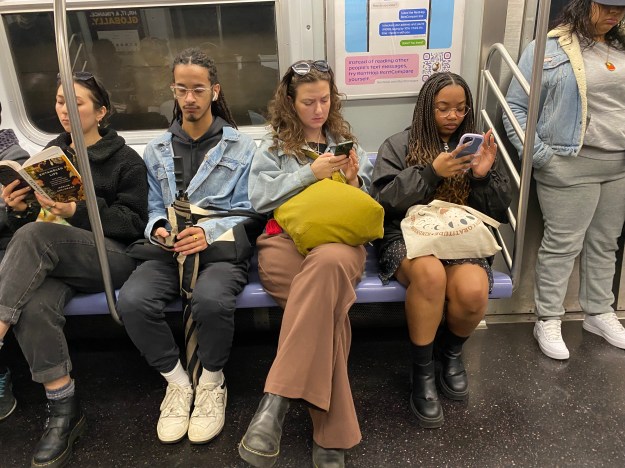
I thought of this post today when I met a homeless woman in a subway station.
It seemed applicable to NYC as one experiences it,
It’s on my rogersgleanings.com site:
“in minute particulars”
— Roger W. Smith
March 14, 2023
I thought of this post today when I met a homeless woman in a subway station.
It seemed applicable to NYC as one experiences it,
It’s on my rogersgleanings.com site:
“in minute particulars”
— Roger W. Smith
March 14, 2023
It was Sunday afternoon, March 5, and I was at my favorite pub, on Seventh Avenue, engrossed in a weighty book of literary criticism.
Time to leave, I thought. I called my wife and told her, I’m leaving the bar, but I don’t want to go home. I think I will go downtown and take the ferry.
Good idea, she said, My wife is an affirmative person.
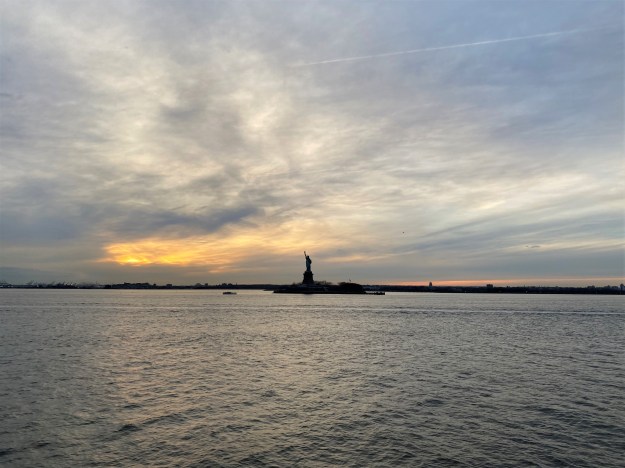
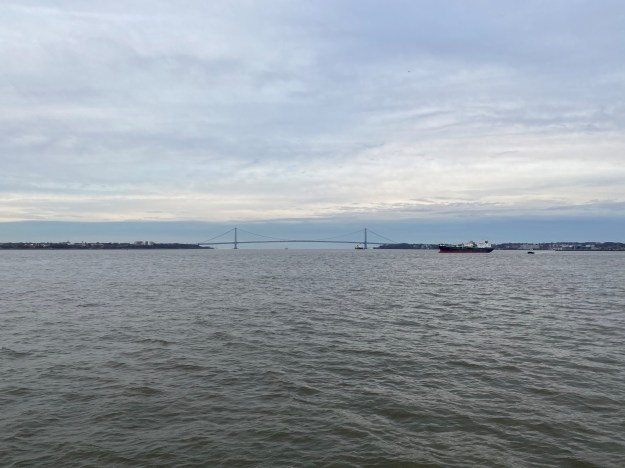
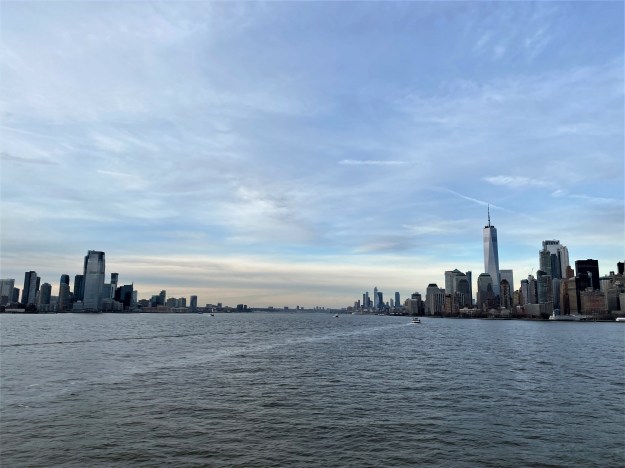
I just made the 5 p.m. ferry to Staten Island, and took the ferry going back. I took the photos shown below.
It was a perfect sky on a late winter day.
— Roger W. Smith


Sea-cabbage; salt hay; sea-rushes; ooze–sea-ooze; gluten–sea-gluten; sea-scum; spawn; surf; beach; salt-perfume; mud; sound of walking barefoot ankle in the edge of the water by the sea. — Walt Whitman: Notebooks and Unpublished Prose Manuscripts, Volume IV: Notes, edited by Edward F. Grier (New York University Press 1984), pg. 1309
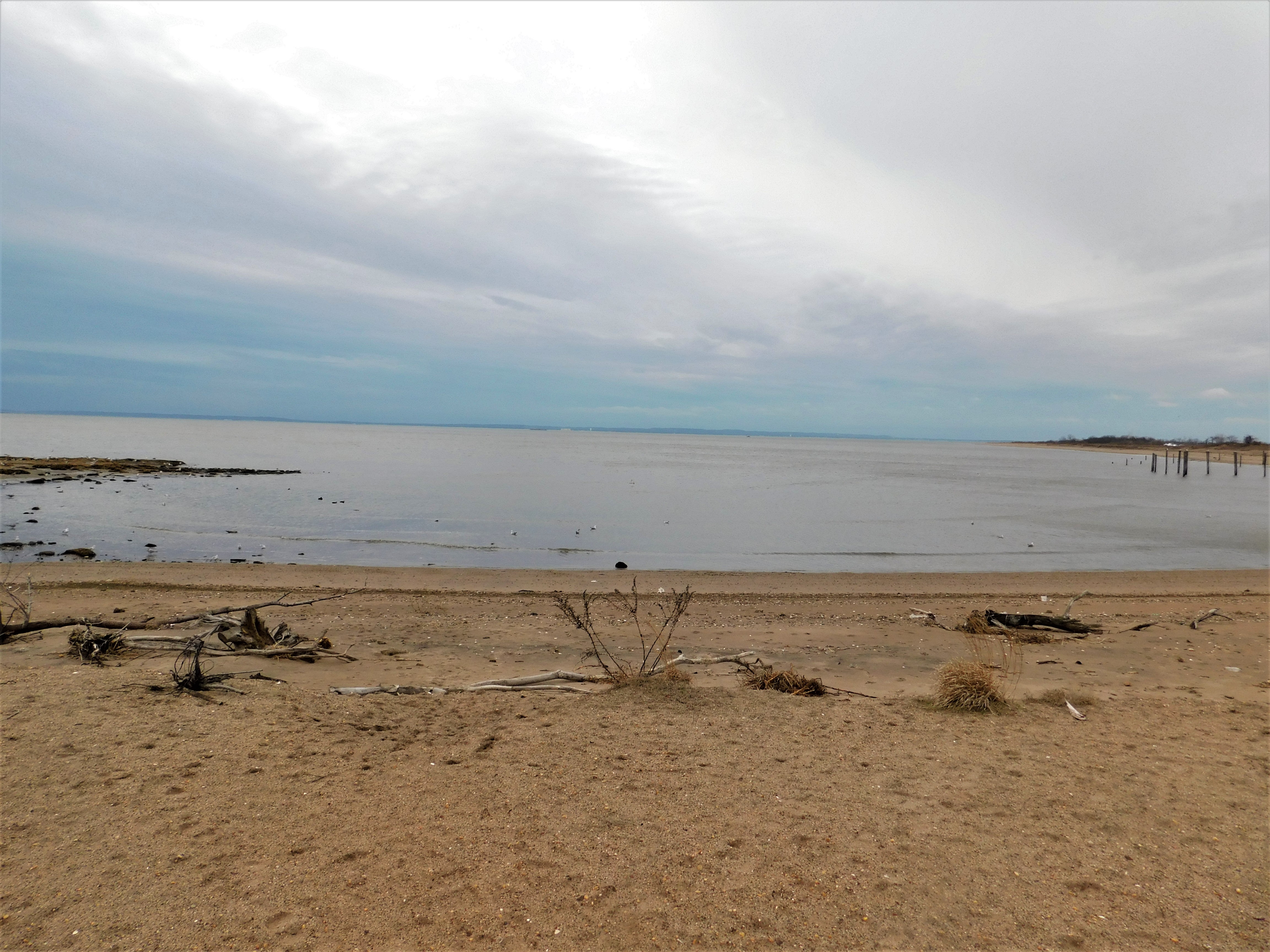
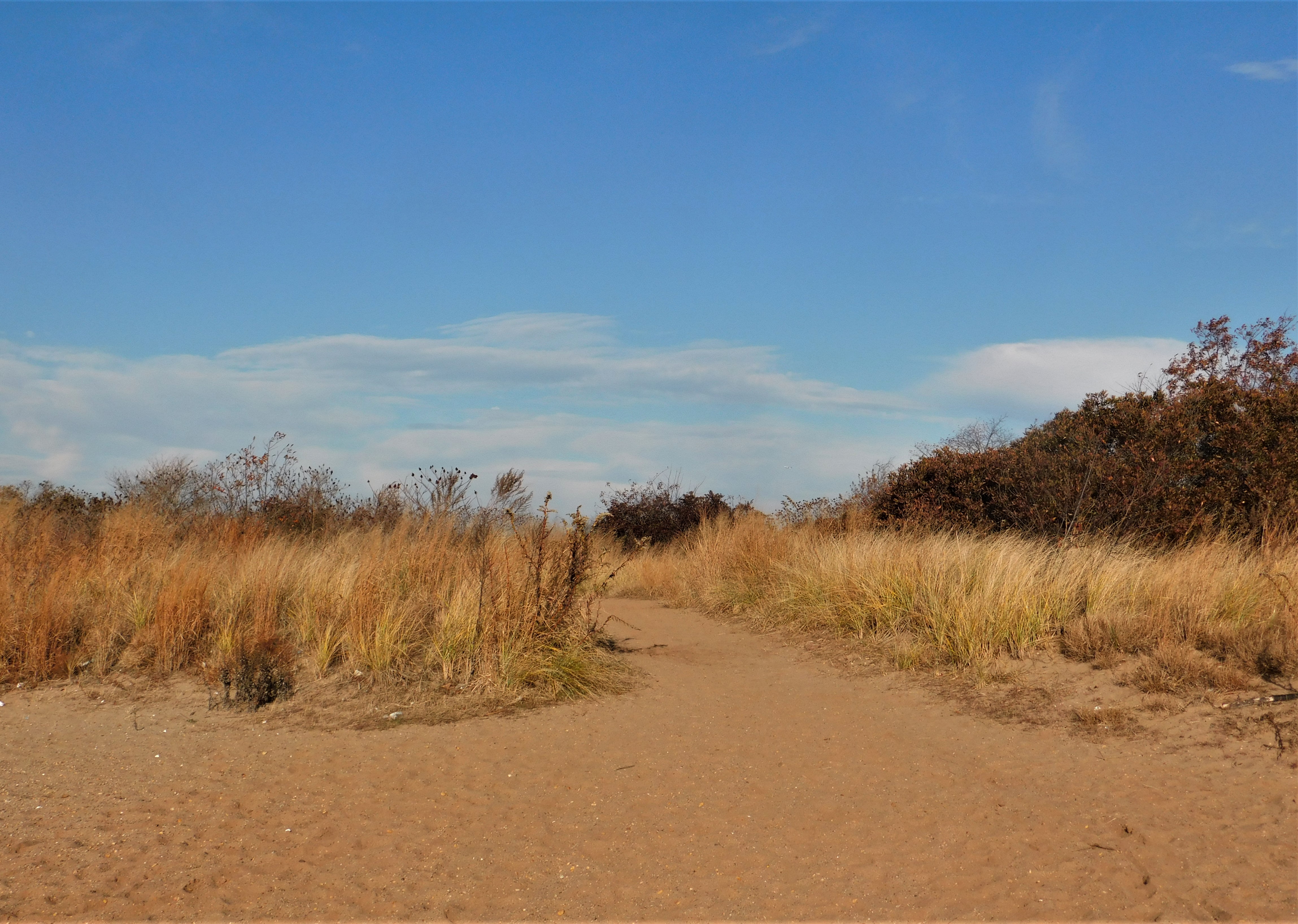
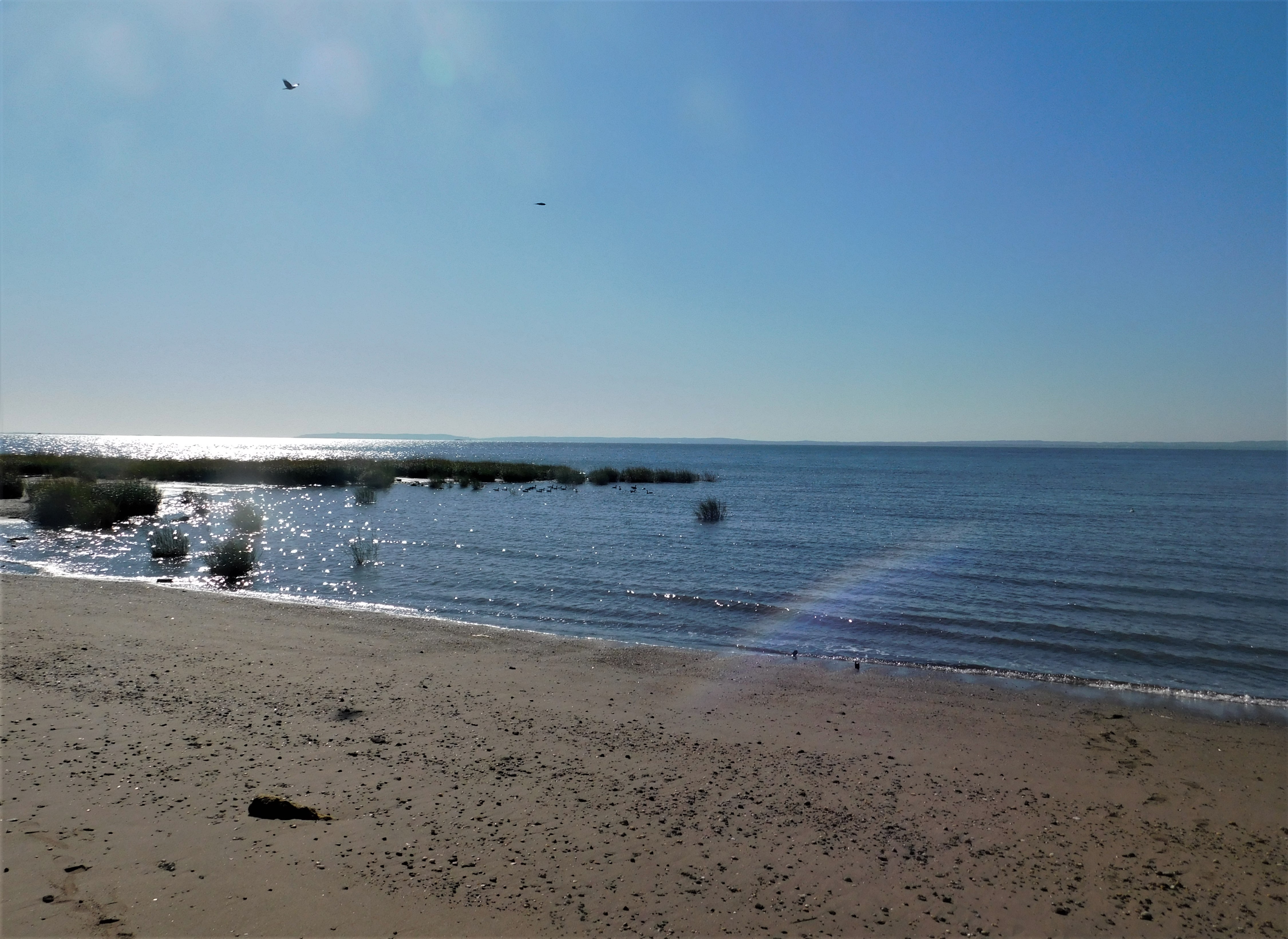
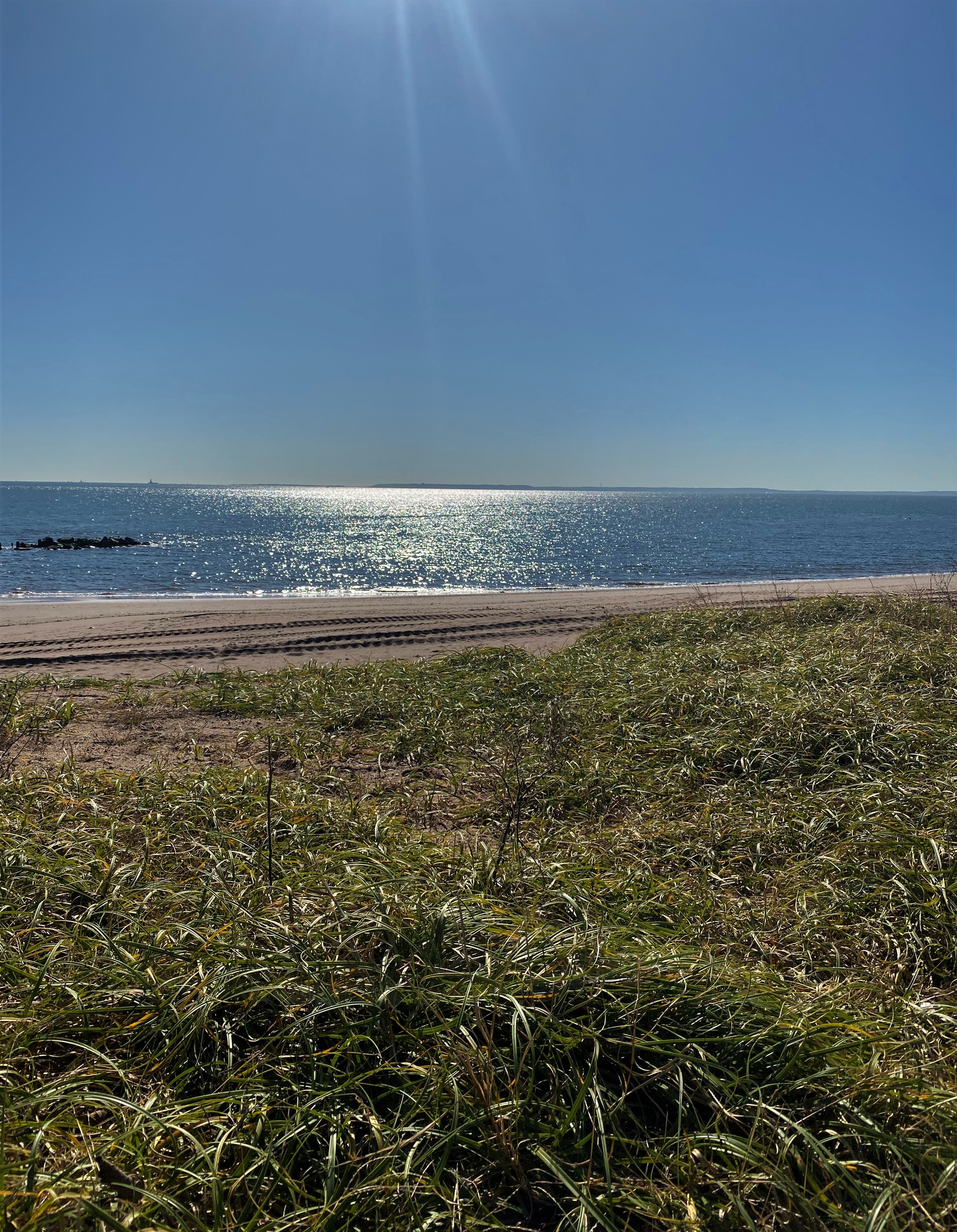
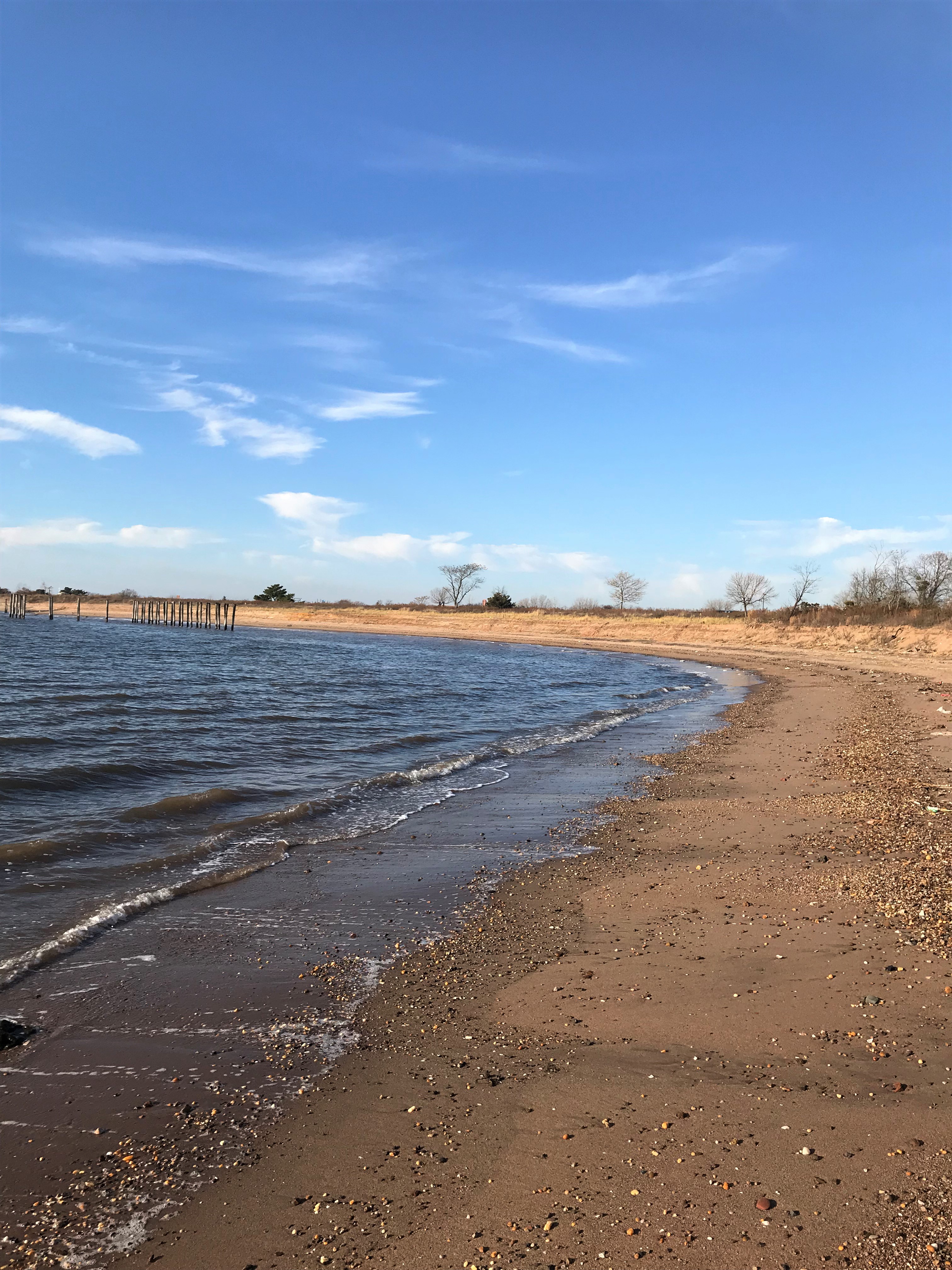
photographs of Midland Beach, Staten Island, by Roger W. Smith


— posted by Roger W. Smith
February 2023
Walt Whitman, ‘Brooklyn Parks’
Posted here (Word document above):
Walt Whitman. “BROOKLYN PARKS”
Brooklyn Daily Times, April 17, 1858
What intrigues me is Whitman’s mention of “a Park on the heights, over Montague ferry!,” whereby he refers to the neighborhood of Brooklyn Heights, from which there is a splendid view of Manhattan.
— posted by Roger W. Smith
January 2023


Brooklyn Heights; photo by Roger W. Smith

Brooklyn Heights; photo by Roger W. Smith
Walt Whitman, ‘Philosophy of Ferries’
Posted here (Word document above):
Walt Whitman “Philosophy of Ferries,” Brooklyn Daily Eagle, August 11, 1947
IN The Uncollected Poetry and Prose of Walt Whitman; Much of Which Has Been But Recently Discovered, with Various Early Manuscripts; Now First Published; Collected and Edited by Emory Holloway, Volume One, pp. 168-171 (Gloucester, Mass. Peter Smith, 1972)
*****************************************************
Things haven’t changed much since Whitman’s day.
— posted by Roger W. Smith
January 2023


photo by Roger W. Smith

*****************************************************
See also my post
the ferry
Posted here (Word document above):
Wat Whitman, “BROADWAY”
Life Illustrated, August 9, 1856
an unsigned article attributed to Whitman, reprinted in
New York Dissected By Walt Whitman: A Sheaf of Recently Discovered Newspaper Articles by the Author of LEAVES OF GRASS; Introduction and Notes by Emory Holloway and Ralph Adimari (New York: Rufus Rockwell Wilson, Inc. 1936), pp. 119-124
*****************************************************
Whitman’s experiences and impressions in his pre-Civil War years are similar to my own in Manhattan jaunts. (I also love to take the ferry.) As noted by Emory Holloway and Ralph Adimari:
When Moncure D. Conway, at Emerson’s suggestion, called upon Whitman a month or so after the appearance of Leaves of Grass, in 1855, he took a walk with him through the city. “Nothing could surpass,” he says, “the blending of insouciance with active observation in his manner as we strolled along the streets”. … Whitman had been walking the streets, riding the omnibuses and crossing the ferries for many years. His memory was stored with so many such impressions that one of his early manuscripts describes his mind as a picture gallery. Perhaps it was from a desire to reconcile the contradictions in these multiform and inharmonious impressions that the poet sought escape in mystical rhapsody. The peculiar quality of Whitman’s elevated poetic mood, however, is due to the fact that instead of withdrawing his mind ascetically from experience, he sought rather to use definite concrete experiences to climb to a summit of vision which would embrace them all.
— posted by Roger W. Smith
January 2022

A friend of mine from Europe said in a message that he hoped to visit New York sometime and would love to see “Broadway Avenue.” I wrote him back with some facts.
I am attaching an explanatory Word document (above) and photos I have taken in my walks.
My photos show Broadway near Wall Street and Broadway way uptown; it goes from the southernmost to the northernmost point (218th Street) of Manhattan.
— Roger W. Smith
January 2023
photos by Roger W. Smith

Broadway and Rector Street, Financial District

Times Square

Broadway and 156th Street, Upper Manhattan

Washington Heights

Inwood

Broadway and 218th Street
I was hired by the New York Friends Group at a salary of eighty dollars a week. My job title was Workroom Supervisor. I sorted mail, ran the mimeograph machine, kept office supplies intact, was messenger and delivery boy.
I had stayed overnight in Westchester with a college roommate and his girlfriend. They were visiting her family there. They drove me to Manhattan on my first day of work. It was April 1969.
My roommate said, while we on the FDR Drive, do you have any cash? Not much, I answered. He was a rich kid with a fancy sports car and was generous. He pulled $150 out of his wallet – it seemed like a large sum to me – and handed it to me.
I had almost no money and had made no arrangements for an apartment or room. I wouldn’t be paid for a couple of weeks.
Someone – an older woman, a longtime New Yorker — at the office kindly suggested a YMCA – I think on 34th Street – to me. I don’t know why I didn’t check it out. I believe it was because it kind of sounded “institutional” and the thought of staying there did not appeal to me.
The office manager at 218 East 18th Street, who was living with his girlfriend – she worked at the same place – and his girlfriend Betsy put me up overnight on my first night at their apartment in Greenwich Village. Where his wife was or the state of his marriage I didn’t know. In the morning, his two sons – the typical precocious city kids – were at the breakfast table.
Betsy, the girlfriend, and I took a cab to the office, which was on East 18th Street. I guess the office manager reported to work either earlier or later. Betsy was in her late twenties. She wore sunglasses in New York fashion and kept saying to the taxi driver, “DRIVER, turn here. DRIVER …” Imperiously. I was sort of put off by it.
For several days, I slept on the office floor. As office boy, I had been given a key to the building. (I think I had the responsibility of opening up in the morning.) I would pretend to go home at 5 p.m., would do a reversal and come back; unlock the door, go to one of the upper floors (my “office” was in the basement), and sleep on a rug. It was relatively comfortable.
The only thing I knew how, practically, to cook was rice. Boiled. I bought a box of rice at Bohack supermarket on Third Avenue. I would cook it in a kitchen that was on one of the upper floors. I had probably bought soy sauce too.
Over the weekend, probably, I would go out and explore the neighborhood, feeling pretty lonely.
This went on a for a week or less; and then I had a series of improvised living arrangements which were mostly unsatisfactory and of short duration. I finally found a studio apartment in Queens.
— Roger W. Smith
January 2023
photos by Roger W. Smith

99 Ryerson Street, Brooklyn

On Ryerson Street in Brooklyn. On December 24, 2019, the day before Christmas.
I walked and walked, thought I would never find Ryerson Street. No one seemed to know where the street was located. The house is in a Brooklyn neighborhood known as Clinton Hill. It is close to the Brooklyn-Queens Expressway.
Whitman and his family lived there briefly, in 1855, and were possibly still there in early 1856. But by the time two Concord intellectuals and writers, Bronson Alcott and Henry David Thoreau, visited Whitman in October 1856, the Whitman family had moved to another house in the area. (The visitors had to take the ferry from Manhattan to get to Brooklyn, which was then a suburb.)
I have posted the following articles here:
“Should Walt Whitman’s House Be Landmarked” The New York Times, December 24, 2019
‘Should Walt Whitman’s House Be Landmarked’ – NY Times 12-24-2019
‘Should Walt Whitman’s House Be Landmarked’
selections from the diary of Bronson Alcott and the correspondence of Henry David Thoreau
‘Whitman in His Own Times’ (Alcott, Thoreau)
Lawrence Buell, “Whitman and Thoreau. Calamus no. 8 (August 1973), pp. 18-28.
Lawrence Buell, ‘Whitman and Thoreau’
— posted by Roger W. Smith
December 2022

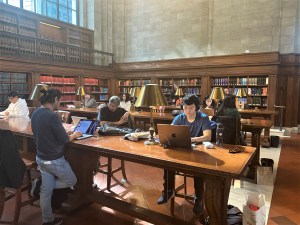
main reading room, New York Public Library

main reading room, New York Public Library
The late William S. (Bill) Dalzell was a very important and valued friend to me, beginning in my twenties when I first came to New York.
We worked at the same place, 218 East 18th Street — technically not for the same employer, since Bill was a self-employed printer.
We hit it off immediately. Bill (as I turned out to be) was a lover of his adopted city. He grew up in Williamsburg, a suburb of Pittsburgh.
He had many pregnant thoughts. We had such interesting conversations.
He was a confirmed bachelor and a creature of habit.
He never worked on weekends.
On Saturday mornings, he would go to the Metropolitan Museum of Art. He would begin in the cafeteria, nursing a cup of coffee and lost in thought.
He said that for him the museum was like a cathedral. It had that effect on him mentally. Either explicitly or implicitly, he was also thinking of Norte Dame Cathedral. He had been there several times and said it was “the holiest place” he had ever visited.
Which brings to mind the New York Public Library on Fifth Avenue.
It has that effect on me. The beautiful building. The interior. The high ceilings and sunlight streaming through. The staff. The “serious,” “dedicated” sense of purpose and calm quietness. The calming and focusing effect it has on me mentally.
— posted by Roger W. Smith
October 2022