Tag Archives: Roger Smith

the music of the spheres (linguistically speaking)


I live in the borough of Queens in New York City.

In a metropolitan area with the most ethnically diverse zip codes in the nation, and in a City where far more languages are spoken than in any other city in the world — in public; on the streets and in parks; in stores and restaurants; on buses and the subway; and so on.

To hear the variety of languages spoken in NYC is exhilarating.

I love to hear foreign languages.

Their musicality.

To hear the wonderful sonorities of Spanish being spoken. To hear Russian, and to be able to recognize it. To be able to recognize Polish, which I hear spoken very often in my neighborhood.

To guess at other languages that I hear being spoken during my peregrinations.

To me, it’s just another reason to WELCOME IMMIGRANTS. If only others — some do, but I fear, and in fact know, it’s far too few — could see this.


—  Roger W. Smith

    August 2018


*****************************************************


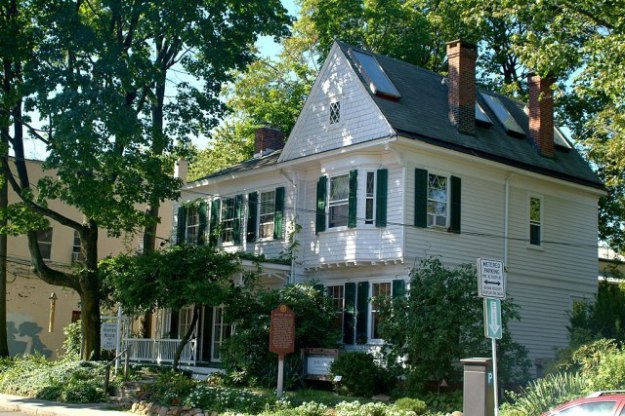
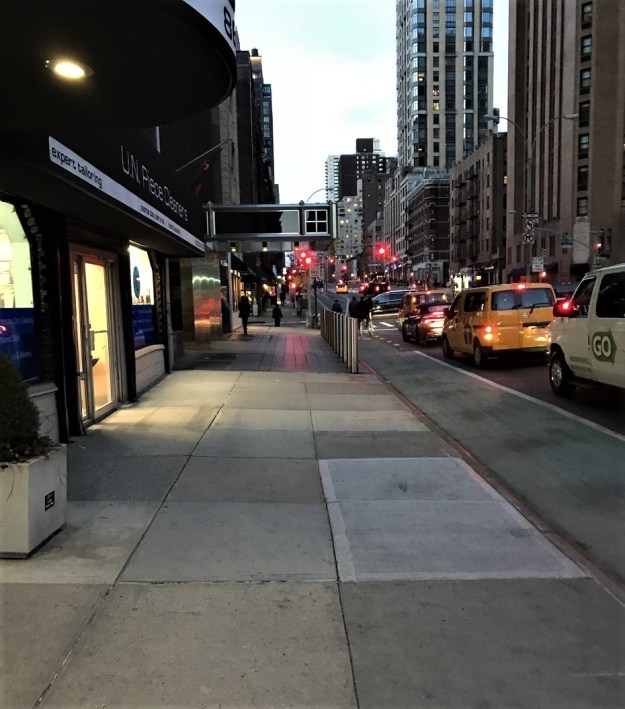
photos taken in Manhattan by Roger W. Smith


1 (2).jpg


2 (4)


3 (2).JPG


4 (2).jpg


5.JPG


6 (2).jpg

New York sunlight (and New York joys)


“The grass that grows by absorbing the life-giving energy of the sun becomes [in Walt Whitman’s Leaves of Grass] a metaphor of ‘the ceaseless springing forth of life from death.’” — David S. Reynolds, Walt Whitman: A Cultural Biography (New York: Alfred A. Knopf, 1995), pg. 240


*****************************************************

My longtime friend Bill Dalzell, who for many years lived in New York City, introduced me to so many things when I first came to New York in the late 1960’s.

Among other things, Bill introduced me to cinema and art. We made several trips together to the Metropolitan Museum of Art.

Bill, a New York transplant from a suburb of Pittsburgh, where he grew up, was — like many having adopted New York City as their home, including myself — an enthusiast of all New York had to offer. He knew all the inexpensive, interesting things to see and do in the City.

Bill used to say: “Would you care to hear me sing the praises of New York?” He used to marvel at the fact that so many people of all races and nationalities lived cheek by jowl in harmony. At the richness of culture. At the convenience of things such as getting around. At how much the City had to offer at what were then modest prices.

Admission to the Metropolitan Museum of Art was free. The main branch of the New York Public Library was open 365 days a year. The subway and bus fares were 20 cents. So was the Staten Island ferry, one of the fun, vivifying, and inexpensive things he enjoyed doing. (We would get off on the Staten Island side, walk around a bit, have a cup of coffee, and take the ferry back to Manhattan.) A meal of wholesome, plain food at the Automat (where Bill used to love to sit and drink coffee while lost in thought) could be had for less than a dollar. A glass of beer in a bar was 20 cents, and usually every third beer was on the house. Films cost less than two dollars. Rents were cheap. Bill paid twenty-nine dollars a month for a one-bedroom apartment on East 5th Street.


*****************************************************

Bill introduced me to the paintings of Edward Hopper, one of his favorite painters. (Hopper’s paintings are, for the most part, exhibited in New York museums.) Bill and I, at his suggestion, made a one-day excursion to Nyack, NY to view Hopper’s birthplace.

During our museum trips, he pointed out how Hopper made use of light.

“The light is different in America,” Bill would say. (He had traveled practically everywhere in the world on a limited budget.) By “different,” Bill meant brighter. More brilliant. Yes. Brilliant light. An observation which I do believe to be true. I have observed and thought about this often.

I have come over the years to be myself fascinated by light. Early morning light, daylight, late afternoon light. The light hitting the grass. Different shades of light and degrees of brightness. Summer light. Autumn light. Winter light.

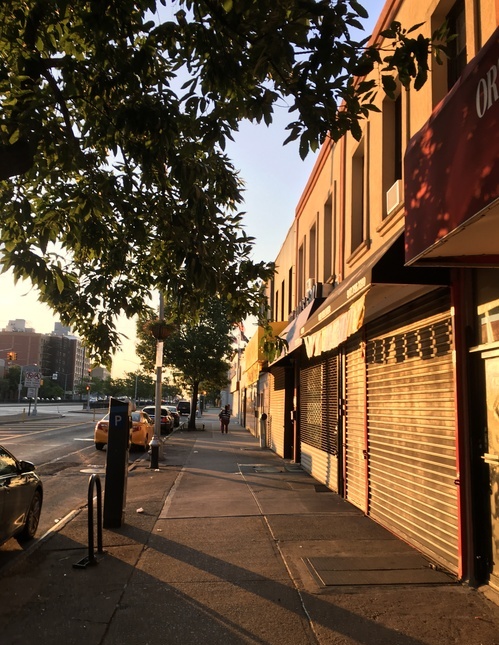
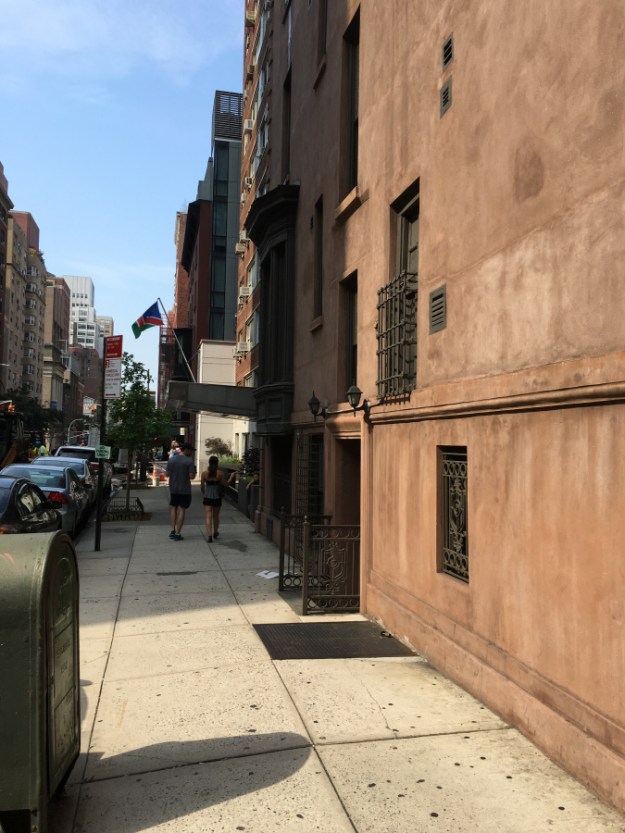
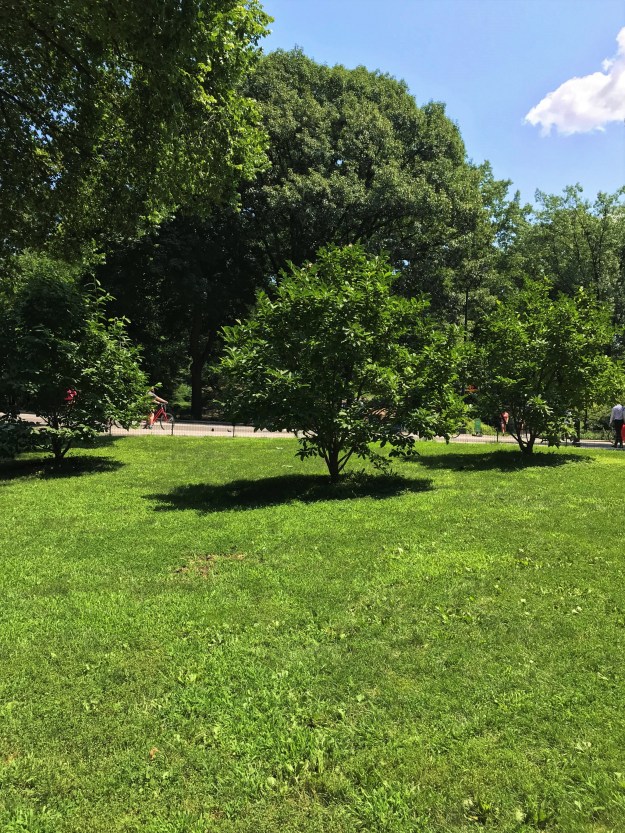
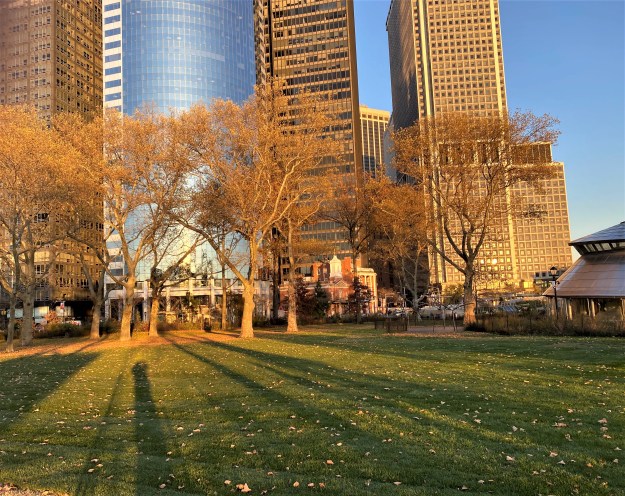
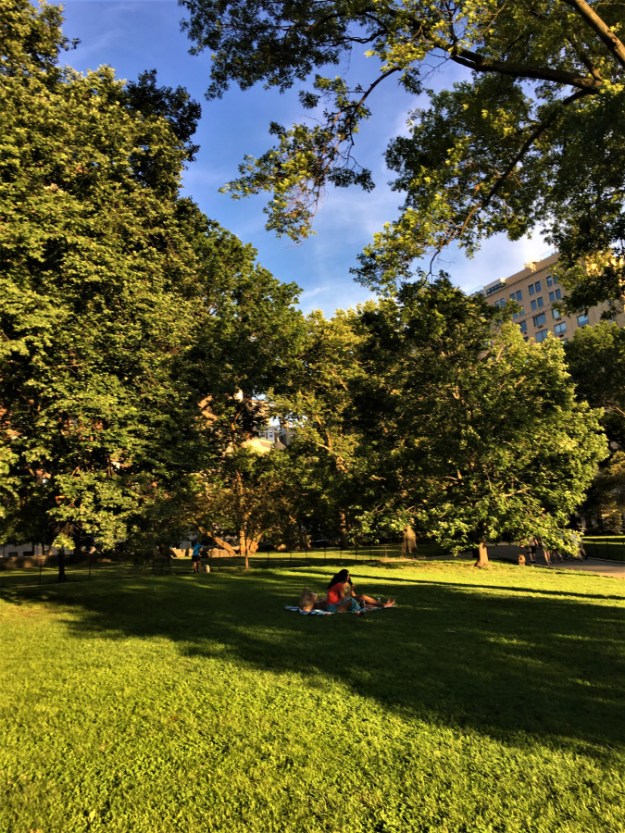
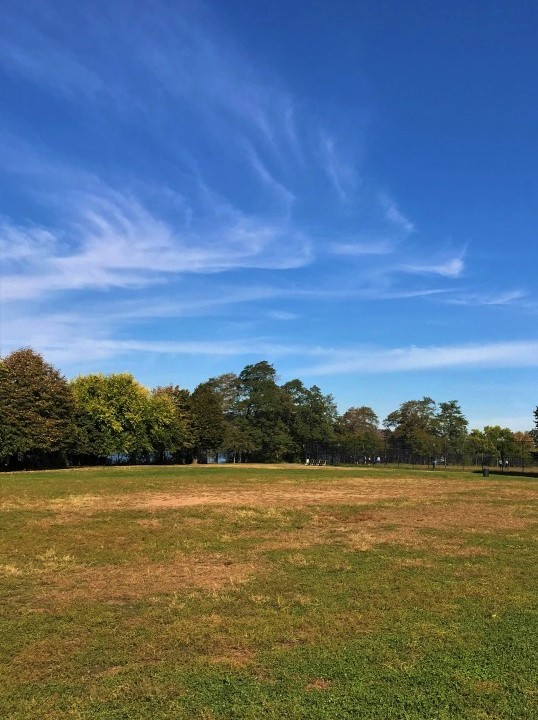
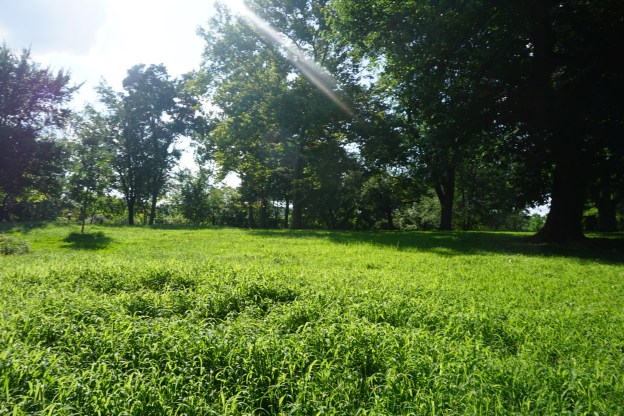
While I would and could never aspire to be an artist — I have no innate talent and only a limited appreciation of the visual arts — I have been taking photographs in the City in parks, on the shorelines, and of houses and streets on my walks, I have posted below some photographs of mine in which an appreciation of sunlight as viewed from ground level is expressed in the photo. I am fascinated by the quality of sunlight in different seasons and at different times of the day.

— Roger W. Smith

   July 2018


*****************************************************

Addendum:

Some relevant information about Edward Hopper.

Most of Hopper’s figure paintings focus on the subtle interaction of human beings with their environment-–carried out with solo figures, couples, or groups. His primary emotional themes are solitude, loneliness, regret, boredom, and resignation. He expresses the emotions in various environments, including the office, in public places, in apartments, on the road, or on vacation. … In many Hopper paintings, the interaction is minimal.

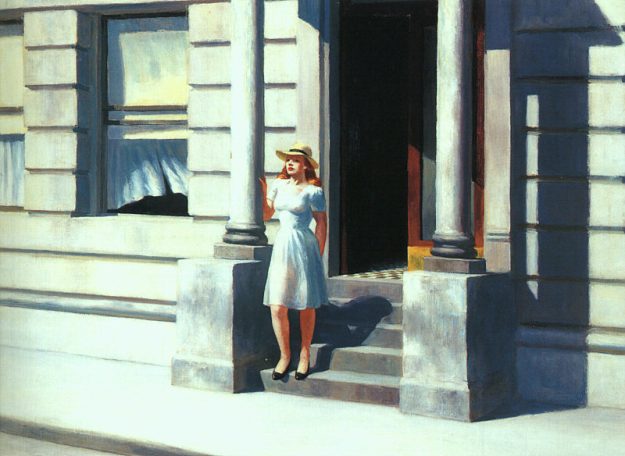
The effective use of light and shadow to create mood is central to Hopper’s methods. Bright sunlight (as an emblem of insight or revelation), and the shadows it casts, also play symbolically powerful roles in Hopper paintings such as “Early Sunday Morning” (1930), “Summertime” (1943), “Seven A.M.” (1948), and “Sun in an Empty Room” (1963).

Hopper always said that his favorite thing was “painting sunlight on the side of a house.”

Although critics and viewers interpret meaning and mood in his cityscapes, Hopper insisted “I was more interested in the sunlight on the buildings and on the figures than any symbolism.” As if to prove the point, his late painting “Sun in an Empty Room” (1963) is a pure study of sunlight.

“Edward Hopper,” Wikipedia

https://en.wikipedia.org/wiki/Edward_Hopper

It should be noted that the American landscape painter Winslow Homer did similar things with sunlight in his remarkable paintings.


*****************************************************

photographs by Roger W. Smith

1 - Woodside, Queens

Woodside, Queens

2 - Murray Hill

Murray Hill

3- Madison Square Park

Madison Square Park

Madison Square Park 2-23 p.m. 7-27-2018

Madison Square Park

4 - Central Park

Central Park

Central Park 11-44 a.m. 11-6-2019.jpg

Central Park

Central Park 12-38 p.m. 8-5-2018.JPG

Central Park

Battery Park on a November afternoon

fall light, Central Park

5 - Riverside Park

Riverside Park

6 - Inwood Hill Park

Inwood Hill Park

7 - Inwood Hill Park

Inwood Hill Park

Isham Park 4-43 p.m. 8-9-2018.JPG

Isham Park, Indwood

All of these photos were taken in New York City.

*****************************************************

Posted here below are some famous paintings of Edward Hopper that show his preoccupation with light and his mastery of representing it visually.

1-hopper-early-sunday2 - Cape Cod3 - stoop, summertime4- Cape Cod evening5- seven am6 - house by sea


*****************************************************

Edward Hopper’s birthplace

Hopper's birthplace.jpg

Edward Hopper birthplace, Nyack, NY


when a man is tired of New York …


“I suggested a doubt, that if I were to reside in London, the exquisite zest with which I relished it in occasional visits might go off, and I might grow tired of it. JOHNSON. ‘Why, Sir, you find no man, at all intellectual, who is willing to leave London. No, Sir, when a man is tired of London, he is tired of life; for there is in London all that life can afford.’ ”

— James Boswell, The Life of Samuel Johnson, LL.D.


*****************************************************

Does repetition imply, mean, or equate to: Boredom? Weariness? Dullness?

By which I mean repeated experiences under known circumstances, such as what one experiences when one lives somewhere for a long time, or a lifetime.

Some people think that variety is the sine qua non. (“Been there, done that.”) They are constantly seeking excitement in new venues.

This is not necessarily, or not always, wrong.

But consider the following reflections of mine, based upon my own experience in New York City, where I have lived for nearly fifty years.


*****************************************************

I have my favorite haunts: the New York Public Library (the research library) at 42nd and Fifth; Central Park; the Staten Island Ferry; the Strand Bookstore; Grand Central Station; Carnegie Hall. I discovered these places — and also discovered how much I liked them over time — through word of mouth though my own peregrinations and repeated visits.

I know the best routes to walk. Just which ones produce the most pleasant “jaunting experience.” Which Manhattan avenue to take, for example, depending upon my mood and other circumstances. The best ways to get from Queens or Brooklyn to Manhattan by foot, with the most pleasant (and, conversely, least pleasant) avenues, neighborhoods, or bridges to walk on or through.

I know who are the most helpful reference librarians at the New York Public Library. I know that the main reading room is the place for me and have a favorite place to sit there. I know which entrance is best to use and where the elevators are.

I know the best items to choose on the menu at one of my and my wife’s favorite restaurants (which, of course, reflects my own preferences).

I know how often and at what times Staten Island ferries run.

I have other favorite places and establishments. Continually going to them works for me, and it will work for you.


*****************************************************

I first met my lifelong friend Bill Dalzell, who recently passed away, in the late 1960’s when I was employed in Manhattan. I was new to the City, and it was one of my first jobs.

Bill, like most Manhattanites, had been born and raised elsewhere. He had come to New York City in the 1950’s, at around the same age as I was when we met.

Bill absolutely loved New York. (He did, at a later age, move elsewhere.) He was always singing its praises.

The things that appealed to him about the City also appealed to me. The sense of freedom — no one watching you and (possibly) expressing disapproval of your activities; the fact that you could live alone or be alone — that it would not be considered abnormal* and you could find plenty of things to do alone and keep you interested even if you had no one else to do them with; the walkable streets; the awesome cultural resources (films, theaters, museums, and libraries).

Bill had his favorite haunts: The Metropolitan Museum of Art, the Thalia and Elgin movie houses, the Staten Island ferry, the automat. Years later, having lived in New York almost continuously since then, I have my own favorite places and things to do.

Bill loved to go to The Metropolitan Museum of Art on weekends. Admission was free back then. Upon arrival, he would go to the cafeteria and sit there for a couple of hours with a cup of coffee, in contemplation. Then he would visit his favorite exhibits. He said that the museum seemed like a cathedral to him and that going there was his equivalent of going to church.

He exulted over the fact that the New York Public Library’s main branch was open (then) 365 days a year, even on Christmas Day!


*****************************************************

Inner peace. Contemplation. That’s what you experience when you are comfortable somewhere (such as the Met Museum cafeteria or some other place, such as a park bench or an automat), as was the case with Bill musing over his cup of coffee; when you feel you belong. Being comfortable with the externals, from repeated experience, you can relax and not worry about them. And, in New York one often gets this feeling: that you belong there as much as anyone else. Besides a feeling of belonging, the comfort comes from knowing what to expect. And being able to anticipate pleasure, which is almost a given.

What is it about such places that makes one want to return again and again?

One thing I would assert is that it’s an automatic thing — sort of like (to use a buzzword) being on autopilot. Once you start going someplace a lot, you feel, naturally, at home there. You know how to get the most out of it. You know just what things about it you like best and how to savor and enjoy to the fullest those things.

Let’s say it’s the library. You will have your favorite divisions and rooms (in a large library like the main branch of the New York Public). You may know of certain staffers who are particularly helpful. You may like certain places to sit or even certain corridors and stairwells to use.

Say it’s the Oyster Bar Restaurant in Grand Central Station. You know which entrees you like the most and which of the available draft beers, and what they cost. You have your favorite waiters. You know where and in which room you like to be seated, and whether at a table or a counter (and then, which counter? there are more than one). You know which point of entry from the labyrinthine Grand Central Station is most convenient.

In Central Park, there are certain walkways and paths I like to take.

I know which points along the Brooklyn Bridge I like the best (the boardwalk, for example); the best ways to approach it as a pedestrian walking in Manhattan; the most fun things to do (talk with people or just observe them having a good time, which one can enjoy vicariously; take pictures; sit on a bench on the boardwalk, etc.).

The Strand Bookstore? I know where I want to browse. I know when it is open. I know how the books are arranged and in what sections.

The New York City subways? (I didn’t mention them before.) I know the best routes which involve the least hassle, the stations and lines to avoid and those that I prefer.

So, FAMILIARITY is a big factor.

As is REPETITION.


— Roger W. Smith

   May 2018


* Regarding the delicious sense of anonymity associated with living in New York — of being part of a crowd but not singled out — an experience I once had when living elsewhere seems relevant. I worked for about a year and a half at a psychiatric hospital in Stamford, Connecticut, a city not far from New York. One spring day, when walking home from work, I stopped in a park that was on my route. I sat there for a while — I think it was on a park bench — in contemplation. It was a leisurely walk home. The park was not crowded, as a New York City park usually would be, but it was not empty by any means.

A couple of days later, the head nurse on my ward said to me, “I saw you in the park the other day.” The park was about a half mile from the hospital and she had probably passed it on the way home. I could tell that her remark amounted to mild “disapproval.” She felt it was odd to see me sitting by myself in a park. If I had been with a friend or coworker, she would not have had thought anything unusual.

cityscapes


Observed a father and his daughter in a Dunkin’ Donuts a little before six this morning.

They looked so in sync and happy to be together. You don’t see that in public so often.

The father looked to be in his thirties and had a neatly trimmed beard. He was wearing a T-shirt. He was drinking a large coffee. When he left, he put on a black quilted jacket with a hood.

The girl, who also had a drink, had black hair (like her father) and was wearing a jersey and slacks, both of the same material (cotton or flannel?), both red. She was animated and was happily chattering away. I would guess she was around seven years old. Her legs were dangling; her feet didn’t reach the floor.

The father would break into a laugh. He was giving his daughter his full attention. You could sense how much they were enjoying each other’s company.

When they got up to leave, I almost felt disappointed — they had made the place especially cheerful. The father zipped up her coat. It was light blue polyester. She was clutching a rag doll.

I watched them through the big plate glass windows as they left and turned a corner, chattering away, and disappeared from sight.

They were like two best friends.

—  Roger W. Smith

    May 6, 2018


in a towered city, far from the busy hum of men


First Avenue 3-5-2018

First Avenue between 48th and 49th Streets, looking north

I had an appointment in the City this afternoon. Having been remiss about walking lately, I decided to walk home. It takes me about two and a half hours.

Walking is an excellent antidote for depression. I was depressed over two deaths that have deeply affected me: of a dear lifelong friend and of a relative my age. And I have experienced unpleasantness lately in interpersonal relationships.

The early evening, dusk, is such a peaceful time. Walking eastward on East 48th Street and northward on First Avenue, I felt this. A serenity came over me. The few people out looked unhurried and peaceful themselves. The mean-spirited persons I know seemed irrelevant, a feeling that was welcome.

One often feels a sense of excitement and pulse of unrelenting activity in Manhattan. But at other times, one almost feels a stillness akin to being far removed from what the poet Milton called “the busy hum of men.” It’s like being in the eye of a hurricane.

Don’t go on a cruise or to a remote tourist spot to escape your problems and tormentors. You’ll be walled in like a patient in an asylum. Go instead to a city, get lost in it, and walk it in the early morning or evening.


— Roger W. Smith

    March 2018

waiting for …


“New Yorkers are accustomed to waiting. They wait, usually with Job-like patience, for a long-overdue train to pull into the station. …”

— editorial, New York Times, February 28, 2018


*****************************************************

This is typical pomposity and snootiness on the part of the New York Times Editorial Board. “Job-like patience”? A ridiculous allusion meant to impress and which shows a tin ear as well as a lofty disdain for the grubby actualities of city life. And, a lack of knowledge of life as it is actually lived in the City.

Do they ever deign to themselves ride the subways along with common folk?

In their high handedness, they remain oblivious to — or perhaps just don’t want to acknowledge (because they would have less to pontificate about) — the fact that the waiting time for New York subways is incredibly short, with very few exceptions. I know. I grew up in Boston, where one often has to wait 15 or 20 minutes for a subway during peak hours (whereas, during rush hour in New York on the most heavily traveled lines, trains arrive every four to five minutes).

To affect disdain for the subway is fashionable now. No doubt, service improvements can and should be made, and upgrades are necessary. But the subway system transports millions of New Yorkers every day and is an indispensable part of city life. That it works as well as it does is a reason for rejoicing.

Yes, rejoicing. The complainers don’t realize how vital the subway is to the city. Ask riders who rely on it. Most of them can’t afford to live in Manhattan or pay for alternative forms of transportation.

Believe me, the Times editorial writers don’t care about how the little people live or what they think. They’re too busy telling the benighted masses what they think is good for them, when it is actually the opposite.


— Roger W. Smith

  February 2018

the ferry


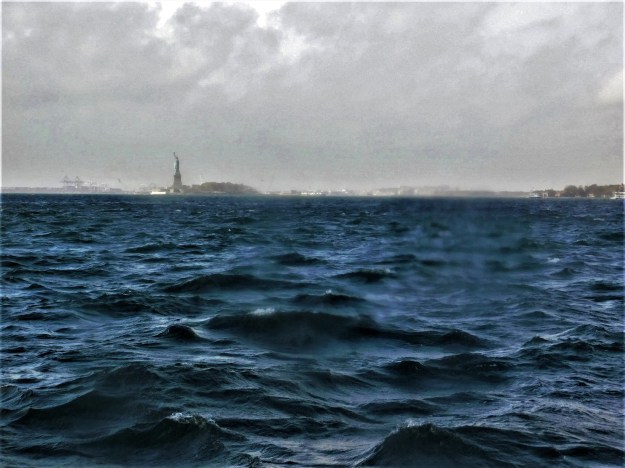
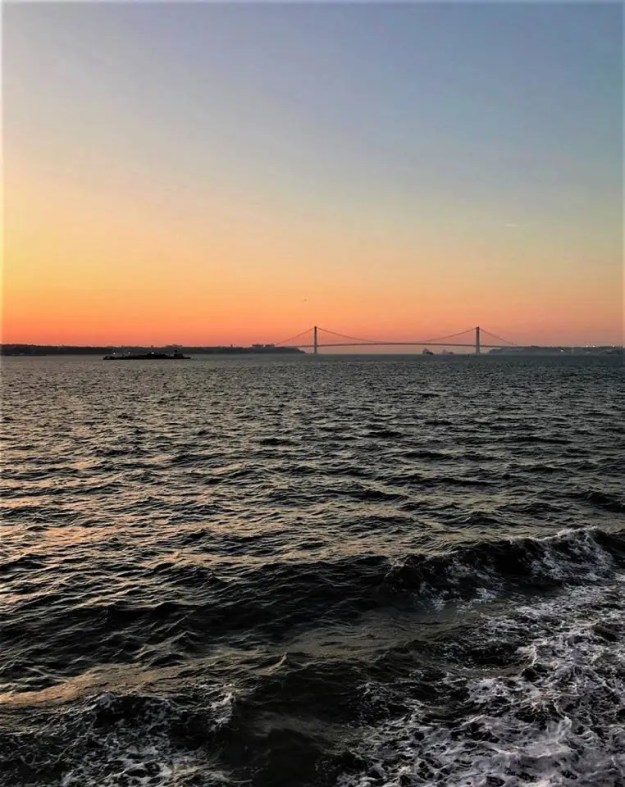
photographs by Roger W. Smith


*****************************************************

The glories strung like beads on my smallest sights and hearings—on the walk in the street, and the passage over the river;
The current rushing so swiftly, and swimming with me far away;

Just as you are refresh’d by the gladness of the river and the bright flow, I was refresh’d;
Just as you stand and lean on the rail, yet hurry with the swift current, I stood, yet was hurried;
Just as you look on the numberless masts of ships, and the thick-stem’d pipes of steamboats, I look’d.

I too many and many a time cross’d the river, the sun half an hour high;
I watched the Twelfth-month sea-gulls—I saw them high in the air, floating with motionless wings, oscillating their bodies,
I saw how the glistening yellow lit up parts of their bodies, and left the rest in strong shadow,
I saw the slow-wheeling circles, and the gradual edging toward the south.
I too saw the reflection of the summer sky in the water,
Had my eyes dazzled by the shimmering track of beams,
Look’d at the fine centrifugal spokes of light around the shape of my head in the sun-lit water,

Look’d on the haze on the hills southward and southwestward,
Look’d on the vapor as it flew in fleeces tinged with violet,

The scallop-edged waves in the twilight, the ladled cups, the frolicsome crests and glistening,

Now I am curious what sight can ever be more stately and admirable to me than my mast-hemm’d Manhattan,
My river and sun-set, and my scallop-edg’d waves of flood-tide,
The sea-gulls oscillating their bodies, the hay-boat in the twilight, and the belated lighter*;

Flow on, river! flow with the flood-tide, and ebb with the ebb-tide!
Frolic on, crested and scallop-edg’d waves!

Gorgeous clouds of the sun-set! drench with your splendor me, or the men and women generations after me;
Cross from shore to shore, countless crowds of passengers!
Be firm, rail over the river, to support those who lean idly, yet haste with the hasting current;
Fly on, sea-birds! fly sideways, or wheel in large circles high in the air;
Receive the summer sky, you water! and faithfully hold it, till all downcast eyes have time to take it from you;
Diverge, fine spokes of light, from the shape of my head, or any one’s head, in the sun-lit water;
Come on, ships from the lower bay! pass up or down, white-sail’d schooners, sloops, lighters!

— excerpted from Walt Whitman, “Crossing Brooklyn Ferry”

* A lighter is a flat-bottomed barge used to transfer cargo to and from ships in harbor.


— posted by Roger W. Smith

   January 2018

good neighbors (in a metropolis)


Thou shalt love thy neighbour as thyself.

— Matthew 22:31


*****************************************************

I have lived in New York City since early adulthood.

New Yorkers cold and impersonal? Too busy to be Good Samaritans?

I have often experienced instances of just the opposite.


*****************************************************

On Wednesday afternoon, January 3, a bitterly cold day, I was headed home and was waiting for a bus.

No one at the bus stop. I guessed that I probably had just missed a bus and that another one wouldn’t arrive for at least ten to fifteen minutes.

It’s a bleak neighborhood, but there was a “gourmet deli” right there.

I entered and ordered a large cappuccino. There was one customer in front of me. Two young women were behind the counter. I paid $3.95 for the cappuccino.

Through a window, I saw my bus, the Q39, pulling up at the bus stop.

“How long does it take to make a cappuccino?” I said to the woman who had taken my order. “My bus is here.”

I left without a cappuccino or the $3.95. The bus was at the curb, about to leave.

I got on. There were only a couple of other passengers. The driver shut the door.

Then he opened the door again for a “last minute passenger.” A young woman boarded (whom I realized after the fact was the cashier) with cash in hand, arms extended. She dashed to my seat and said, breathlessly, “here’s your $3.95”; handed me the money with a big smile. Then she darted off the bus before it left.

New Yorkers are NICE.


*****************************************************

When I first moved to New York (to take a job) after graduating from college, I was overwhelmed by the immensity and seeming impersonality of the place. The anonymity was refreshing and liberating, in its own way. But, the City seemed like an awfully cold place. (And, besides its sheer size, all those high rise buildings intimidated me.)

I went to Eighth Street in Greenwich Village once, when interviewing for the job, and asked a couple of young people if there were any like minded types hanging out there, as I had experienced on Boston Common. “If you walk over to St. Mark’s Place, you will find some,” they said kindly.

On Sundays, I would hang out in Central Park, where Sixties types would congregate, perhaps listening to a guitar player singing folk songs, hoping that I would vicariously feel a sense of belonging or companionship.

One day in a subway station, I asked someone a question of some sort. They answered politely and helpfully. I told a friend of mine from college, Sam Silberstein (son of concentration camp survivors), who had grown up in Flushing, Queens, about this. “Someone was actually nice to me in the subway,” I said.

“New Yorkers are people, too,” Sam replied.


*****************************************************

Yes, New Yorkers are nice. I wonder if it’s the same way in Paris. I don’t think so. Parisians seem to be cold and abrupt. But, I can’t really say, having been to Paris only briefly a few times.

“Even with that sprawl of humanity, New York can be lived as a small town, familiar and compact,” in the words of New York Times reporter Jim Dwyer.

What accounts for this? I am thinking particularly of the way New Yorkers treat one another.

I think there are several factors. People like myself live in a metropolis like New York because they like being amidst other people. They don’t want to live in an ivory tower or, God forbid, a gated community.

The diversity of New York’s population acts as an elixir, a tonic. Immigrants in particular bring vitality and a palpable sense of community to the City. One might think it could be otherwise, that perhaps immigrants would cloister themselves in ethnic enclaves. Perhaps to an extent in the outlying boroughs, but, for the most part, I have found that it’s the opposite: The newcomers, and the recently arrived, or those who have not always lived in New York (which includes a large segment of the population) are full of enthusiasm for everything (and an inherent ingenuousness), including getting to know other people. And the tourists have the same attitude.


*****************************************************

When I go into retail establishments, restaurants, and the like, the staff seems to be for the most part friendly, eager to relate with you, the customer. (Perhaps a bit less so in chain stores.) I seem to get a welcoming reception and a friendly hello or goodbye over half the time.

If you are in distress, incommoded, or someone perceives they can help you, it’s quite remarkable how often people are ready and eager to do so. When I tripped and fell flat on my face crossing Third Avenue a couple of months ago and within seconds several people were clustered around me, helping me to get up, asking if I was okay, and (one woman) offering to call for medical assistance.

When I was taking photographs on Fifth Avenue near 59th Street last summer and someone with a foreign accident, a man who seemed to be Hispanic with several children, noticed that I had dropped my wallet on the pavement and alerted me to the fact. (I was already walking away and was halfway down the block). Same thing if one drops something or gets up and leaves one’s hat or gloves or one’s MetroCard on their seat on a bus. People including myself swiping their MetroCard for someone who needs a fare, and frequently giving handouts.

And so on. I could cite numerous examples.


*****************************************************

Re niceness. Of people in general, that is. And Good Samaritan-ship (aka altruism). I prefer to encounter it “in the raw,” so to speak, spontaneously, from average people whom one encounters ad libitum. To witness it bubbling up from the ebullience of good hearted types. Prefer this to organized charity and welfare, to do goodership of the institutional form.


– Roger W. Smith

   January 5, 2018

we are blessed (and so am I): racial diversity in New York


This past fall, I saw the film Ex Libris, directed by the documentary filmmaker Frederick Wiseman. It is a documentary film about the New York Public Library, both the library system itself and the vital role it plays in the life of the City.

The film includes scenes of library patrons participating in discussion groups. In one scene, a discussion group at the library’s main branch on Fifth Avenue is engaged in a lively exchange of views about Gabriel García Márquez’s novel Love in the Time of Cholera with respect to romantic love. There were several scenes of library patrons participating in similar meetings and discussion groups at branch libraries in Manhattan and in other boroughs such as the Bronx. Some were about books, some involved a presentation cum discussion on topics of current interest. Others concerned how to make the library more accessible or serve community needs better.

Something that struck me was that the racial/ethnic composition or makeup of the various local groups seen in the film was so diverse. Well, one might say, would you not expect this in a city such as New York? Everyone knows it is racially heterogeneous and always has been.

Yes, but.

I observed the same thing at a business presentation not long ago: a presentation by persons associated with an entrepreneurial company for attendees who had recently become involved as independent partners and persons interested in getting involved. It was a relatively small group and there was a lot of interaction among the attendees.

What I have observed is that in New York, people do not seem to notice or take account of racial differences. They just plain don’t matter.

At both the library sessions seen in the film and at the business meeting I attended, the ethnicity was varied: whites, blacks, Hispanics, Asians, and other groups. And, it was not as if there was just a smattering of or token representation by one racial or ethnic group or another. All were amply represented. There had obviously been no conscious effort to achieve “diversity” in the makeup of the audience/participants. It had just resulted, naturally, that the groups were notably diverse. In both instances, one did not get the sense of any one group predominating in any sense, numerically or otherwise.

The discussions were spirited. Persons were engaged. At no time — I observed this both in the film I saw and as a participant/observer at the business meeting — does one ever get the sense of consciousness by anyone — meaning speakers or audience; the give and take of participants who had something to say or just looked on with interest; group discussions — of race, their race or anyone else’s, being a factor that was taken or that one was expected to take into account, or that actually was noticed (which is to say, by an impartial observer), from what I could observe. Race was not a factor in any shape or form. It was clearly not something that might affect the content of the discussion and how someone or their contributions were viewed. People were just plain friendly and respectful, period. No one looked to be guarded or on the defensive. Everyone seemed fully accepted and welcomed. A priori. As a matter of course. No one is unwelcome nor patronized or talked down to.

In New York City, race really doesn’t seem to matter — as a public thing, that is: in social interactions and events, business, or commerce. In other words, in daily life, which goes on as it should. This is a welcome and edifying thing. It energizes and gladdens me.


— Roger W. Smith

  December 2017

writers: walkers


In a previous post of mine

“on walking (and exercise)”

https://rogersgleanings.com/2017/09/26/on-walking-and-exercise/


I wrote that “walking, as is well known, is conducive to thinking and creativity, which is why so many writers and intellectuals have always been walkers.”

Por favor, read on!


*****************************************************

CHARLES DICKENS

Dickens was a man of abundant, restless energy. His chief exercise was walking, and his “daily constitutionals,” as he referred to his long walks, could extend as far as twenty to thirty miles each day. He once wrote, “My only comfort is, in Motion,” and told John Forster that “if I couldn’t walk fast and far, I should just explode and perish.” — gallery text, “Charles Dickens and the Spirit of Christmas,” exhibit at The Morgan Library & Museum, New York, November 2017


*****************************************************

HENRY DAVID THOREAU

I think that I cannot preserve my health and spirits, unless I spend four hours a day at least–and it is commonly more than that-–sauntering through the woods and over the hills and fields, absolutely free from all worldly engagements. … When sometimes I am reminded that the mechanics and shopkeepers stay in their shops not only all the forenoon, but all the afternoon too, sitting with crossed legs, so many of them–as if the legs were made to sit upon, and not to stand or walk upon–I think that they deserve some credit for not having all committed suicide long ago.

“Walking” (The Atlantic Monthly, June 1862)


*****************************************************

WALT WHITMAN

“Why are there trees I never walk under but large and melodious thoughts descend upon me?”

“Song of the Open Road” (1856)


I too walked the streets of Manhattan Island, and
bathed in the waters around it,
I too felt the curious abrupt questionings stir within
me,
In the day, among crowds of people, sometimes they
came upon me,
In my walks home late at night, or as I lay in my
bed, they came upon me.

“Crossing Brooklyn Ferry” (1860)


My joys in the open air—my walks through the Mannahatta

“To My Soul” (1860)


I continually enjoy these streets, planned on such a generous scale, stretching far, without stop or turn, giving the eye vistas. I feel freer, larger in them. Not the squeezed limits of Boston, New-York, or even Philadelphia; but royal plenty and nature’s own bounty—American, prairie-like. It is worth writing a book about, this point alone. I often find it silently, curiously making up to me the absence of the ocean tumult of humanity I always enjoyed in New-York. Here, too, is largeness, in another more impalpable form; and I never walk Washington, day or night, without feeling its satisfaction.

In my walks I never cease finding new effects and pictures, and I believe it would continue so if I went rambling around here for fifty years.

Walt Whitman, Letter from Washington, New York Times, October 4, 1863


GIVE me the splendid silent sun, with all his beams full-
dazzling; ….
Give me odorous at sunrise a garden of beautiful flowers,
where I can walk undisturb’d; …
While yet incessantly asking, still I adhere to my city;
Day upon day, and year upon year, O city, walking
your streets, …
Give me faces and streets! give me these phantoms incessant and endless along the trottoirs! …
Give me such shows! give me the streets of Manhattan!
Give me Broadway, with the soldiers marching—give
me the sound of the trumpets and drums! …
Give me the shores and the wharves heavy-fringed
with the black ships! …
People, endless, streaming, with strong voices, passions,
pageants;
Manhattan streets, with their powerful throbs, with the
beating drums, ….
Manhattan crowds with their turbulent musical chorus
—with varied chorus and light of the sparkling
eyes;
Manhattan faces and eyes forever for me.

“Give Me The Splendid Silent Sun” (1865)


NIGHT on the prairies;
The supper is over—the fire on the ground burns
low;
The wearied emigrants sleep, wrapt in their blankets;
I walk by myself—I stand and look at the stars,
which I think now I never realized before.

Leaves of Grass (1867)


My little dog is stretched out on the rug at full length, snoozing. He hardly lets me go a step without being close at my heels—follows me in my slow walks, & stops or turns just as I do.

letter from Whitman to his friend Pete Doyle, 26–27 March, 1874


SKIRTING the river road, (my languid forenoon walk, my rest,)

“The Dalliance of the Eagles” (1880)


I came down yesterday amid sousing rain & cloudy weather—but this forenoon it is sunshiny & delightful—I have just returned from a two hours ramble in the old woods—wintry & bare, & yet lots of holly & laurel—& I only wish I could send you some cedary branches thick with the china-blue little plums, so pretty amid the green tufts— … We had a flurry of snow last evening, & it looks wintry enough to-day, but the sun is out, & I take my walks in the woods.

letter from Whitman to Herbert Gilchrist, 30–31 December 1881


Thy windows rich, and huge hotels—thy side-walks wide;
Thou of the endless sliding, mincing, shuffling feet!
Thou, like the parti-colored world itself—like infinite, teeming,
mocking life!
Thou visor’d, vast, unspeakable show and lesson!

“Broadway” (1888)


Sunday, October 21, 1888.

7.20 evening. W. lying on the bed, dressed, I entered very quietly: stood there without a word. He had been dozing. Started up. “Come in! Come in!” After we had shaken hands he described his day: “… he [Whitman] asked: “And you—what have you done with the day?” I had been far in the country on a long walk. I said something about “the joy of going on and on and not getting tired.” This aroused him. “I can fully realize that joy—that untranslatable joy: I have known its meaning to the full. In the old days, long ago, I was fond of taking interminable walks—going on and on, as you say, without a stop or the thought of a stop. It was at that time, in Washington, that I got to know Peter Doyle—a Rebel, a car-driver, a soldier: have you met him here? seen him? talked with him? Ah yes! we would walk together for miles and miles, never sated. Often we would go on for some time without a word, then talk—Pete a rod ahead or I a rod ahead. Washington was then the grandest of all the cities for such strolls. In order to maintain the centrality, identity, authority, of the city, a whole chain of forts, barracks, was put about it and roads leading out to them. It was therefore owing to these facts that our walks were made easy. Oh! the long, long walks, way into the nights!—in the after hours—sometimes lasting till two or three in the morning! The air, the stars, the moon, the water—what a fullness of inspiration they imparted!—what exhilaration! And there were the detours, too—wanderings off into the country out of the beaten path: I remember one place in Maryland in particular to which we would go. How splendid, above all, was the moon—the full moon, the half moon: and then the wonder, the delight, of the silences.” He half sat up in bed as he spoke. “It was a great, a precious, a memorable, experience. To get the ensemble of Leaves of Grass you have got to include such things as these—the walks, Pete’s friendship: yes, such things: they are absolutely necessary to the completion of the story.”

Horace Traubel, With Walt Whitman in Camden, Volume 2


Tuesday, November 20, 1888.

W. had another letter for me. He picked it up from the accustomed place on the table. “It’s from Rossetti,” he said: ” I’ve been reading it over: William Rossetti: full of wise beautiful things—overflowing with genial winsome good will: you ‘ll feel its treasurable quality.” I sat there and read. He said: “Read it aloud: I can easily enjoy it again.” When I got to the passage describing the walks W. interrupted me: “Oh! that’s so fine—so fine, fine, fine: he brings back my own walks to me: the walks alone: the walks with Pete [Doyle, Whitman’s friend]: the blessed past undying days: they make me hungry, tied up as I am now and for good in a room …

Horace Traubel, With Walt Whitman in Camden, Volume 3


AH, whispering, something again, unseen,
Where late this heated day thou enterest at my window, door,
Thou, laving, tempering all, cool-freshing, gently vitalizing
Me, old, alone, sick, weak-down, melted-worn with sweat;
Thou, nestling, folding close and firm yet soft, companion better than
talk, book, art,
(Thou hast, O Nature! elements! utterance to my heart beyond the
rest—and this is of them,)
So sweet thy primitive taste to breathe within—thy soothing fingers on
my face and hands,
Thou, messenger-magical strange bringer to body and spirit of me,
(Distances balk’d—occult medicines penetrating me from head to foot.)
I feel the sky, the prairies vast—I feel the mighty northern lakes,
I feel the ocean and the forest—somehow I feel the globe itself swift-
swimming in space;
Thou blown from lips so loved, now gone—haply from endless store,
God sent,
(For thou art spiritual, Godly, most of all known to my sense,)
Minister to speak to me, here and now, what word has never told, and
cannot tell,
Art thou not universal concrete’s distillation? Law’s, all Astronomy’s
last refinement?
Hast thou no soul? Can I not know, identify thee?

“To The Sunset Breeze” (1890)


Friday, February 14, 1890

On B[uckwalter]. expressing his pleasure that W. got out of doors, W. said: “I got out yesterday—today it has not been possible. Yesterday’s jaunt—and it was quite a jaunt—was a fine one. The sky, the river, the sun—they are my curatives.”

Horace Traubel, With Walt Whitman in Camden , Volume 6


Who was not proud of his songs, but of the measureless ocean of
love within him, and freely pour’d it forth,
Who often walk’d lonesome walks thinking of his dear friends, his
lovers, …
wandering hand in hand, they twain
apart from other men,
Who oft as he saunter’d the streets curv’d with his arm the shoulder of his friend, while the arm of his friend rested upon
him also.

“Recorders Ages Hence” (1891)


— Roger W. Smith

   originally posted November 2017; updated December 2017


*****************************************************

addendum:

Note that Charles Dickens is said to frequently have taken long walks that could extend to twenty to thirty miles a day, and that Henry David Thoreau wrote: “I cannot preserve my health and spirits, unless I spend four hours a day at least — and it is commonly more than that” walking. I wonder if Dickens really did thirty miles that often.

My record for a single day was two separate walks (one in the morning and one in the afternoon) of a combined total length of twenty-four miles. I try to take one very long walk once a week. This walk is usually about twelve miles, though sometimes I do around fifteen or sixteen miles.

However, it is noted in The Man Who Invented Christmas: How Charles Dickens’s A Christmas Carol Rescued His Career and Revived Our Holiday Spirits by Les Standiford that Dickens went to work in a blacking factory at age twelve to support his family, which was in financial straits and that, after working all day, he would walk home every night, a distance of five miles.


— posted by Roger W. Smith

   December 2017