Tag Archives: Roger W. Smith

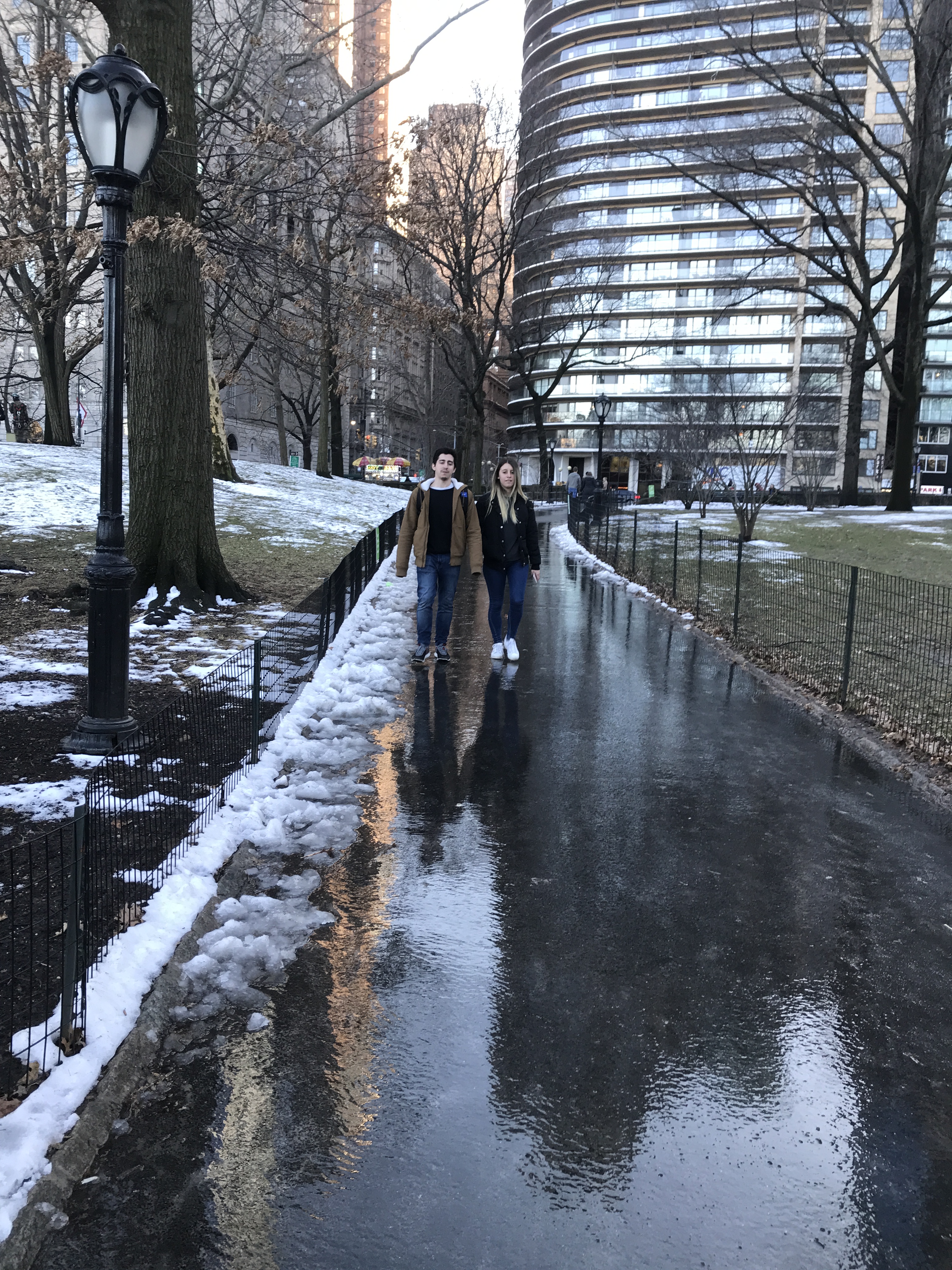
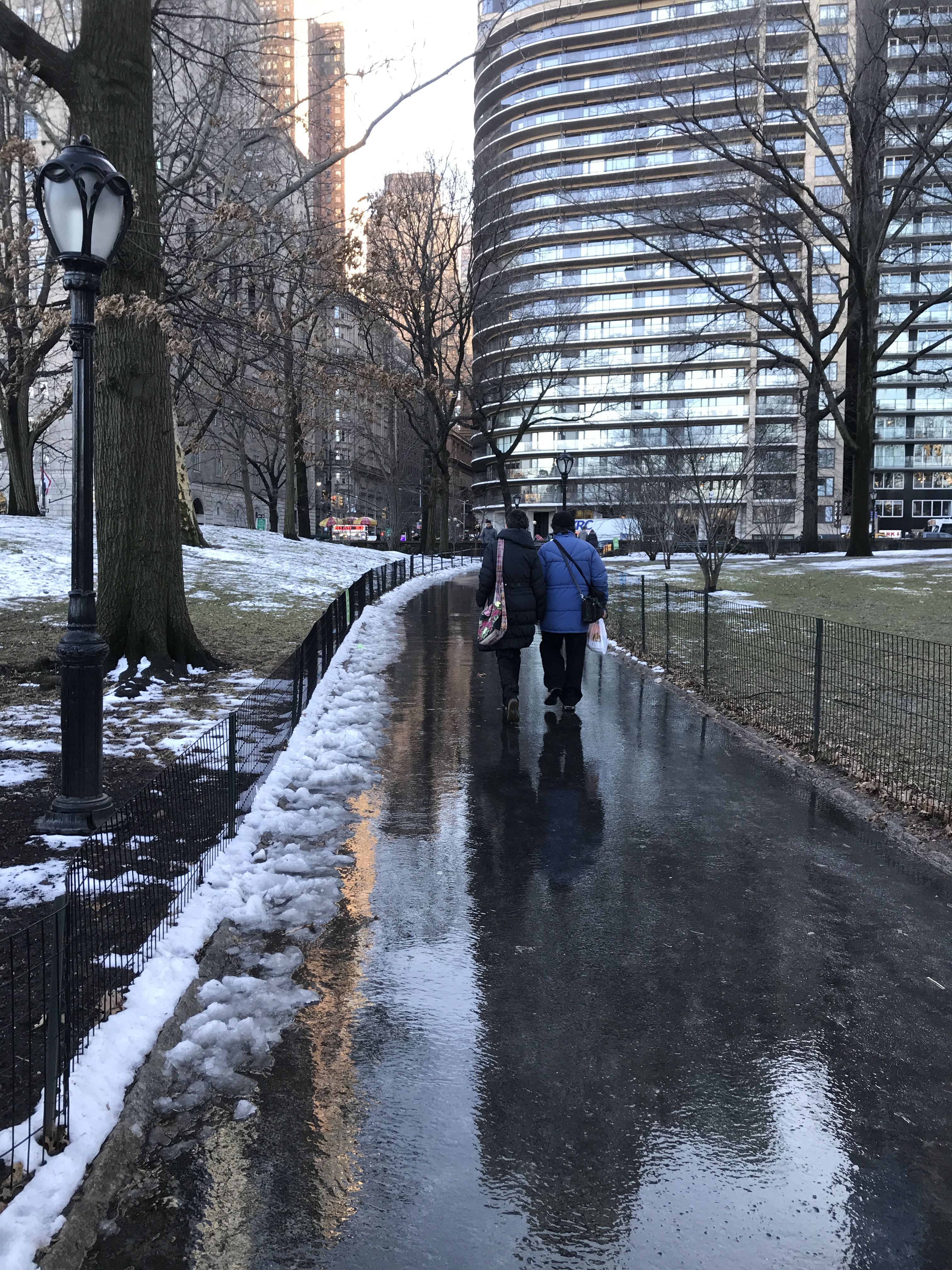
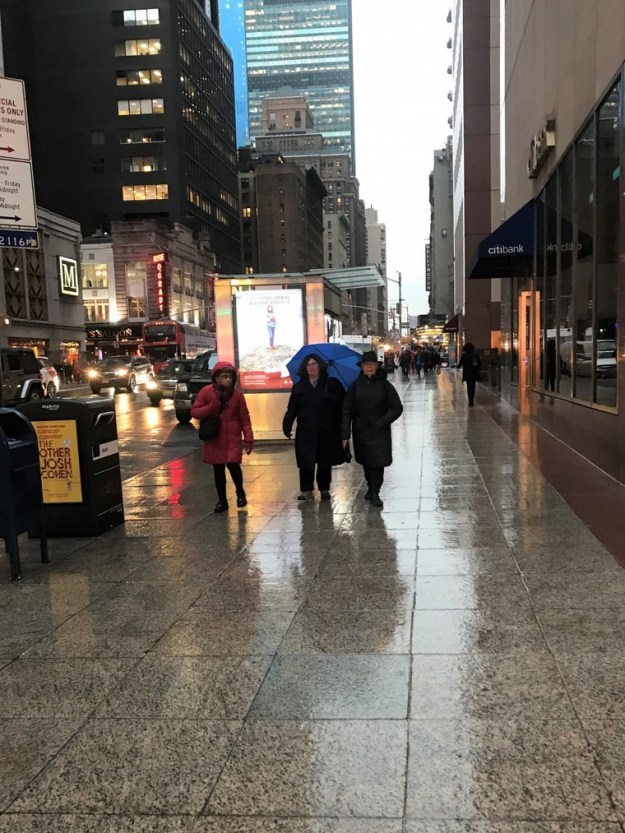
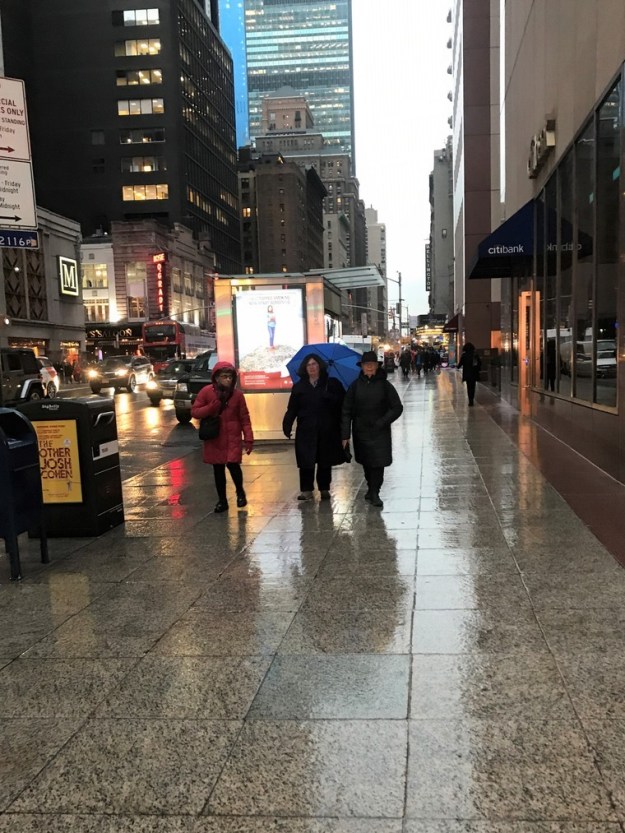
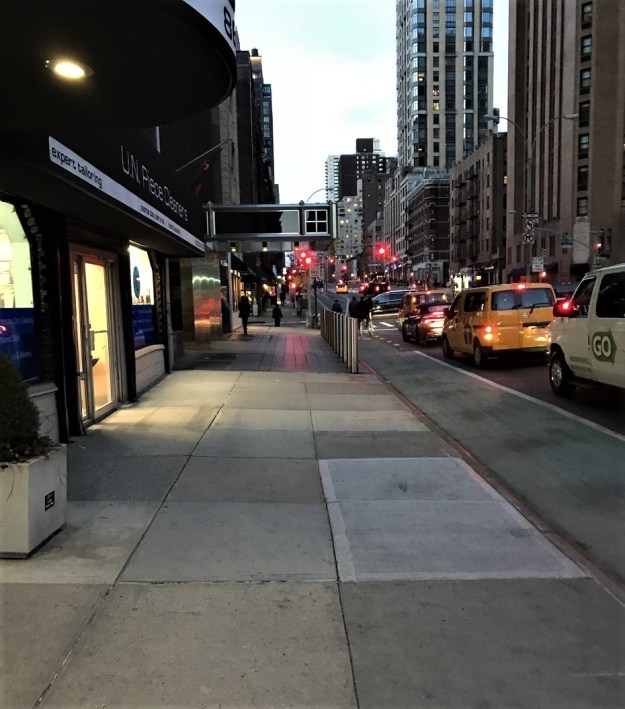
Sixth Avenue on a rainy afternoon; Herman Melville


Sixth Avenue 4-23 a.m. 11-30-2018

Sixth Avenue, New York City; Friday afternoon, November 30, 2018

I took this photo of Sixth Avenue on my way home on Friday afternoon.

It’s been raining a lot in the City this week.

Rain can be a slight inconvenience, like other weather phenomena, but I never really minded it. It can be “nice.”

When I was very young, my mother took me once to my eye doctor, Dr. Johnson, in Boston on a weekday. We went by subway.

The appointment lasted a long time. Going home in the late afternoon, it was dark and rainy. I didn’t mind. I loved having my mother all to myself. When we got home, she put me to bed. She was so kind. She kept saying that I was cold and wet and that I must be very tired: it had been such a long day and we got home late.

Re this photo of Sixth Avenue, this street scene, it reminds me of Herman Melville’s words (in Moby-Dick): “a damp, drizzly November in my soul.”

Thanks to the Good Lord that it came upon me once when I was first living in NYC to read Moby-Dick, in a library copy. What a book!

THE Great American Novel.

*****************************************************

Whenever I find myself growing grim about the mouth; whenever it is a damp, drizzly November in my soul; whenever I find myself involuntarily pausing before coffin warehouses, and bringing up the rear of every funeral I meet; and especially whenever my hypos get such an upper hand of me, that it requires a strong moral principle to prevent me from deliberately stepping into the street, and methodically knocking people’s hats off—then, I account it high time to get to sea as soon as I can.

— Herman Melville, Moby-Dick; CHAPTER 1. “Loomings.”


— Roger W. Smith

   December 2, 2018

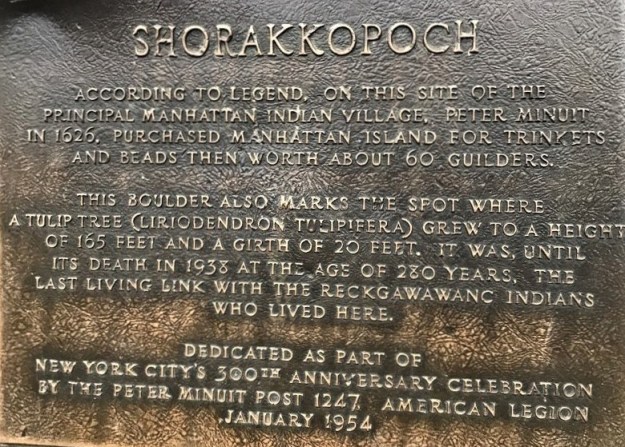
Shorakkopoch


Shorakkopoch stone.jpg

Shorakkopoch (also spelled Shorakopok) stone; Inwood Hill Park, New York City

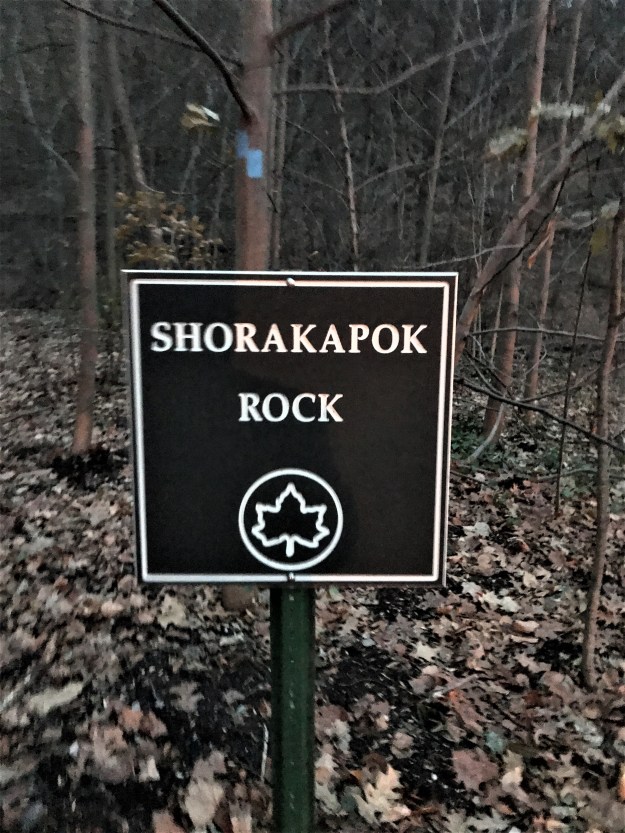
IMG_2871.JPG

imageedit_1_4755421

SHORAKKOPOCH

According to legend, on this site of the principal Manhattan Indian village, Peter Minuit in 1626, purchased Manhattan Island for trinkets and beads then worth about 60 guilders.

This boulder also marks the spot where a tulip tree (Liriodendron Tulipiera) grew to a height of 165 feet and a girth of 20 feet. It was until its death in 1938 at the age of 280 years. the last living link with the Reckgawawanc Indians who lived here.

Dedicated as part of New York City’s 300th anniversary celebration by the Peter Minuit post 1247, American Legion January 1954.

*****************************************************

This marker is in Inwood Hill Park in Upper Manhattan, where I was walking yesterday.

The stone is easy to miss. It’s on one of the paths in the forested area of the park.

Shorakkopoch or Shorakapok appears to be derived from the Native American name for the area, meaning either “the wading place,” “the edge of the river,” or “the place between the ridges.”

*****************************************************

from Wikipedia:

Through the 17th century, the Wecquaesgeek, a Munsee-speaking band of Wappinger people, inhabited the area. There is evidence of a main encampment along the eastern edge of the park, known as the village of Shorakapok.

The park’s Shorakapok Preserve was formerly the site of a “Great Tulip Tree”, a Liriodendron tulipifera considered the largest tree on Manhattan, as well as one of the oldest, and was championed and restored by Parks Commissioner Charles B. Stover. As part of care for the tree, a plaque was put up connecting it to Hudson’s voyages, a few years after the Hudson–Fulton Celebration, commemorating the 300th anniversary of Hudson’s work and the 100th anniversary of Fulton’s. The original plaque also connected the tree to Native American archaeological finds nearby, speculating that some of the Native Americans at Shorakapok could have interacted with Hudson. Hudson actually engaged in a battle from his ship with Native Americans at nearby Nipinichsen, just north of Spuyten Duyvil Creek, on October 2, 1609. The tree survived for centuries until it was felled by a storm in 1933.

Until the 1950s the stump was still to be seen, surrounded by a large iron fence, but as it rotted it was finally removed and a boulder and plaque replaced it. Peter Minuit Post 1247 of the American Legion placed the boulder and the plaque in 1954, commemorating the 300th anniversary of New Amsterdam gaining municipal rights a year earlier. The plaque labels the boulder “Shorakkopoch” (a more recent Parks Department sign nearby calls it “Shorakapok Rock”), and claims that “according to legend” this is where Minuit negotiated the purchase of Manhattan Island from Native Americans. The account does not appear in any historical records, and some historians place any such meeting location in Lower Manhattan.


— Roger W. Smith

  November 28, 2018; updated July 2026

the music of the spheres (linguistically speaking)


I live in the borough of Queens in New York City.

In a metropolitan area with the most ethnically diverse zip codes in the nation, and in a City where far more languages are spoken than in any other city in the world — in public; on the streets and in parks; in stores and restaurants; on buses and the subway; and so on.

To hear the variety of languages spoken in NYC is exhilarating.

I love to hear foreign languages.

Their musicality.

To hear the wonderful sonorities of Spanish being spoken. To hear Russian, and to be able to recognize it. To be able to recognize Polish, which I hear spoken very often in my neighborhood.

To guess at other languages that I hear being spoken during my peregrinations.

To me, it’s just another reason to WELCOME IMMIGRANTS. If only others — some do, but I fear, and in fact know, it’s far too few — could see this.


—  Roger W. Smith

    August 2018


*****************************************************


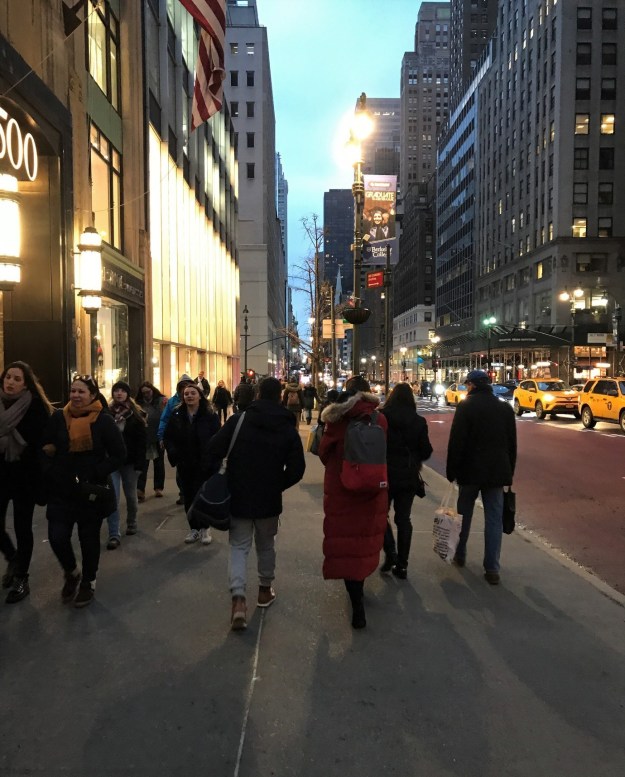
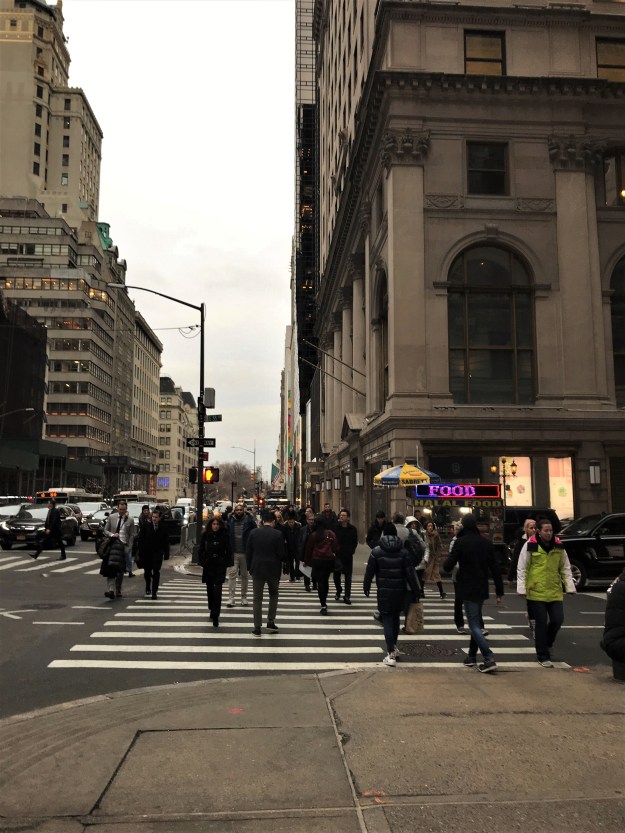
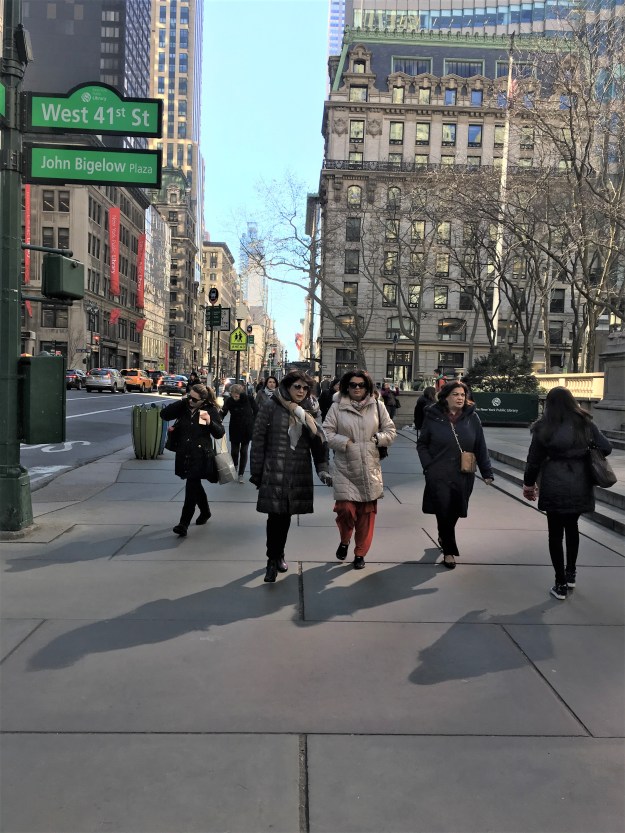
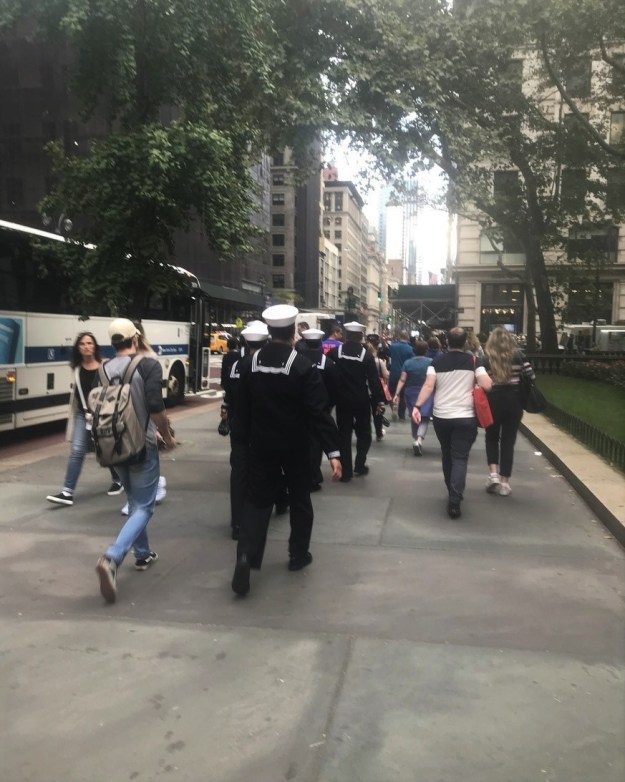
photos taken in Manhattan by Roger W. Smith


1 (2).jpg

2 (4)

3 (2).JPG

4 (2).jpg

5.JPG

6 (2).jpg

cityscapes


Observed a father and his daughter in a Dunkin’ Donuts a little before six this morning.

They looked so in sync and happy to be together. You don’t see that in public so often.

The father looked to be in his thirties and had a neatly trimmed beard. He was wearing a T-shirt. He was drinking a large coffee. When he left, he put on a black quilted jacket with a hood.

The girl, who also had a drink, had black hair (like her father) and was wearing a jersey and slacks, both of the same material (cotton or flannel?), both red. She was animated and was happily chattering away. I would guess she was around seven years old. Her legs were dangling; her feet didn’t reach the floor.

The father would break into a laugh. He was giving his daughter his full attention. You could sense how much they were enjoying each other’s company.

When they got up to leave, I almost felt disappointed — they had made the place especially cheerful. The father zipped up her coat. It was light blue polyester. She was clutching a rag doll.

I watched them through the big plate glass windows as they left and turned a corner, chattering away, and disappeared from sight.

They were like two best friends.

—  Roger W. Smith

    May 6, 2018


in a towered city, far from the busy hum of men


First Avenue 3-5-2018

First Avenue between 48th and 49th Streets, looking north

I had an appointment in the City this afternoon. Having been remiss about walking lately, I decided to walk home. It takes me about two and a half hours.

Walking is an excellent antidote for depression. I was depressed over two deaths that have deeply affected me: of a dear lifelong friend and of a relative my age. And I have experienced unpleasantness lately in interpersonal relationships.

The early evening, dusk, is such a peaceful time. Walking eastward on East 48th Street and northward on First Avenue, I felt this. A serenity came over me. The few people out looked unhurried and peaceful themselves. The mean-spirited persons I know seemed irrelevant, a feeling that was welcome.

One often feels a sense of excitement and pulse of unrelenting activity in Manhattan. But at other times, one almost feels a stillness akin to being far removed from what the poet Milton called “the busy hum of men.” It’s like being in the eye of a hurricane.

Don’t go on a cruise or to a remote tourist spot to escape your problems and tormentors. You’ll be walled in like a patient in an asylum. Go instead to a city, get lost in it, and walk it in the early morning or evening.


— Roger W. Smith

    March 2018

waiting for …


“New Yorkers are accustomed to waiting. They wait, usually with Job-like patience, for a long-overdue train to pull into the station. …”

— editorial, New York Times, February 28, 2018


*****************************************************

This is typical pomposity and snootiness on the part of the New York Times Editorial Board. “Job-like patience”? A ridiculous allusion meant to impress and which shows a tin ear as well as a lofty disdain for the grubby actualities of city life. And, a lack of knowledge of life as it is actually lived in the City.

Do they ever deign to themselves ride the subways along with common folk?

In their high handedness, they remain oblivious to — or perhaps just don’t want to acknowledge (because they would have less to pontificate about) — the fact that the waiting time for New York subways is incredibly short, with very few exceptions. I know. I grew up in Boston, where one often has to wait 15 or 20 minutes for a subway during peak hours (whereas, during rush hour in New York on the most heavily traveled lines, trains arrive every four to five minutes).

To affect disdain for the subway is fashionable now. No doubt, service improvements can and should be made, and upgrades are necessary. But the subway system transports millions of New Yorkers every day and is an indispensable part of city life. That it works as well as it does is a reason for rejoicing.

Yes, rejoicing. The complainers don’t realize how vital the subway is to the city. Ask riders who rely on it. Most of them can’t afford to live in Manhattan or pay for alternative forms of transportation.

Believe me, the Times editorial writers don’t care about how the little people live or what they think. They’re too busy telling the benighted masses what they think is good for them, when it is actually the opposite.


— Roger W. Smith

  February 2018

we are blessed (and so am I): racial diversity in New York


This past fall, I saw the film Ex Libris, directed by the documentary filmmaker Frederick Wiseman. It is a documentary film about the New York Public Library, both the library system itself and the vital role it plays in the life of the City.

The film includes scenes of library patrons participating in discussion groups. In one scene, a discussion group at the library’s main branch on Fifth Avenue is engaged in a lively exchange of views about Gabriel García Márquez’s novel Love in the Time of Cholera with respect to romantic love. There were several scenes of library patrons participating in similar meetings and discussion groups at branch libraries in Manhattan and in other boroughs such as the Bronx. Some were about books, some involved a presentation cum discussion on topics of current interest. Others concerned how to make the library more accessible or serve community needs better.

Something that struck me was that the racial/ethnic composition or makeup of the various local groups seen in the film was so diverse. Well, one might say, would you not expect this in a city such as New York? Everyone knows it is racially heterogeneous and always has been.

Yes, but.

I observed the same thing at a business presentation not long ago: a presentation by persons associated with an entrepreneurial company for attendees who had recently become involved as independent partners and persons interested in getting involved. It was a relatively small group and there was a lot of interaction among the attendees.

What I have observed is that in New York, people do not seem to notice or take account of racial differences. They just plain don’t matter.

At both the library sessions seen in the film and at the business meeting I attended, the ethnicity was varied: whites, blacks, Hispanics, Asians, and other groups. And, it was not as if there was just a smattering of or token representation by one racial or ethnic group or another. All were amply represented. There had obviously been no conscious effort to achieve “diversity” in the makeup of the audience/participants. It had just resulted, naturally, that the groups were notably diverse. In both instances, one did not get the sense of any one group predominating in any sense, numerically or otherwise.

The discussions were spirited. Persons were engaged. At no time — I observed this both in the film I saw and as a participant/observer at the business meeting — does one ever get the sense of consciousness by anyone — meaning speakers or audience; the give and take of participants who had something to say or just looked on with interest; group discussions — of race, their race or anyone else’s, being a factor that was taken or that one was expected to take into account, or that actually was noticed (which is to say, by an impartial observer), from what I could observe. Race was not a factor in any shape or form. It was clearly not something that might affect the content of the discussion and how someone or their contributions were viewed. People were just plain friendly and respectful, period. No one looked to be guarded or on the defensive. Everyone seemed fully accepted and welcomed. A priori. As a matter of course. No one is unwelcome nor patronized or talked down to.

In New York City, race really doesn’t seem to matter — as a public thing, that is: in social interactions and events, business, or commerce. In other words, in daily life, which goes on as it should. This is a welcome and edifying thing. It energizes and gladdens me.


— Roger W. Smith

  December 2017

the snow shovelers


Our front doorbell just rang while I was busy on my computer. Somewhat annoyed, since it was the umpteenth time today (lots of Christmas deliveries), I trundled downstairs and answered the door. Saw no one on the doorstep.

Within a second or two, two boys were in front of my stoop. Nice looking boys with cherubic faces. About age eleven, I would guess. Snow shovels in hand. A few inches of snow had just fallen.

Without giving them a chance to speak, figuring I didn’t want to waste their time, I told them, peremptorily (and recalling a few times when we have gotten ripped off in the past by boys we agreed to let shovel our driveway), “No, thanks. Don’t need shoveling.”

They politely left.

I was thinking about how, in Cambridge, Massachusetts, when I was about the same age, my friends and I used to go around knocking on doors asking to shovel people’s front porches and walks. What a golden opportunity a snowstorm presented to make pocket money. Fifty cents to shovel their front steps and walk. A whole two dollars sometimes for a driveway.

I ran upstairs to tell our tenant about the cute kids I had just seen. My wife wasn’t home; I couldn’t tell her.

“No, she [our tenant] won’t care,” I thought.

What to do with my good holiday feelings? Let them shovel our walk!

I ran downstairs to see if the boys were still around. No one in sight. I shouted as loud as I could, “Boys! Snow shoveling!” They reappeared.

“How much to shovel our stoop and walk?” I asked. They didn’t have a figure in mind.

“Would five dollars be all right?” I asked. They nodded yes.

A few minutes later, my bell rang again. The boys were standing there, wishing to discuss some “technicalities” regarding ice (or something of that sort) on the sidewalk. Handsome lads with ruddy faces, one with a parti-colored knit cap. Obviously wanting to do a good job. Impressive conscientiousness.

“Looks like you did a good job,” I told them. “Here’s two more dollars.”

I asked them what school they attended, and they told me they were both in the sixth grade.

I felt like Ebenezer Scrooge on Christmas Day. When he asks a boy whom he espies through his upstairs window to buy a prize turkey for the family of his clark.

— Roger W. Smith

  December 15, 2017


*****************************************************

‘It’s Christmas Day!’ said Scrooge to himself. ‘I haven’t missed it. The Spirits have done it all in one night. They can do anything they like. Of course they can. Of course they can. Hallo, my fine fellow!’

‘Hallo!’ returned the boy.

‘Do you know the Poulterer’s, in the next street but one, at the corner?’ Scrooge inquired.

‘I should hope I did,’ replied the lad.

‘An intelligent boy!’ said Scrooge. ‘A remarkable boy! Do you know whether they’ve sold the prize Turkey that was hanging up there? — Not the little prize Turkey: the big one?’

‘What, the one as big as me?’ returned the boy.

‘What a delightful boy!’ said Scrooge. ‘It’s a pleasure to talk to him. Yes, my buck!’

‘It’s hanging there now,’ replied the boy.

‘Is it?’ said Scrooge. ‘Go and buy it.’

‘Walk-er!’ exclaimed the boy.

‘No, no,’ said Scrooge, ‘I am in earnest. Go and buy it, and tell them to bring it here, that I may give them the direction where to take it. Come back with the man, and I’ll give you a shilling. Come back with him in less than five minutes and I’ll give you half-a-crown!’

— Charles Dickens, A Christmas Carol, Stave Five

Lincoln Center; the ruminations of a “genius”


I emailed the following comment to my wife last month: “Do you realize that you married a genius?”

Don’t worry, I said it in jest. Or at least half in jest. It’s okay to make such comments, jesting or not, to one’s spouse.

She responded, “Let’s not get carried away, dear.” She tends to keep me from getting a swelled head. She is never awed by me. Admires me, yes. Knows my weaknesses all too well. Takes me with a grain of salt. Isn’t given to making exaggerated claims about anyone, including herself.


*****************************************************

In a previous post

“a Carnegie Hall concert”

a Carnegie Hall concert

I wrote, about Lincoln Center:

I have never liked Lincoln Center. It’s a sterile “arts center” with worse seating and acoustics than Carnegie Hall. The architecture is typical 1960’s (think Shea Stadium): functional but uninspiring. Lincoln Center ruined a neighborhood; the surrounding streets have no street life. There are hardly any restaurants, watering holes, cafes, or places of interest, other than one or two rip-off restaurants on the other side of Broadway, across the street from the main entrance.


*****************************************************

Further thoughts of mine re Lincoln Center (since my post):

the main plaza is dreary … it’s raised above street level … one has to walk up a stairway to get to it

there are always few people on the main plaza … they don’t look happy

there is no “through traffic” (pedestrian, that is) … it is not welcoming

there is no life, no animation to the horrid “arts center’ or the surrounding area

See my photos below.

IMG_2904.JPG

Lincoln Center; photo by Roger W. Smith; December 2017

IMG_2889.JPG

Lincoln Center; photo by Roger W. Smith; December 2017


*****************************************************

Guess what? The pioneering urban theorist and writer Jane Jacobs, who became famous for her book The Death and Life of Great American Cities, said essentially the same thing:

… the street, not the block, is the significant unit. … When blight or improvement spreads, it comes along the street. Entire complexes of city life take their names, not from blocks, but from streets — Wall Street, Fifth Avenue, State Street, Canal Street, Beacon Street.

… Believing their block maps instead of their eyes, developers think of downtown streets as dividers of areas, not as the unifiers they are. … The Lincoln Center for the Performing Arts in New York is a case in point. This cultural superblock is intended to be very grand and the focus of the whole music and dance world of New York. But its streets will be able to give it no support whatever. Its eastern street is a major trucking artery where the cargo trailers, on their way to the industrial districts and tunnels, roar so loudly that sidewalk construction must be shouted. To the north, the street will be shared with a huge, and grim, high school. To the south will be another superblock institution, a campus for Fordham.

And what of the new Metropolitan Opera, to be the crowning glory of the project? The old opera has long suffered from the fact that it has been out of context amid the garment district streets, with their overpowering loft buildings and huge cafeterias. There was a lesson here for the project planners. If the published plans are followed, however, the opera will again have neighbor trouble. Its back will be its effective entrance; for this is the only place where the building will be convenient to the street and here is where opera-goers will disembark from taxis and cars. Lining the other side of the street are the towers of one of New York’s bleakest public-housing projects. Out of the frying pan into the fire.

— “Downtown Is for People,” Fortune, April 1958

… New York consists of an intricate, living network of relationships–made up of an enormously rich variety of people and activities. … Consider the interdependence, the constant adjustment, and the mutual support of every kind which must work, and work well, in a city like ours.

This cross-crossing of relationships means, for instance, that a Russian tea room and last year’s minks and a place to rent English sports cars bloom well near Carnegie Hall. …

All that we have in New York of magnetism, of opportunities to earn a living, of leadership of the arts, of glamor, of convenience, of power to fulfill and assimilate our immigrants, of ability to repair our wounds and right our evils, depends on our great and wonderful criss-cross of relationships. …

This is all so obvious it should be unnecessary to mention. But it is necessary, for our slum clearers, housing officials, highway planners and semi-public developers have been treating the city as if were only a bunch of physical raw materials – land, space, roads, utilities. They are destroying New York’s variety and disorganizing its economic and social relationships just as swiftly and efficiently as rebuilding money can destroy them.

The most direct destruction is, of course, associated with clearance, and this is a painful aspect of slum elimination of which we are becoming aware. It was described well by Harrison Salisbury, in his New York Times series on delinquency. “When slum clearance enters an area,” says Salisbury, “it does not merely rip out slatternly houses. It uproots the people. It tears out the churches. It destroys the local businessman. It sends the neighborhood lawyer to new offices downtown and it mangles the tight skein of community friendships and group relationships beyond repair.”

…. Our rebuilders have no idea of what they are destroying, and they have no idea of repairing the damage – or making it possible for anyone else to do so. The entire theory of urban rebuilding rests on the premise that subsidized improvements will catalyze further spontaneous improvement. It is not working that way in New York. Living communities, portions of living commercial districts, are so ruthlessly and haphazardly amputated that the remnants, far from improving, get galloping gangrene.

Furthermore, the newly built projects themselves stifle the growth of relationships. We are now conscious that this is true of the huge public housing projects. What we may not be so aware of is that this stifling of variety and of economic and social relationships is inherent in the massive project approach itself, whether public or private housing or anything else.

Take the Lincoln Center for Performing Arts for example. It is planned entirely on the assumption that the logical neighbor of a hall is another hall. Nonsense. Who goes straight from the Metropolitan Opera to the Philharmonic concert and thence to the ballet? The logical neighbors of a hall are bars, florist shops, non-institutionalized restaurants, studios, all the kinds of thing [sic] you find on West Fifth-seventh Street or along Times Square or generated by the off-Broadway theatres down here in the Village. True, halls and theatres are desirable to each other as nearby neighbors to the extent that their joint support is needed to generate this kind of urbanity and variety. But Lincoln Center is so planned and so bounded that there is no possible place for variety, convenience and urbanity to work itself in or alongside. The city’s unique stock-in-trade is destroyed for these halls in advance, and for keeps, as long as the Center lives. It is a piece of built-in rigor mortis. [italics added] …

Lincoln Center shows a brutal disregard for still another type of urban relationship. It will have a catastrophic effect on Amsterdam Houses, a ten-year-old, 800-family public housing project. Amsterdam Houses is now bordered by factories, railroad tracks. garages and institutions except on its eastern side. On that one side, fortunately, it faces, across the street, forty-eight lively neighborhood stores, part of a non-project, ordinary community. The stores and the non-project community will be cleared out to make way for Lincoln Center. The tenants of Amsterdam Houses will therefore no longer have neighborhood stores or any contact with non-project community life, which they desperately need. Instead they will have the Metropolitan Opera. This project will be utterly shut off to itself and isolated. I should think its people would explode. What kind of irresponsibility it this that deliberately and at great expense, makes intimate neighbors of public housing and the Opera, depriving each of the neighbors it needs?

— “A Living Network of Relationships”; speech at The New School for Social Research, April 20, 1958


*****************************************************

Jane Jacobs and I both think, see, and say the same things. I am convinced she was a genius. She stood urban planning and the way people think about cities on its head.

Ergo, I am a genius.

Just kidding.

But, I see in her writing and views similarity to my own writing and cast of mind. For example:

We are both by nurture and nature contrarians.

We are liberal on many social and political issues, but we have a deep, ingrained strain of conservatism. Some commentators perceived Jacobs, who was arrested for anti-government and antiwar protest activities, as being reactionary.

We both rely on good old plain thinking more than education or professional credentials. We try to think everything through anew, to see it for ourselves — through our own eyes — to examine it “from the ground up.” We don’t tend to be influenced by accepted doctrines.

We both distrust big government and social engineering.

We are both essentially apolitical, but apt to be attacked for our views.

She is refreshingly jargon free. She writes simply and clearly (and, persuasively).

Does my writing compare? I will leave it to the judgment of readers of this blog. But, you know what, I think it does. So there!


— Roger W. Smith

   December 2017

“I hear and behold God in every object”


I hear and behold God in every object, yet I understand God not in the least,

Nor do I understand who can ever be more wonderful than myself.

— Walt Whitman, Leaves of Grass


*****************************************************

I am not sure how the last part of the assertions made by Whitman might apply to me. But, I felt the truth of what he says about God’s presence everywhere during a day long ramble yesterday on Staten Island.


— Roger W. Smith

   November 26, 2017


***************************************************

SI 1

IMG_1514.jpg

SI 2

SI 3.JPG

photographs by Roger W. Smith