Tag Archives: Walt Whitman

Walt Whitman … profoundly a New Yorker


In his sprawl, his vaunting ambition, and his humanity, Walt Whitman was profoundly a New Yorker. His poetry bore no little resemblance to the “mettlesome, mad, extravagant city” that he called home, and to the end of his life, he remained “a Manhattanese, free, friendly and proud.”

Whitman was born in the small community of West Hills in Suffolk County, and he returned often to the rural scenes of “fish-shape Paumanok,” as he called Long Island. But he grew up in Brooklyn, at a time when it was growing explosively, and proudly called himself a “Brooklyn boy.” Like his father, he found occasional work in carpentry and contracting, and that may have affected the way he thought about his poetry–with “the preparatory jointing, squaring, sawing, mortising, the hoist-up of beams the push of them in their places, laying them regular.”

New York’s expansion resembled Whitman’s own during the “seed-time years” that preceded Leaves of Grass. He later claimed that the poems “arose out of my life in Brooklyn and New York from 1838 to 1853, absorbing a million people, for fifteen years, with an intimacy, an eagerness, and an abandon, probably never equaled.” Although he moved to Washington during the Civil War and then to Camden, New Jersey, he never stopped revisiting the New York of his imagination. In a letter from 1868, he wrote, “I sometimes think I am the particular man who enjoys the shows of all these things in New York more than any other mortal–as if it was all got up just for me to observe and study.” [italics added]

– exhibit label, “Walt Whitman: Bard of Democracy”; exhibition at the Morgan Library, New York, NY


*****************************************************

CITY OF SHIPS.

CITY of ships!
(O the black ships! O the fierce ships!
O the beautiful sharp-bow’d steam-ships and sail-ships!)
City of the world! (for all races are here,
All the lands of the earth make contributions here;)
City of the sea! city of hurried and glittering tides!
City whose gleeful tides continually rush or recede, whirling in and out with eddies and foam!
City of wharves and stores—city of tall façades of marble and iron!
Proud and passionate city—mettlesome, mad, extravagant city!
Spring up O city—not for peace alone, but be indeed yourself, warlike!
Fear not—submit to no models but your own O city!
Behold me—incarnate me as I have incarnated you!
I have rejected nothing you offer’d me—whom you adopted I have adopted,
Good or bad I never question you— love all—I do not condemn any thing,
I chant and celebrate all that is yours—yet peace no more,
In peace I chanted peace, but now the drum of war is mine,
War, red war is my song through your streets, O city!

Leaves of Grass (1881-1882)


*****************************************************

But I was a Manhattanese, free, friendly, and proud
I was called by my nighest name by clear loud voices
of young men as they saw me approaching or passing,
Felt their arms on my neck as I stood, or the negligent leaning of their flesh against me as I sat,
Saw many I loved in the street, or ferry-boat, or public assembly, yet never told them a word,
Lived the same life with the rest, the same old laughing, gnawing, sleeping,
Played the part that still looks back on the actor or actress,
The same old rôle, the rôle that is what we make it, as great as we like,
Or as small as we like, or both great and small.

— Walt Whitman, “Crossing Brooklyn Ferry” (excerpt)


*****************************************************

The house-builder at work in cities or anywhere,
The preparatory jointing, squaring, sawing, mortising,
The hoist-up of beams, the push of them in their places,
laying them regular

— Walt Whitman, “Song of the Broad-Axe” (excerpt)


*****************************************************

The exhibit label is vague about where Whitman actually lived during his years in what now comprises New York City. (Brooklyn and Manhattan were separate municipalities when Whitman lived there. Jamaica, Queens, where Whitman was a schoolteacher briefly, was then part of Long Island, where Whitman was born.) He grew up in Brooklyn; and, in the years of his adulthood prior to the Civil War, he resided in both Brooklyn and Manhattan at various times. When in Manhattan, he lived downtown in boarding houses in or near what is now the Financial District. When he was residing in Brooklyn, he often took the ferry to Manhattan. He was a regular at Pfaff’s beer cellar in Manhattan, which was located on Broadway near Bleecker Street.

Whitman lived on Ryerson Street in Brooklyn in the 1850s.


*****************************************************

photos by Roger W. Smith
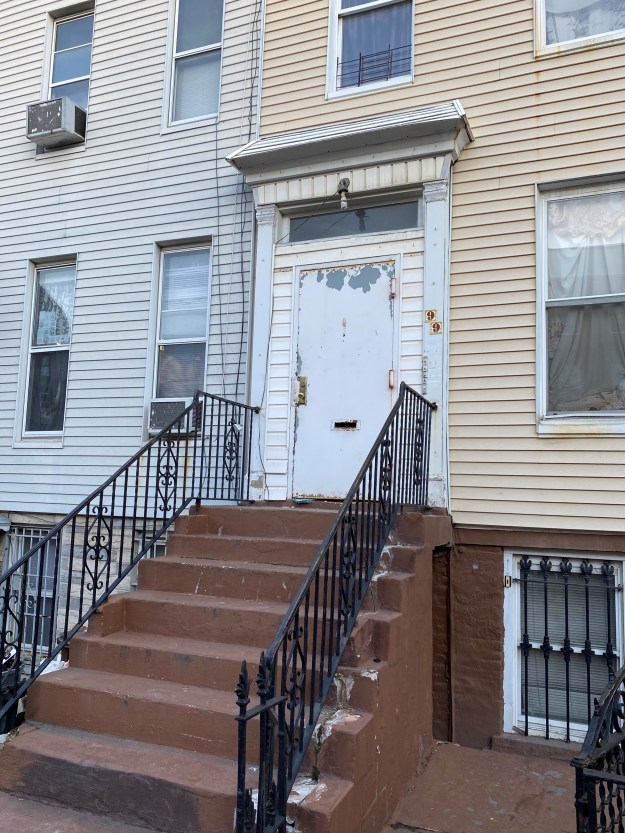
former Whitman home, 99 Ryerson Street, Brooklyn (Clinton Hill Section)
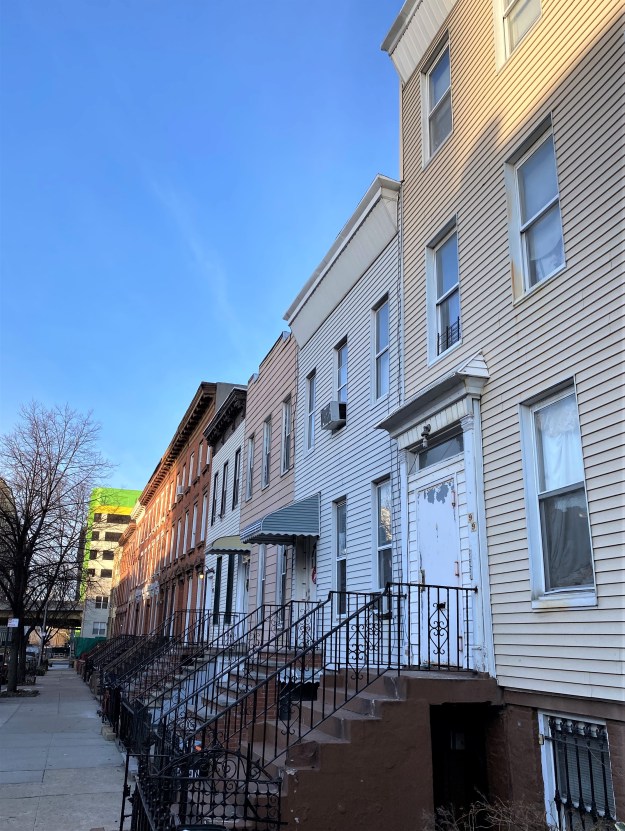
99 Ryerson Street


*****************************************************

See:

“Should Walt Whitman’s House Be Landmarked? It’s Complicated: The city does not think so, and the building’s owner agrees. Then there’s the matter of whether the poet should be honored in such a diverse neighborhood.,” By Jane Margolies,  The New York Times, December 24, 2019


‘Should Walt Whitman House Be Landmarked’ – NY Times 12-24-2019


— posted by Roger W. Smith


*****************************************************

Addendum:

In 2017, University of Iowa Press published a lost Whitman novel (its existence was unknown to scholars):  Life and Adventures of Jack Engle, which was originally published by Whitman in 1852 under a pseudonym and was serialized in a New York newspaper, the Sunday Dispatch. Zachary Turpin, who wrote an introduction to the 2017 edition, made this remarkable discovery.

If one reads the novel, which is set in Manhattan at around the time of Whitman’s boyhood — i.e., the early nineteenth century —  one can readily perceive Whitman’s familiarity with the City, which provides a setting and backdrop for the events and gives the story verisimilitude.

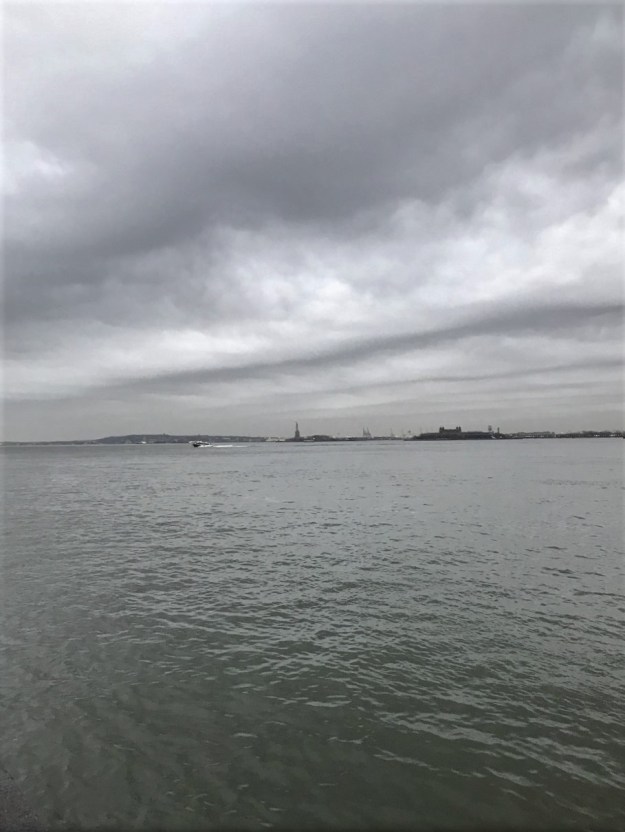
 

another Manhattan jaunt


“A City Walk-Just a list of all that is seen in a walk through the streets of Brooklyn and New York and crossing the Ferry.”

— Walt Whitman, idea for a poem (published in Walt Whitman: Notebooks and Unpublished Prose Manuscripts, Volume IV: Notes, edited by Edward F. Grier, New York University Press 1984, pg. 1292)


*****************************************************

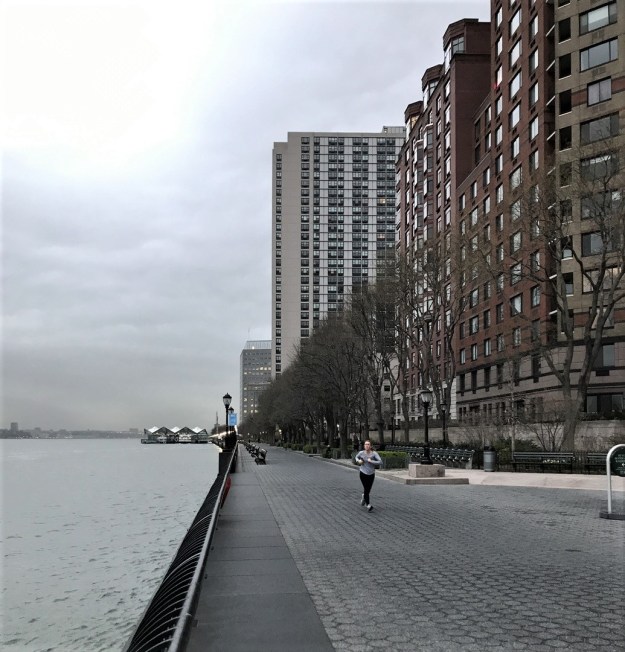
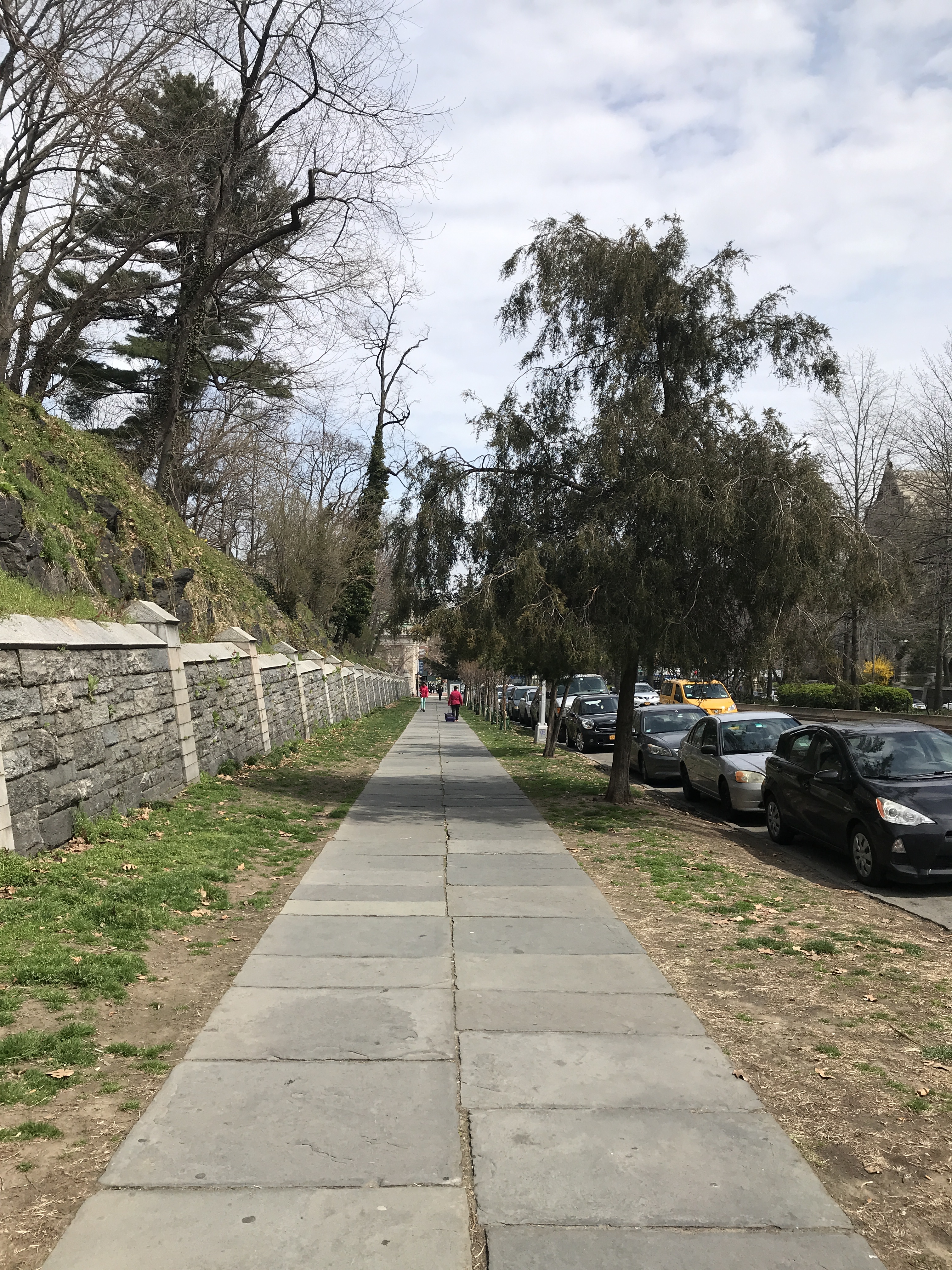
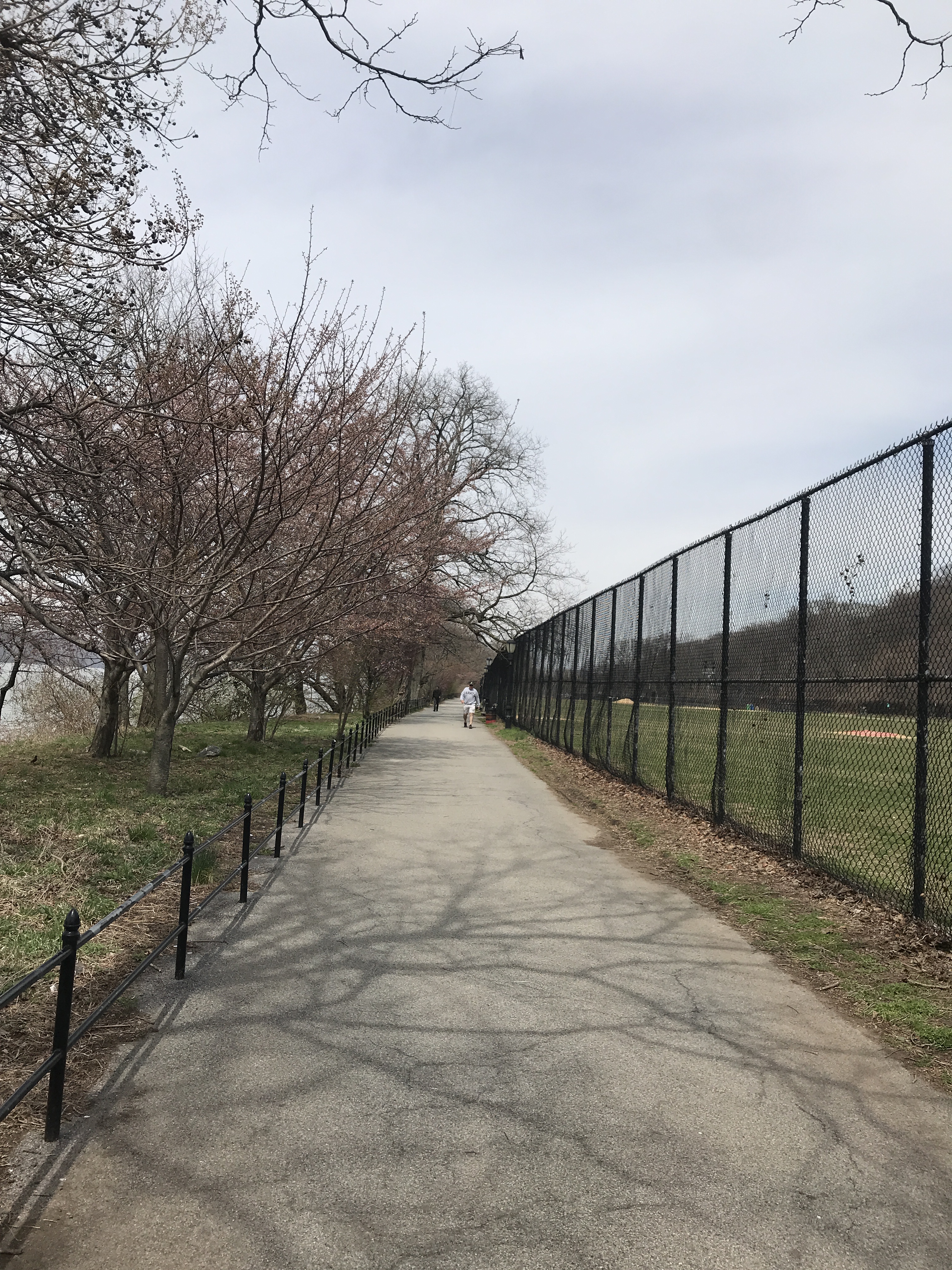
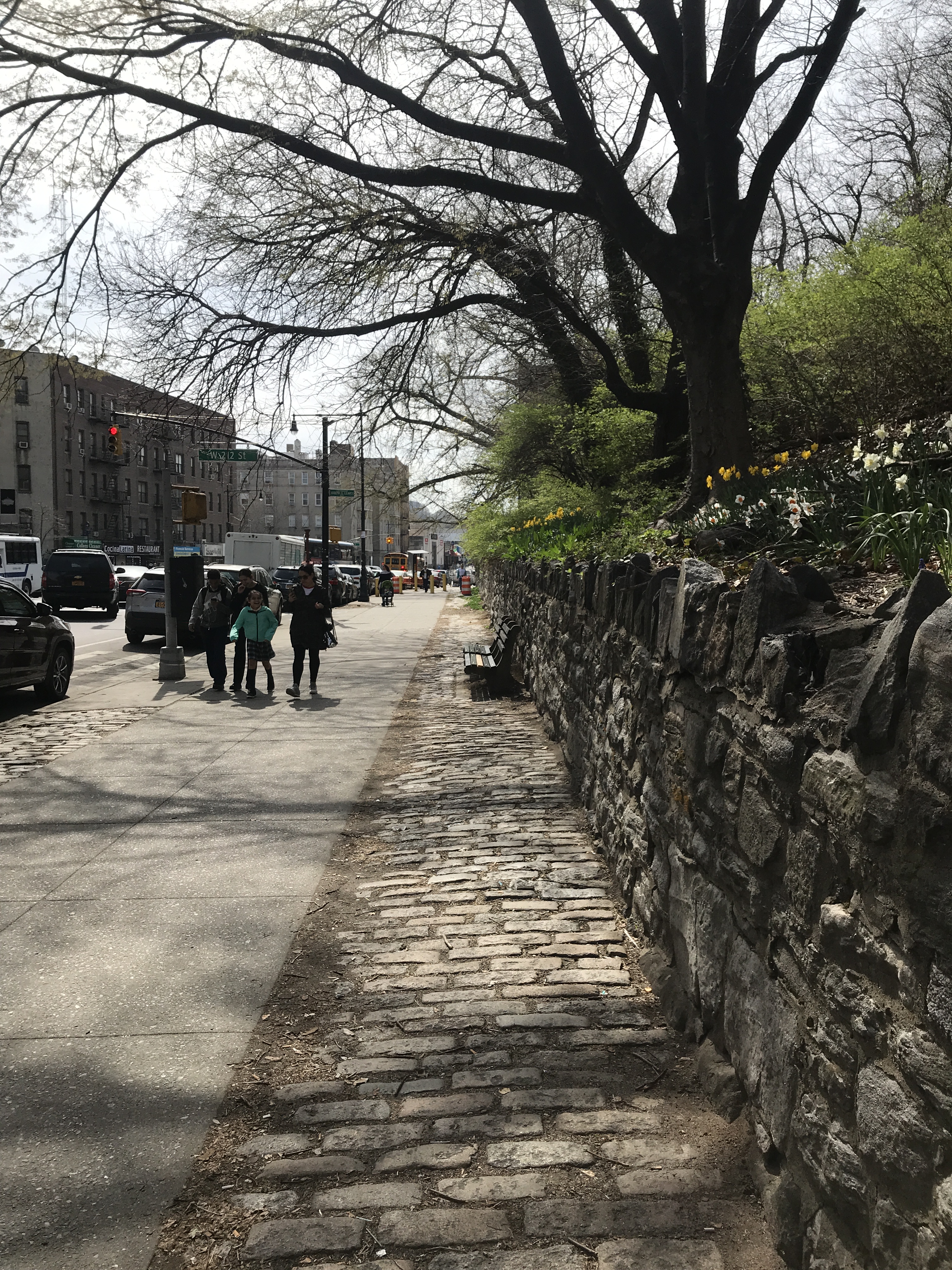
On Friday, April 12, I walked from one end of Manhattan to the another — from bottom to top — and another five miles back downtown before getting tired and giving up.

The photos below were taken by me during different stages of my walk, beginning in Battery Park in the early morning, continuing to 218 Street at midday, and ending in the Columbia University neighborhood in the early evening.

I would like to make a few points about walking that have occurred to me from time to time, and which seemed to be confirmed by this long walk of between twenty and twenty-five miles.


*****************************************************

First, contrary to what one might expect, walking, counterintuitively, seems to decrease appetite. I had eaten very lightly the day before; I woke up hungry. I walked about three miles before having a light breakfast at around 8:30 a.m., two and a half hours after I had started.

At around five-thirty, I stopped to eat a late afternoon, early evening lunch/dinner. I felt very hungry. But I quickly got filled up and couldn’t finish.

Secondly, walking seems (as I have stated before) to be a perfect form of exercise which does not unduly tax the body while contributing to wellbeing. I have not walked as much as usual lately — this was true in the winter months. Yet, on Sunday, April 7, I walked something like fifteen or sixteen miles, and on April 12, as noted above, I walked another eight miles or so further than on my previous jaunt. I experienced little tiredness at different stages of my walk, did not need to warm up or feel the need to take breaks.

Without being an expert, I would be inclined to say that we are made for walking, evolutionarily speaking. For most of human existence, until recently, people were accustomed to walk constantly, and it is undoubtable that they walked on average a lot more than we do now.

Thirdly, I have noticed that, when I start walking frequently, my “brother body” (a term used by the sociologist Pitirim A. Sorokin, apparently adopting the phrase from words of St. Francis) seems to want more and more of the same. I will wake up a day or two later feeling, I want to do that again. Today!


— Roger W. Smith

   April 2019


*****************************************************

photographs by Roger W. Smith


Battery Park 6-11 a.m. 4-12-2019

Battery Park, 6:11 a.m.

New York Harbor 6-39 a.m. 4-12-2019

New York Harbor viewed from Hudson River Park, 6:39 a.m.

Hudson River Park 8-12 a.m. 4-12-2019

Hudson River Park, 8:12 a.m.

coffee shop.jpg

coffeehouse, Ninth Avenue and 44th Street, 8:51 a.m.

Broadway and 103rd St 10-55 a.m. 4-12-2019

Broadway and 103rd Street, 10:55 a.m.

IMG_3667.JPG

Broadway near 155th Street, 11:52 a.m.

Broadway near 195 St 12-48 p.m. 4-12-2019

Broadway near 195th Street, 12:48 p.m.

IMG_3736.JPG

Inwood Hill Park, 2:08 p.m.

Inwood Hill Park 2-23 p.m. 4-12-2019.JPG

Inwood Hil Park, 2:23 p.m.

218th Street and Broadway.JPG

218 Street (the last in Manhattan) and Broadway

IMG_3815.JPG

Broadway, Inwood, 3:15 p.m.


*****************************************************

See also my posts:


on walking (and exercise)

on walking (and exercise)


Manhattan Island from Bottom to Top; Walking as Exercise

Manhattan Island from Bottom to Top; Walking as Exercise

New Yorkers


I was on a bus in Brooklyn a couple of weeks ago.

My eyes strayed to a seat across from me, and I saw that a young woman was smiling at me.

Beaming.

She had a five or six or year old boy in her lap. It was a bit different than holding a toddler in one’s lap. The boy was restless. But the mother and her son and seemed to be totally in sync.

“Is he going to school. Or he is too young for that?” I asked.

“No, he’s going to school,” she said, still smiling.

Then, I got off the bus. She waved at me and wished me a good day. It was as if we had been glad to meet.

This little encounter — unanticipated, most would say totally inconsequential — set me up for the rest of the day. It was as if somehow I had made her morning pleasurable. She certainly did that for me.

A reason I am writing about this is because this sort of thing happens to me very often in New York. I doubt such encounters would be as likely in the suburbs. (Certainly not if one were driving to work or an appointment.) Rubbing shoulders with others as a matter of course is something I love about living in NYC.

When I first moved to New York as a young man, everyone seemed to in a hurry, and the City seemed cold and impersonal.

It’s exactly the opposite. Many New Yorkers have told me that their experience has been the same.

*****************************************************

In his poem “Mannahatta,” Walt Whitman said something very similar:

Rich, hemm’d thick all around with sailships and
steamships, an island sixteen miles long, solid-founded,
Numberless crowded streets, high growths of iron, slender,
strong, light, splendidly uprising toward clear skies, …
The mechanics of the city, the masters, well-form’d,
beautiful-faced, looking you straight in the eyes,
Trottoirs throng’d, vehicles, Broadway, the women, the
shops and shows,
A million people–manners free and superb–open voices–
hospitality–the most courageous and friendly young
men,

— Roger W. Smith

   December 2018


*****************************************************

When faith finally tiptoed into my life it didn’t come through information or persuasion but, at least at first, through numinous experiences. These are the scattered moments of awe and wonder that wash over most of us unexpectedly from time to time. …

In 2013, I experienced an acceleration of those moments. This time they were not mere spooky experiences but illuminations — events that tell us about the meaning of life and change the way we see the world. One morning in April, I was in a crowded subway car underneath 33rd Street and Eighth Avenue in New York (truly one of the ugliest spots on this good green earth). I looked around the car, and I had this shimmering awareness that all the people in it had souls. Each of them had some piece of themselves that had no size, color, weight or shape but that gave them infinite value. The souls around me that day seemed not inert but yearning — some soaring, some suffering or sleeping; some were downtrodden and crying

— David Brooks, The New York Times, December 19, 2024


additional comments of my own:

I was on the Q58 bus going home a couple of months ago. My eyes usually roam to momentarily scan the passengers. There were two young Asian women seated a couple of seats behind me. I didn’t take notice of them, but they got up to leave before my stop and as they passed me one of the women, young and attractive, smiled at me. It was such a warm, genuine, wholesome smile; it came unexpectedly and infused me with a warm feeling.

— Roger W. Smith, December 2024


writers: walkers


In a previous post of mine

“on walking (and exercise)”

https://rogersgleanings.com/2017/09/26/on-walking-and-exercise/


I wrote that “walking, as is well known, is conducive to thinking and creativity, which is why so many writers and intellectuals have always been walkers.”

Por favor, read on!


*****************************************************

CHARLES DICKENS

Dickens was a man of abundant, restless energy. His chief exercise was walking, and his “daily constitutionals,” as he referred to his long walks, could extend as far as twenty to thirty miles each day. He once wrote, “My only comfort is, in Motion,” and told John Forster that “if I couldn’t walk fast and far, I should just explode and perish.” — gallery text, “Charles Dickens and the Spirit of Christmas,” exhibit at The Morgan Library & Museum, New York, November 2017


*****************************************************

HENRY DAVID THOREAU

I think that I cannot preserve my health and spirits, unless I spend four hours a day at least–and it is commonly more than that-–sauntering through the woods and over the hills and fields, absolutely free from all worldly engagements. … When sometimes I am reminded that the mechanics and shopkeepers stay in their shops not only all the forenoon, but all the afternoon too, sitting with crossed legs, so many of them–as if the legs were made to sit upon, and not to stand or walk upon–I think that they deserve some credit for not having all committed suicide long ago.

“Walking” (The Atlantic Monthly, June 1862)


*****************************************************

WALT WHITMAN

“Why are there trees I never walk under but large and melodious thoughts descend upon me?”

“Song of the Open Road” (1856)


I too walked the streets of Manhattan Island, and
bathed in the waters around it,
I too felt the curious abrupt questionings stir within
me,
In the day, among crowds of people, sometimes they
came upon me,
In my walks home late at night, or as I lay in my
bed, they came upon me.

“Crossing Brooklyn Ferry” (1860)


My joys in the open air—my walks through the Mannahatta

“To My Soul” (1860)


I continually enjoy these streets, planned on such a generous scale, stretching far, without stop or turn, giving the eye vistas. I feel freer, larger in them. Not the squeezed limits of Boston, New-York, or even Philadelphia; but royal plenty and nature’s own bounty—American, prairie-like. It is worth writing a book about, this point alone. I often find it silently, curiously making up to me the absence of the ocean tumult of humanity I always enjoyed in New-York. Here, too, is largeness, in another more impalpable form; and I never walk Washington, day or night, without feeling its satisfaction.

In my walks I never cease finding new effects and pictures, and I believe it would continue so if I went rambling around here for fifty years.

Walt Whitman, Letter from Washington, New York Times, October 4, 1863


GIVE me the splendid silent sun, with all his beams full-
dazzling; ….
Give me odorous at sunrise a garden of beautiful flowers,
where I can walk undisturb’d; …
While yet incessantly asking, still I adhere to my city;
Day upon day, and year upon year, O city, walking
your streets, …
Give me faces and streets! give me these phantoms incessant and endless along the trottoirs! …
Give me such shows! give me the streets of Manhattan!
Give me Broadway, with the soldiers marching—give
me the sound of the trumpets and drums! …
Give me the shores and the wharves heavy-fringed
with the black ships! …
People, endless, streaming, with strong voices, passions,
pageants;
Manhattan streets, with their powerful throbs, with the
beating drums, ….
Manhattan crowds with their turbulent musical chorus
—with varied chorus and light of the sparkling
eyes;
Manhattan faces and eyes forever for me.

“Give Me The Splendid Silent Sun” (1865)


NIGHT on the prairies;
The supper is over—the fire on the ground burns
low;
The wearied emigrants sleep, wrapt in their blankets;
I walk by myself—I stand and look at the stars,
which I think now I never realized before.

Leaves of Grass (1867)


My little dog is stretched out on the rug at full length, snoozing. He hardly lets me go a step without being close at my heels—follows me in my slow walks, & stops or turns just as I do.

letter from Whitman to his friend Pete Doyle, 26–27 March, 1874


SKIRTING the river road, (my languid forenoon walk, my rest,)

“The Dalliance of the Eagles” (1880)


I came down yesterday amid sousing rain & cloudy weather—but this forenoon it is sunshiny & delightful—I have just returned from a two hours ramble in the old woods—wintry & bare, & yet lots of holly & laurel—& I only wish I could send you some cedary branches thick with the china-blue little plums, so pretty amid the green tufts— … We had a flurry of snow last evening, & it looks wintry enough to-day, but the sun is out, & I take my walks in the woods.

letter from Whitman to Herbert Gilchrist, 30–31 December 1881


Thy windows rich, and huge hotels—thy side-walks wide;
Thou of the endless sliding, mincing, shuffling feet!
Thou, like the parti-colored world itself—like infinite, teeming,
mocking life!
Thou visor’d, vast, unspeakable show and lesson!

“Broadway” (1888)


Sunday, October 21, 1888.

7.20 evening. W. lying on the bed, dressed, I entered very quietly: stood there without a word. He had been dozing. Started up. “Come in! Come in!” After we had shaken hands he described his day: “… he [Whitman] asked: “And you—what have you done with the day?” I had been far in the country on a long walk. I said something about “the joy of going on and on and not getting tired.” This aroused him. “I can fully realize that joy—that untranslatable joy: I have known its meaning to the full. In the old days, long ago, I was fond of taking interminable walks—going on and on, as you say, without a stop or the thought of a stop. It was at that time, in Washington, that I got to know Peter Doyle—a Rebel, a car-driver, a soldier: have you met him here? seen him? talked with him? Ah yes! we would walk together for miles and miles, never sated. Often we would go on for some time without a word, then talk—Pete a rod ahead or I a rod ahead. Washington was then the grandest of all the cities for such strolls. In order to maintain the centrality, identity, authority, of the city, a whole chain of forts, barracks, was put about it and roads leading out to them. It was therefore owing to these facts that our walks were made easy. Oh! the long, long walks, way into the nights!—in the after hours—sometimes lasting till two or three in the morning! The air, the stars, the moon, the water—what a fullness of inspiration they imparted!—what exhilaration! And there were the detours, too—wanderings off into the country out of the beaten path: I remember one place in Maryland in particular to which we would go. How splendid, above all, was the moon—the full moon, the half moon: and then the wonder, the delight, of the silences.” He half sat up in bed as he spoke. “It was a great, a precious, a memorable, experience. To get the ensemble of Leaves of Grass you have got to include such things as these—the walks, Pete’s friendship: yes, such things: they are absolutely necessary to the completion of the story.”

Horace Traubel, With Walt Whitman in Camden, Volume 2


Tuesday, November 20, 1888.

W. had another letter for me. He picked it up from the accustomed place on the table. “It’s from Rossetti,” he said: ” I’ve been reading it over: William Rossetti: full of wise beautiful things—overflowing with genial winsome good will: you ‘ll feel its treasurable quality.” I sat there and read. He said: “Read it aloud: I can easily enjoy it again.” When I got to the passage describing the walks W. interrupted me: “Oh! that’s so fine—so fine, fine, fine: he brings back my own walks to me: the walks alone: the walks with Pete [Doyle, Whitman’s friend]: the blessed past undying days: they make me hungry, tied up as I am now and for good in a room …

Horace Traubel, With Walt Whitman in Camden, Volume 3


AH, whispering, something again, unseen,
Where late this heated day thou enterest at my window, door,
Thou, laving, tempering all, cool-freshing, gently vitalizing
Me, old, alone, sick, weak-down, melted-worn with sweat;
Thou, nestling, folding close and firm yet soft, companion better than
talk, book, art,
(Thou hast, O Nature! elements! utterance to my heart beyond the
rest—and this is of them,)
So sweet thy primitive taste to breathe within—thy soothing fingers on
my face and hands,
Thou, messenger-magical strange bringer to body and spirit of me,
(Distances balk’d—occult medicines penetrating me from head to foot.)
I feel the sky, the prairies vast—I feel the mighty northern lakes,
I feel the ocean and the forest—somehow I feel the globe itself swift-
swimming in space;
Thou blown from lips so loved, now gone—haply from endless store,
God sent,
(For thou art spiritual, Godly, most of all known to my sense,)
Minister to speak to me, here and now, what word has never told, and
cannot tell,
Art thou not universal concrete’s distillation? Law’s, all Astronomy’s
last refinement?
Hast thou no soul? Can I not know, identify thee?

“To The Sunset Breeze” (1890)


Friday, February 14, 1890

On B[uckwalter]. expressing his pleasure that W. got out of doors, W. said: “I got out yesterday—today it has not been possible. Yesterday’s jaunt—and it was quite a jaunt—was a fine one. The sky, the river, the sun—they are my curatives.”

Horace Traubel, With Walt Whitman in Camden , Volume 6


Who was not proud of his songs, but of the measureless ocean of
love within him, and freely pour’d it forth,
Who often walk’d lonesome walks thinking of his dear friends, his
lovers, …
wandering hand in hand, they twain
apart from other men,
Who oft as he saunter’d the streets curv’d with his arm the shoulder of his friend, while the arm of his friend rested upon
him also.

“Recorders Ages Hence” (1891)


— Roger W. Smith

   originally posted November 2017; updated December 2017


*****************************************************

addendum:

Note that Charles Dickens is said to frequently have taken long walks that could extend to twenty to thirty miles a day, and that Henry David Thoreau wrote: “I cannot preserve my health and spirits, unless I spend four hours a day at least — and it is commonly more than that” walking. I wonder if Dickens really did thirty miles that often.

My record for a single day was two separate walks (one in the morning and one in the afternoon) of a combined total length of twenty-four miles. I try to take one very long walk once a week. This walk is usually about twelve miles, though sometimes I do around fifteen or sixteen miles.

However, it is noted in The Man Who Invented Christmas: How Charles Dickens’s A Christmas Carol Rescued His Career and Revived Our Holiday Spirits by Les Standiford that Dickens went to work in a blacking factory at age twelve to support his family, which was in financial straits and that, after working all day, he would walk home every night, a distance of five miles.


— posted by Roger W. Smith

   December 2017

“I hear and behold God in every object”


I hear and behold God in every object, yet I understand God not in the least,

Nor do I understand who can ever be more wonderful than myself.

— Walt Whitman, Leaves of Grass


*****************************************************

I am not sure how the last part of the assertions made by Whitman might apply to me. But, I felt the truth of what he says about God’s presence everywhere during a day long ramble yesterday on Staten Island.


— Roger W. Smith

   November 26, 2017


***************************************************

SI 1

IMG_1514.jpg

SI 2

SI 3.JPG

photographs by Roger W. Smith

Walt Whitman, “Jaunt up the Hudson”


“Jaunt up the Hudson”

June 20th.—ON the “Mary Powell,” enjoy’d everything beyond precedent. The delicious tender summer day, just warm enough—the constantly changing but ever beautiful panorama on both sides of the river—(went up near a hundred miles)—the high straight walls of the stony Palisades—beautiful Yonkers, and beautiful Irvington—the never-ending hills, mostly in rounded lines, swathed with verdure,—the distant turns, like great shoulders in blue veils—the frequent gray and brown of the tall-rising rocks—the river itself, now narrowing, now expanding—the white sails of the many sloops, yachts, &c., some near, some in the distance—the rapid succession of handsome villages and cities, (our boat is a swift traveler, and makes few stops)—the Race—picturesque West Point, and indeed all along—the costly and often turreted mansions forever showing in some cheery light color, through the woods—make up the scene.

— Walt Whitman, Specimen Days


*****************************************************

This is vintage, typical Whitman. A man who loved every minute of his life — savored it. Reminds one of this as it applies to our own lives. Knew how to express this beautifully. Felt and appreciated things keenly as few do.

jaunt (noun) — a short excursion or journey for pleasure


— Roger W. Smith

   August 2017

Walt Whitman’s watering hole


whitman-in-pfaffs


Pfaff’s beer cellar, a bohemian watering hole and a center of literary life in Manhattan in the mid-nineteenth century, was located at 647 Broadway in what is now called Lower Manhattan.  (At the time, most of Manhattan was below 14th Street.)

The building in which Pfaff’s was located still stands. It is now occupied by a deli (see photograph below) and is on Broadway between Bleecker and Bond Streets.  Access to the cramped cellar where Pfaff’s was located is still possible.

— Roger W. Smith

   February 2017; updated June 2019


*************************************************

–The vault at Pfaffs where the drinkers and laughers meet to eat and drink and carouse
While on the walk immediately overhead pass the myriad feet of Broadway
As the dead in their graves are underfoot hidden
And the living pass over them, recking not of them,
Laugh on laughers!
Drink on drinkers!
Bandy the jest!
Toss the theme from one to another!
Beam up–Brighten up, bright eyes of beautiful young men!
Eat what you, having ordered, are pleased to see placed before you–after the work of the day, now, with appetite eat,
Drink wine–drink beer–raise your voice,
Behold! your friend, as he arrives–Welcome him, where, from the upper step, he looks down upon you with a cheerful look
Overhead rolls Broadway–the myriad rushing Broadway
The lamps are lit–the shops blaze–the fabrics vividly are seen through the plate glass windows
The strong lights from above pour down upon them and are shed outside,
The thick crowds, well-dressed–the continual crowds as if they would never end
The curious appearance of the faces–the glimpse just caught of the eyes and expressions, as they flit along,
(You phantoms! oft I pause, yearning, to arrest some one of you!
Oft I doubt your reality–whether you are real–I suspect all is but a pageant.)
The lights beam in the first vault–but the other is entirely dark
In the first

— “The Two Vaults,” unpublished poem by Walt Whitman

*************************************************

A GLIMPSE through an interstice caught,
Of a crowd of workmen and drivers in a bar-room around the
stove late of a winter night, and I unremark’d seated in a
corner,
Of a youth who loves me and whom I love, silently approaching
and seating himself near, that he may hold me by the hand,
A long while amid the noises of coming and going, of drinking
and oath and smutty jest,
There we two, content, happy in being together, speaking little,
perhaps not a word.

— Walt Whitman, “A Glimpse”

*****************************************************

I am glad to see you are engaged in such good work at Washington. It must be even more refreshing than to sit by Pfaff’s privy and eat sweet-breads and drink coffee, and listen to the intolerable wit of the crack-brains. I happened in there the other night, and the place smelt as atrociously as ever. Pfaff looked as of yore

— John Swinton to Walt Whitman, February 25, 1863

*****************************************************

“After the publication of “Leaves of Grass” Mr. Whitman became acquainted with most all of the younger generation of literary men across the river in New York, and especially with those who eventually enrolled themselves under the good fellowship of old Henry Clapp, who had been living a free and easy life in Paris and longed to establish a Bohemia in New York like Henry Murger’s “Vie de Boheme” in Paris. The headquarters — still well remembered — was at Pfaff’s restaurant in Broadway, near Bond st.

“I used to go to Pfaff’s nearly every night,” Mr. Whitman went on. “It used to be a pleasant place to go in the evening after taking a bath and finishing the work of the day. When it began to grow dark Pfaff would politely invite everybody who happened to be sitting in the cave he had under the sidewalk to some other part of the restaurant. There was a long table extending the length of this cave; and as soon as the Bohemians put in an appearance Henry Clapp would take a seat at the head of this table. I think there was as good talk around that table as took place anywhere in the world. Clapp was a very witty man. Fitz James O’Brien was very bright. Ned Wilkins, who used to be the dramatic critic of the Herald, was another bright man. There were between twenty-five and thirty journalists, authors, artists and actors who made up the company that took possession of the cave under the sidewalk. Pfaff himself I took a dislike to the first time I ever saw him. But my subsequent acquaintance with him taught me not to be too hasty in making up my mind about people on first sight. He turned out to be a very agreeable, kindly man in many ways. He was always kind to beggars and gave them food freely. Then he was easily moved to sympathise with any one who was in trouble and was generous with his money. I believe he was at that time the best judge of wine of anybody in this country.”

— interview with Walt Whitman by F.B.S., Brooklyn Eagle, July 11, 1886

*****************************************************

hans-deli-grocery-july-2016 (3)

The former Pfaff’s was located in this deli on Broadway near Bleecker Street. Photo by Roger W. Smith.

Han’s Deli Grocery, 645 Broadway,  New York, NY, through within which one can can gain access to the former beer cellar (photograph by Roger W. Smith).


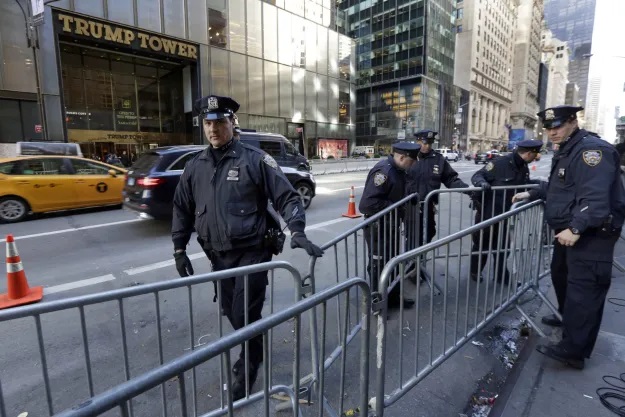
“Trump Takes Manhattan”


re:

“How Fifth Avenue Is Coping,” by Matthew Schneier, The New York Times, November 23, 2016

How Fifth Avenue Is Coping


*******************************************************

The above referenced New York Times article is about the massive traffic headaches that have already been created – and which are looming – mainly on Fifth Avenue and on streets and other avenues in Manhattan in the vicinity of Trump Tower. Trump Tower, the main residence, for the time being, of President-elect Donald Trump, is located on the east side of Fifth Avenue between 56th and 57th Streets.

A couple of points that I would like to make before discussing the contents of this particular article, which thoroughly describes the problem.

— New York City, it goes without saying, has always attracted people with star power: celebrities and magnates. Yet I have always thought and felt that it’s the sort of place which nobody can dominate. It is such a huge and such a great city that it cuts everyone down to size. I know that when I first moved to New York, as a young adult, I was awed by it. It seems to have that effect on everyone. It’s a welcoming place in many respects in that the atmosphere is so tolerant, of different races, lifestyles, ethnicities, persons high and low, and so forth. It’s welcoming, it’s also overwhelming. It seems to have that effect on everyone. It attracts; it excites; and, it intimidates. It has a way of cutting people with big egos down to size.

— New York is one of the world’s greatest cities for walking. Fifth Avenue is among the best places to walk. Stretches of Fifth Avenue include some of the most expensive residences in the world and luxury stores. Yet, the avenue is accessible to all. The sidewalks are wide, the pedestrian traffic is not limited by any means to one social class, and it’s a just plain fun avenue to stroll on. It is aesthetically pleasing, rarely gets overcrowded (to the point where passage is difficult; an exception might be right in front of Rockefeller Center, where there is a giant tree on display during Christmastime; crowds are found there at this particular time of the year at certain times on certain days). The glamor, elegance, and upbeat quality of the avenue and its denizens from around the 30’s to around 100th Street seem to rub off on everyone; the pedestrians always seem to be cheerful and unstressed. You rarely seem to see something depressing.

It looks like this is changing. It makes me very unhappy. Actually, angry.


*******************************************************

What the Times article says:

— The “festive spirit” normally observed on Fifth Avenue during the holiday shopping season has been “dampened a bit by the long guns of stationed police officers and the regular presence of bomb-sniffing dogs.”

— Famous stores on the avenue have been blocked by police barricades.

— Anti-Trump protests have shut down traffic. (Perhaps the protests are abating now.)

— Gawkers loitering on the sidewalk outside Trump Tower have presented a problem, both for pedestrians and security.

— Pedestrian access to the east side of Fifth Avenue between 56th and 57th Streets, where Trump Tower is located, has been restricted.

— When Trump moves to the White House, the situation is not likely to ease. It is expected that he will still be spending considerable time at his Trump Tower residence. And, Trump’s wife, Melania Trump, and the couple’s son, Barron, are to stay in New York in the near term.


*******************************************************

Last week, I had an appointment at the Apple Store at Fifth Avenue and 59th Street to have my iPhone battery checked. It was raining hard. I was doing a shopping errand for my wife at a department store at Fifth Avenue and 39th Street.

I love to walk in Manhattan, and having to go from one place to another gives me a reason and incentive to walk. So, I headed north on Fifth Avenue, my preferred route and the most direct one. An alternate route would not make sense, and I much prefer Fifth Avenue to Madison or Park.

But, I had to make a detour at Fifth Avenue and 56th Street. There were barriers on both sides of the avenue (east and west) which served the purpose of a sort of funnel. Pedestrians were lined up on either side of the avenue, awaiting an ID check that would enable them to pass. A depressing sight. I have never seen this before in New York.

I was thinking what are they lining up for? It’s not worth it. Probably they wanted to be able to walk past Trump Tower and get a glimpse of it. Big thrill!


*******************************************************

I was reminded of an experience I had somewhere between fifteen and twenty years ago. I was walking during midday in Bryant Park, which is right behind the New York Public Library. The park runs between Fifth and Sixth Avenues and between 40th and 42nd Streets.

I was on a gravel pathway right behind the library which abuts the park. There were few people around, and my path crossed that of ex-mayor Ed Koch, who was strolling the other way on the same pathway. Neither of us was in a hurry.

We made eye contact.

I did not speak to Mr. Koch. I probably should have said, “Good day, Mr. Mayor.” But I kept going without speaking.

I had the distinct feeling that he knew that I knew who he was – in short, recognized him.

He peered at me. I had the feeling, intuition that he was thinking to himself, looks like an interesting face, an intelligent person (me).

We exchanged congenial glances.

I was reminded about something I read about Walt Whitman when Whitman was working and living in Washington, DC during the Civil War. Whitman often spotted President Lincoln riding by on horseback for business or pleasure. “I see the President almost every day. We have got so that we exchange bows, and very cordial ones,” Whitman wrote in 1863.

Mayor Koch, when I encountered him on my stroll, similar to the experience Whitman had when he saw President Lincoln riding by, seemed to be an ordinary citizen, no different than any other New Yorker. That’s the way it should be. Donald Trump is not larger than life. He should not be allowed to shut down Manhattan.

— Roger W. Smith

   December 2016


*******************************************************

Addendum:

See also

“With Trump Using Tower as Base, Fifth Avenue Grinds to a Halt,” The New York Times, November 16, 2016

“Donald Trump Loves New York. But It Doesn’t Love Him Back,” The New York Times, December 9, 2016

“Businesses Near Trump Tower Say Security Is Stealing Their Christmas,” The New York Times, December 23, 2016

“One-Man Traffic Jam Will Hit City When Trump Visits,” The New York Times, January 27, 2017

Manhattan in spring


MANHATTAN’S streets I saunter’d pondering

— Walt Whitman


photographs taken by Roger W. Smith

April 2016


Walt Whitman on walking


“Why are there trees I never walk under but large and melodious thoughts descend upon me?”

“Song of the Open Road” (1856)

I too walked the streets of Manhattan Island, and
bathed in the waters around it,
I too felt the curious abrupt questionings stir within
me,
In the day, among crowds of people, sometimes they
came upon me,
In my walks home late at night, or as I lay in my
bed, they came upon me.

“Crossing Brooklyn Ferry” (1860)


My joys in the open air—my walks through the Mannahatta

“To My Soul” (1860)


I continually enjoy these streets, planned on such a generous scale, stretching far, without stop or turn, giving the eye vistas. I feel freer, larger in them. Not the squeezed limits of Boston, New-York, or even Philadelphia; but royal plenty and nature’s own bounty—American, prairie-like. It is worth writing a book about, this point alone. I often find it silently, curiously making up to me the absence of the ocean tumult of humanity I always enjoyed in New-York. Here, too, is largeness, in another more impalpable form; and I never walk Washington, day or night, without feeling its satisfaction.

In my walks I never cease finding new effects and pictures, and I believe it would continue so if I went rambling around here for fifty years.

Walt Whitman, Letter from Washington, New-York Times 4 October 1863


Lo, the most excellent sun so calm and haughty,
The violet and purple morn with just-felt breezes,
The gentle soft-born measureless light,
The miracle spreading bathing all, the fulfill’d noon,
The coming eve delicious, the welcome night and the stars,
Over my cities shining all, enveloping man and land.

“When Lilacs Last in the Dooryard Bloom’d” (1865)


GIVE me the splendid silent sun, with all his beams full-
dazzling; ….
Give me odorous at sunrise a garden of beautiful flowers,
where I can walk undisturb’d; …
While yet incessantly asking, still I adhere to my city;
Day upon day, and year upon year, O city, walking
your streets, …
Give me faces and streets! give me these phantoms incessant and endless along the trottoirs! …
Give me such shows! give me the streets of Manhattan!
Give me Broadway, with the soldiers marching—give
me the sound of the trumpets and drums! …
Give me the shores and the wharves heavy-fringed
with the black ships! …
People, endless, streaming, with strong voices, passions,
pageants;
Manhattan streets, with their powerful throbs, with the
beating drums, ….
Manhattan crowds with their turbulent musical chorus
—with varied chorus and light of the sparkling
eyes;
Manhattan faces and eyes forever for me.

“Give Me The Splendid Silent Sun” (1865)


NIGHT on the prairies;
The supper is over—the fire on the ground burns
low;
The wearied emigrants sleep, wrapt in their blankets;
I walk by myself—I stand and look at the stars,
which I think now I never realized before.

Leaves of Grass (1867)


My little dog is stretched out on the rug at full length, snoozing. He hardly lets me go a step without being close at my heels—follows me in my slow walks, & stops or turns just as I do.

letter from Whitman to his friend Pete Doyle, 26–27 March, 1874

SKIRTING the river road, (my languid forenoon walk, my rest,)

“The Dalliance of the Eagles” (1880)


I came down yesterday amid sousing rain & cloudy weather—but this forenoon it is sunshiny & delightful—I have just returned from a two hours ramble in the old woods—wintry & bare, & yet lots of holly & laurel—& I only wish I could send you some cedary branches thick with the china-blue little plums, so pretty amid the green tufts— … We had a flurry of snow last evening, & it looks wintry enough to-day, but the sun is out, & I take my walks in the woods.

letter from Whitman to Herbert Gilchrist, 30–31 December 1881


Thy windows rich, and huge hotels—thy side-walks wide;
Thou of the endless sliding, mincing, shuffling feet!
Thou, like the parti-colored world itself—like infinite, teeming,
mocking life!
Thou visor’d, vast, unspeakable show and lesson!

“Broadway” (1888)


Sunday, October 21, 1888.

7.20 evening. W. lying on the bed, dressed, I entered very quietly: stood there without a word. He had been dozing. Started up. “Come in! Come in!” After we had shaken hands he described his day: “… he [Whitman] asked: “And you—what have you done with the day?” I had been far in the country on a long walk. I said something about “the joy of going on and on and not getting tired.” This aroused him. “I can fully realize that joy—that untranslatable joy: I have known its meaning to the full. In the old days, long ago, I was fond of taking interminable walks—going on and on, as you say, without a stop or the thought of a stop. It was at that time, in Washington, that I got to know Peter Doyle—a Rebel, a car-driver, a soldier: have you met him here? seen him? talked with him? Ah yes! we would walk together for miles and miles, never sated. Often we would go on for some time without a word, then talk—Pete a rod ahead or I a rod ahead. Washington was then the grandest of all the cities for such strolls. In order to maintain the centrality, identity, authority, of the city, a whole chain of forts, barracks, was put about it and roads leading out to them. It was therefore owing to these facts that our walks were made easy. Oh! the long, long walks, way into the nights!—in the after hours—sometimes lasting till two or three in the morning! The air, the stars, the moon, the water—what a fullness of inspiration they imparted!—what exhilaration! And there were the detours, too—wanderings off into the country out of the beaten path: I remember one place in Maryland in particular to which we would go. How splendid, above all, was the moon—the full moon, the half moon: and then the wonder, the delight, of the silences.” He half sat up in bed as he spoke. “It was a great, a precious, a memorable, experience. To get the ensemble of Leaves of Grass you have got to include such things as these—the walks, Pete’s friendship: yes, such things: they are absolutely necessary to the completion of the story.”

Horace Traubel, With Walt Whitman in Camden, Volume 2


Tuesday, November 20, 1888.

W. had another letter for me. He picked it up from the accustomed place on the table. “It’s from Rossetti,” he said: ” I’ve been reading it over: William Rossetti: full of wise beautiful things—overflowing with genial winsome good will: you ‘ll feel its treasurable quality.” I sat there and read. He said: “Read it aloud: I can easily enjoy it again.” When I got to the passage describing the walks W. interrupted me: “Oh! that’s so fine—so fine, fine, fine: he brings back my own walks to me: the walks alone: the walks with Pete [Doyle, Whitman’s friend]: the blessed past undying days: they make me hungry, tied up as I am now and for good in a room …

Horace Traubel, With Walt Whitman in Camden, Volume 3


AH, whispering, something again, unseen,
Where late this heated day thou enterest at my window, door,
Thou, laving, tempering all, cool-freshing, gently vitalizing
Me, old, alone, sick, weak-down, melted-worn with sweat;
Thou, nestling, folding close and firm yet soft, companion better than
talk, book, art,
(Thou hast, O Nature! elements! utterance to my heart beyond the
rest—and this is of them,)
So sweet thy primitive taste to breathe within—thy soothing fingers on
my face and hands,
Thou, messenger-magical strange bringer to body and spirit of me,
(Distances balk’d—occult medicines penetrating me from head to foot.)
I feel the sky, the prairies vast—I feel the mighty northern lakes,
I feel the ocean and the forest—somehow I feel the globe itself swift-
swimming in space;
Thou blown from lips so loved, now gone—haply from endless store,
God sent,
(For thou art spiritual, Godly, most of all known to my sense,)
Minister to speak to me, here and now, what word has never told, and
cannot tell,
Art thou not universal concrete’s distillation? Law’s, all Astronomy’s
last refinement?
Hast thou no soul? Can I not know, identify thee?

“To The Sunset Breeze” (1890)


Friday, February 14, 1890

On B[uckwalter]. expressing his pleasure that W. got out of doors, W. said: “I got out yesterday—today it has not been possible. Yesterday’s jaunt—and it was quite a jaunt—was a fine one. The sky, the river, the sun—they are my curatives.”

Horace Traubel, With Walt Whitman in Camden, Volume 6


Who was not proud of his songs, but of the measureless ocean of
love within him, and freely pour’d it forth,
Who often walk’d lonesome walks thinking of his dear friends, his
lovers, …
wandering hand in hand, they twain
apart from other men,
Who oft as he saunter’d the streets curv’d with his arm the shoulder of his friend, while the arm of his friend rested upon
him also.

“Recorders Ages Hence” (1891)


— posted by Roger W. Smith

  March 2016