Category Archives: my city and neighborhood

good neighbors (in a metropolis)


Thou shalt love thy neighbour as thyself.

— Matthew 22:31


*****************************************************

I have lived in New York City since early adulthood.

New Yorkers cold and impersonal? Too busy to be Good Samaritans?

I have often experienced instances of just the opposite.


*****************************************************

On Wednesday afternoon, January 3, a bitterly cold day, I was headed home and was waiting for a bus.

No one at the bus stop. I guessed that I probably had just missed a bus and that another one wouldn’t arrive for at least ten to fifteen minutes.

It’s a bleak neighborhood, but there was a “gourmet deli” right there.

I entered and ordered a large cappuccino. There was one customer in front of me. Two young women were behind the counter. I paid $3.95 for the cappuccino.

Through a window, I saw my bus, the Q39, pulling up at the bus stop.

“How long does it take to make a cappuccino?” I said to the woman who had taken my order. “My bus is here.”

I left without a cappuccino or the $3.95. The bus was at the curb, about to leave.

I got on. There were only a couple of other passengers. The driver shut the door.

Then he opened the door again for a “last minute passenger.” A young woman boarded (whom I realized after the fact was the cashier) with cash in hand, arms extended. She dashed to my seat and said, breathlessly, “here’s your $3.95”; handed me the money with a big smile. Then she darted off the bus before it left.

New Yorkers are NICE.


*****************************************************

When I first moved to New York (to take a job) after graduating from college, I was overwhelmed by the immensity and seeming impersonality of the place. The anonymity was refreshing and liberating, in its own way. But, the City seemed like an awfully cold place. (And, besides its sheer size, all those high rise buildings intimidated me.)

I went to Eighth Street in Greenwich Village once, when interviewing for the job, and asked a couple of young people if there were any like minded types hanging out there, as I had experienced on Boston Common. “If you walk over to St. Mark’s Place, you will find some,” they said kindly.

On Sundays, I would hang out in Central Park, where Sixties types would congregate, perhaps listening to a guitar player singing folk songs, hoping that I would vicariously feel a sense of belonging or companionship.

One day in a subway station, I asked someone a question of some sort. They answered politely and helpfully. I told a friend of mine from college, Sam Silberstein (son of concentration camp survivors), who had grown up in Flushing, Queens, about this. “Someone was actually nice to me in the subway,” I said.

“New Yorkers are people, too,” Sam replied.


*****************************************************

Yes, New Yorkers are nice. I wonder if it’s the same way in Paris. I don’t think so. Parisians seem to be cold and abrupt. But, I can’t really say, having been to Paris only briefly a few times.

“Even with that sprawl of humanity, New York can be lived as a small town, familiar and compact,” in the words of New York Times reporter Jim Dwyer.

What accounts for this? I am thinking particularly of the way New Yorkers treat one another.

I think there are several factors. People like myself live in a metropolis like New York because they like being amidst other people. They don’t want to live in an ivory tower or, God forbid, a gated community.

The diversity of New York’s population acts as an elixir, a tonic. Immigrants in particular bring vitality and a palpable sense of community to the City. One might think it could be otherwise, that perhaps immigrants would cloister themselves in ethnic enclaves. Perhaps to an extent in the outlying boroughs, but, for the most part, I have found that it’s the opposite: The newcomers, and the recently arrived, or those who have not always lived in New York (which includes a large segment of the population) are full of enthusiasm for everything (and an inherent ingenuousness), including getting to know other people. And the tourists have the same attitude.


*****************************************************

When I go into retail establishments, restaurants, and the like, the staff seems to be for the most part friendly, eager to relate with you, the customer. (Perhaps a bit less so in chain stores.) I seem to get a welcoming reception and a friendly hello or goodbye over half the time.

If you are in distress, incommoded, or someone perceives they can help you, it’s quite remarkable how often people are ready and eager to do so. When I tripped and fell flat on my face crossing Third Avenue a couple of months ago and within seconds several people were clustered around me, helping me to get up, asking if I was okay, and (one woman) offering to call for medical assistance.

When I was taking photographs on Fifth Avenue near 59th Street last summer and someone with a foreign accident, a man who seemed to be Hispanic with several children, noticed that I had dropped my wallet on the pavement and alerted me to the fact. (I was already walking away and was halfway down the block). Same thing if one drops something or gets up and leaves one’s hat or gloves or one’s MetroCard on their seat on a bus. People including myself swiping their MetroCard for someone who needs a fare, and frequently giving handouts.

And so on. I could cite numerous examples.


*****************************************************

Re niceness. Of people in general, that is. And Good Samaritan-ship (aka altruism). I prefer to encounter it “in the raw,” so to speak, spontaneously, from average people whom one encounters ad libitum. To witness it bubbling up from the ebullience of good hearted types. Prefer this to organized charity and welfare, to do goodership of the institutional form.


– Roger W. Smith

   January 5, 2018

we are blessed (and so am I): racial diversity in New York


This past fall, I saw the film Ex Libris, directed by the documentary filmmaker Frederick Wiseman. It is a documentary film about the New York Public Library, both the library system itself and the vital role it plays in the life of the City.

The film includes scenes of library patrons participating in discussion groups. In one scene, a discussion group at the library’s main branch on Fifth Avenue is engaged in a lively exchange of views about Gabriel García Márquez’s novel Love in the Time of Cholera with respect to romantic love. There were several scenes of library patrons participating in similar meetings and discussion groups at branch libraries in Manhattan and in other boroughs such as the Bronx. Some were about books, some involved a presentation cum discussion on topics of current interest. Others concerned how to make the library more accessible or serve community needs better.

Something that struck me was that the racial/ethnic composition or makeup of the various local groups seen in the film was so diverse. Well, one might say, would you not expect this in a city such as New York? Everyone knows it is racially heterogeneous and always has been.

Yes, but.

I observed the same thing at a business presentation not long ago: a presentation by persons associated with an entrepreneurial company for attendees who had recently become involved as independent partners and persons interested in getting involved. It was a relatively small group and there was a lot of interaction among the attendees.

What I have observed is that in New York, people do not seem to notice or take account of racial differences. They just plain don’t matter.

At both the library sessions seen in the film and at the business meeting I attended, the ethnicity was varied: whites, blacks, Hispanics, Asians, and other groups. And, it was not as if there was just a smattering of or token representation by one racial or ethnic group or another. All were amply represented. There had obviously been no conscious effort to achieve “diversity” in the makeup of the audience/participants. It had just resulted, naturally, that the groups were notably diverse. In both instances, one did not get the sense of any one group predominating in any sense, numerically or otherwise.

The discussions were spirited. Persons were engaged. At no time — I observed this both in the film I saw and as a participant/observer at the business meeting — does one ever get the sense of consciousness by anyone — meaning speakers or audience; the give and take of participants who had something to say or just looked on with interest; group discussions — of race, their race or anyone else’s, being a factor that was taken or that one was expected to take into account, or that actually was noticed (which is to say, by an impartial observer), from what I could observe. Race was not a factor in any shape or form. It was clearly not something that might affect the content of the discussion and how someone or their contributions were viewed. People were just plain friendly and respectful, period. No one looked to be guarded or on the defensive. Everyone seemed fully accepted and welcomed. A priori. As a matter of course. No one is unwelcome nor patronized or talked down to.

In New York City, race really doesn’t seem to matter — as a public thing, that is: in social interactions and events, business, or commerce. In other words, in daily life, which goes on as it should. This is a welcome and edifying thing. It energizes and gladdens me.


— Roger W. Smith

  December 2017

writers: walkers


In a previous post of mine

“on walking (and exercise)”

https://rogersgleanings.com/2017/09/26/on-walking-and-exercise/


I wrote that “walking, as is well known, is conducive to thinking and creativity, which is why so many writers and intellectuals have always been walkers.”

Por favor, read on!


*****************************************************

CHARLES DICKENS

Dickens was a man of abundant, restless energy. His chief exercise was walking, and his “daily constitutionals,” as he referred to his long walks, could extend as far as twenty to thirty miles each day. He once wrote, “My only comfort is, in Motion,” and told John Forster that “if I couldn’t walk fast and far, I should just explode and perish.” — gallery text, “Charles Dickens and the Spirit of Christmas,” exhibit at The Morgan Library & Museum, New York, November 2017


*****************************************************

HENRY DAVID THOREAU

I think that I cannot preserve my health and spirits, unless I spend four hours a day at least–and it is commonly more than that-–sauntering through the woods and over the hills and fields, absolutely free from all worldly engagements. … When sometimes I am reminded that the mechanics and shopkeepers stay in their shops not only all the forenoon, but all the afternoon too, sitting with crossed legs, so many of them–as if the legs were made to sit upon, and not to stand or walk upon–I think that they deserve some credit for not having all committed suicide long ago.

“Walking” (The Atlantic Monthly, June 1862)


*****************************************************

WALT WHITMAN

“Why are there trees I never walk under but large and melodious thoughts descend upon me?”

“Song of the Open Road” (1856)


I too walked the streets of Manhattan Island, and
bathed in the waters around it,
I too felt the curious abrupt questionings stir within
me,
In the day, among crowds of people, sometimes they
came upon me,
In my walks home late at night, or as I lay in my
bed, they came upon me.

“Crossing Brooklyn Ferry” (1860)


My joys in the open air—my walks through the Mannahatta

“To My Soul” (1860)


I continually enjoy these streets, planned on such a generous scale, stretching far, without stop or turn, giving the eye vistas. I feel freer, larger in them. Not the squeezed limits of Boston, New-York, or even Philadelphia; but royal plenty and nature’s own bounty—American, prairie-like. It is worth writing a book about, this point alone. I often find it silently, curiously making up to me the absence of the ocean tumult of humanity I always enjoyed in New-York. Here, too, is largeness, in another more impalpable form; and I never walk Washington, day or night, without feeling its satisfaction.

In my walks I never cease finding new effects and pictures, and I believe it would continue so if I went rambling around here for fifty years.

Walt Whitman, Letter from Washington, New York Times, October 4, 1863


GIVE me the splendid silent sun, with all his beams full-
dazzling; ….
Give me odorous at sunrise a garden of beautiful flowers,
where I can walk undisturb’d; …
While yet incessantly asking, still I adhere to my city;
Day upon day, and year upon year, O city, walking
your streets, …
Give me faces and streets! give me these phantoms incessant and endless along the trottoirs! …
Give me such shows! give me the streets of Manhattan!
Give me Broadway, with the soldiers marching—give
me the sound of the trumpets and drums! …
Give me the shores and the wharves heavy-fringed
with the black ships! …
People, endless, streaming, with strong voices, passions,
pageants;
Manhattan streets, with their powerful throbs, with the
beating drums, ….
Manhattan crowds with their turbulent musical chorus
—with varied chorus and light of the sparkling
eyes;
Manhattan faces and eyes forever for me.

“Give Me The Splendid Silent Sun” (1865)


NIGHT on the prairies;
The supper is over—the fire on the ground burns
low;
The wearied emigrants sleep, wrapt in their blankets;
I walk by myself—I stand and look at the stars,
which I think now I never realized before.

Leaves of Grass (1867)


My little dog is stretched out on the rug at full length, snoozing. He hardly lets me go a step without being close at my heels—follows me in my slow walks, & stops or turns just as I do.

letter from Whitman to his friend Pete Doyle, 26–27 March, 1874


SKIRTING the river road, (my languid forenoon walk, my rest,)

“The Dalliance of the Eagles” (1880)


I came down yesterday amid sousing rain & cloudy weather—but this forenoon it is sunshiny & delightful—I have just returned from a two hours ramble in the old woods—wintry & bare, & yet lots of holly & laurel—& I only wish I could send you some cedary branches thick with the china-blue little plums, so pretty amid the green tufts— … We had a flurry of snow last evening, & it looks wintry enough to-day, but the sun is out, & I take my walks in the woods.

letter from Whitman to Herbert Gilchrist, 30–31 December 1881


Thy windows rich, and huge hotels—thy side-walks wide;
Thou of the endless sliding, mincing, shuffling feet!
Thou, like the parti-colored world itself—like infinite, teeming,
mocking life!
Thou visor’d, vast, unspeakable show and lesson!

“Broadway” (1888)


Sunday, October 21, 1888.

7.20 evening. W. lying on the bed, dressed, I entered very quietly: stood there without a word. He had been dozing. Started up. “Come in! Come in!” After we had shaken hands he described his day: “… he [Whitman] asked: “And you—what have you done with the day?” I had been far in the country on a long walk. I said something about “the joy of going on and on and not getting tired.” This aroused him. “I can fully realize that joy—that untranslatable joy: I have known its meaning to the full. In the old days, long ago, I was fond of taking interminable walks—going on and on, as you say, without a stop or the thought of a stop. It was at that time, in Washington, that I got to know Peter Doyle—a Rebel, a car-driver, a soldier: have you met him here? seen him? talked with him? Ah yes! we would walk together for miles and miles, never sated. Often we would go on for some time without a word, then talk—Pete a rod ahead or I a rod ahead. Washington was then the grandest of all the cities for such strolls. In order to maintain the centrality, identity, authority, of the city, a whole chain of forts, barracks, was put about it and roads leading out to them. It was therefore owing to these facts that our walks were made easy. Oh! the long, long walks, way into the nights!—in the after hours—sometimes lasting till two or three in the morning! The air, the stars, the moon, the water—what a fullness of inspiration they imparted!—what exhilaration! And there were the detours, too—wanderings off into the country out of the beaten path: I remember one place in Maryland in particular to which we would go. How splendid, above all, was the moon—the full moon, the half moon: and then the wonder, the delight, of the silences.” He half sat up in bed as he spoke. “It was a great, a precious, a memorable, experience. To get the ensemble of Leaves of Grass you have got to include such things as these—the walks, Pete’s friendship: yes, such things: they are absolutely necessary to the completion of the story.”

Horace Traubel, With Walt Whitman in Camden, Volume 2


Tuesday, November 20, 1888.

W. had another letter for me. He picked it up from the accustomed place on the table. “It’s from Rossetti,” he said: ” I’ve been reading it over: William Rossetti: full of wise beautiful things—overflowing with genial winsome good will: you ‘ll feel its treasurable quality.” I sat there and read. He said: “Read it aloud: I can easily enjoy it again.” When I got to the passage describing the walks W. interrupted me: “Oh! that’s so fine—so fine, fine, fine: he brings back my own walks to me: the walks alone: the walks with Pete [Doyle, Whitman’s friend]: the blessed past undying days: they make me hungry, tied up as I am now and for good in a room …

Horace Traubel, With Walt Whitman in Camden, Volume 3


AH, whispering, something again, unseen,
Where late this heated day thou enterest at my window, door,
Thou, laving, tempering all, cool-freshing, gently vitalizing
Me, old, alone, sick, weak-down, melted-worn with sweat;
Thou, nestling, folding close and firm yet soft, companion better than
talk, book, art,
(Thou hast, O Nature! elements! utterance to my heart beyond the
rest—and this is of them,)
So sweet thy primitive taste to breathe within—thy soothing fingers on
my face and hands,
Thou, messenger-magical strange bringer to body and spirit of me,
(Distances balk’d—occult medicines penetrating me from head to foot.)
I feel the sky, the prairies vast—I feel the mighty northern lakes,
I feel the ocean and the forest—somehow I feel the globe itself swift-
swimming in space;
Thou blown from lips so loved, now gone—haply from endless store,
God sent,
(For thou art spiritual, Godly, most of all known to my sense,)
Minister to speak to me, here and now, what word has never told, and
cannot tell,
Art thou not universal concrete’s distillation? Law’s, all Astronomy’s
last refinement?
Hast thou no soul? Can I not know, identify thee?

“To The Sunset Breeze” (1890)


Friday, February 14, 1890

On B[uckwalter]. expressing his pleasure that W. got out of doors, W. said: “I got out yesterday—today it has not been possible. Yesterday’s jaunt—and it was quite a jaunt—was a fine one. The sky, the river, the sun—they are my curatives.”

Horace Traubel, With Walt Whitman in Camden , Volume 6


Who was not proud of his songs, but of the measureless ocean of
love within him, and freely pour’d it forth,
Who often walk’d lonesome walks thinking of his dear friends, his
lovers, …
wandering hand in hand, they twain
apart from other men,
Who oft as he saunter’d the streets curv’d with his arm the shoulder of his friend, while the arm of his friend rested upon
him also.

“Recorders Ages Hence” (1891)


— Roger W. Smith

   originally posted November 2017; updated December 2017


*****************************************************

addendum:

Note that Charles Dickens is said to frequently have taken long walks that could extend to twenty to thirty miles a day, and that Henry David Thoreau wrote: “I cannot preserve my health and spirits, unless I spend four hours a day at least — and it is commonly more than that” walking. I wonder if Dickens really did thirty miles that often.

My record for a single day was two separate walks (one in the morning and one in the afternoon) of a combined total length of twenty-four miles. I try to take one very long walk once a week. This walk is usually about twelve miles, though sometimes I do around fifteen or sixteen miles.

However, it is noted in The Man Who Invented Christmas: How Charles Dickens’s A Christmas Carol Rescued His Career and Revived Our Holiday Spirits by Les Standiford that Dickens went to work in a blacking factory at age twelve to support his family, which was in financial straits and that, after working all day, he would walk home every night, a distance of five miles.


— posted by Roger W. Smith

   December 2017

the awfulness of Lincoln Center: a photo essay


Yes, awful!

See my previous post

Lincoln Center; the ruminations of a “genius”


The following photos of Lincoln Center and the immediate neighborhood/surrounding streets prove my point.


— Roger W. Smith

   December 2017; updated February 2018


*****************************************************

photographs by Roger W. Smith


IMG_2872.JPG

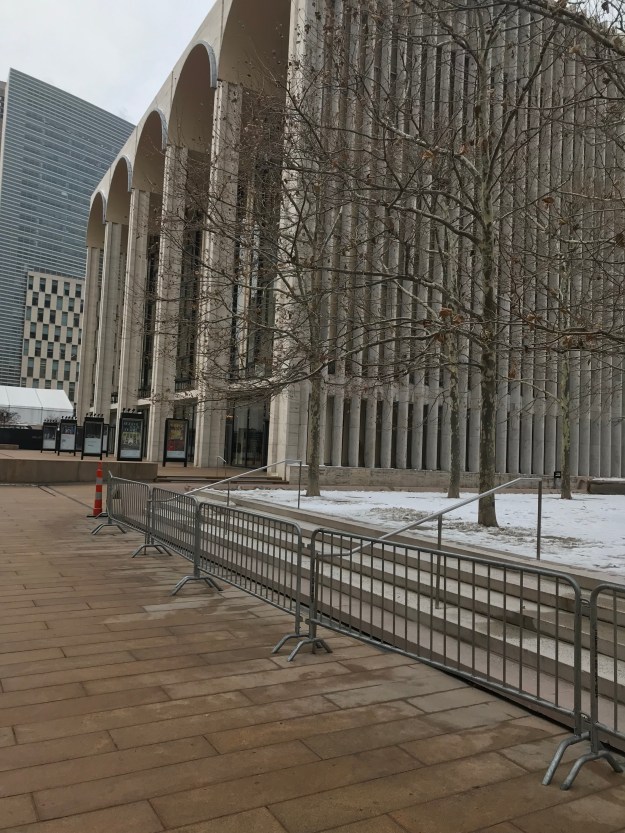
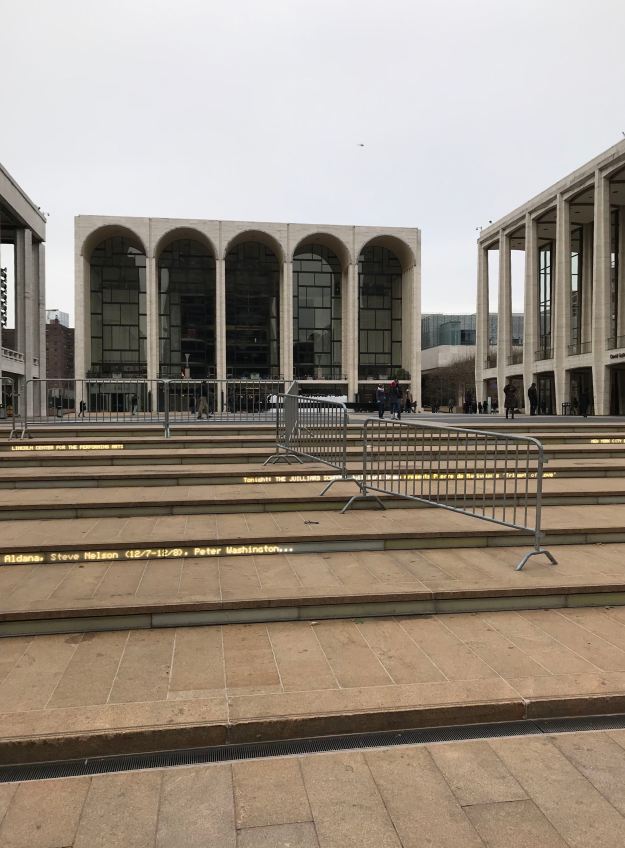
Ugliness and inaccessibility go hand and hand. The Broadway steps leading to the plaza, which is usually nearly empty of live people.

IMG_3937.jpg

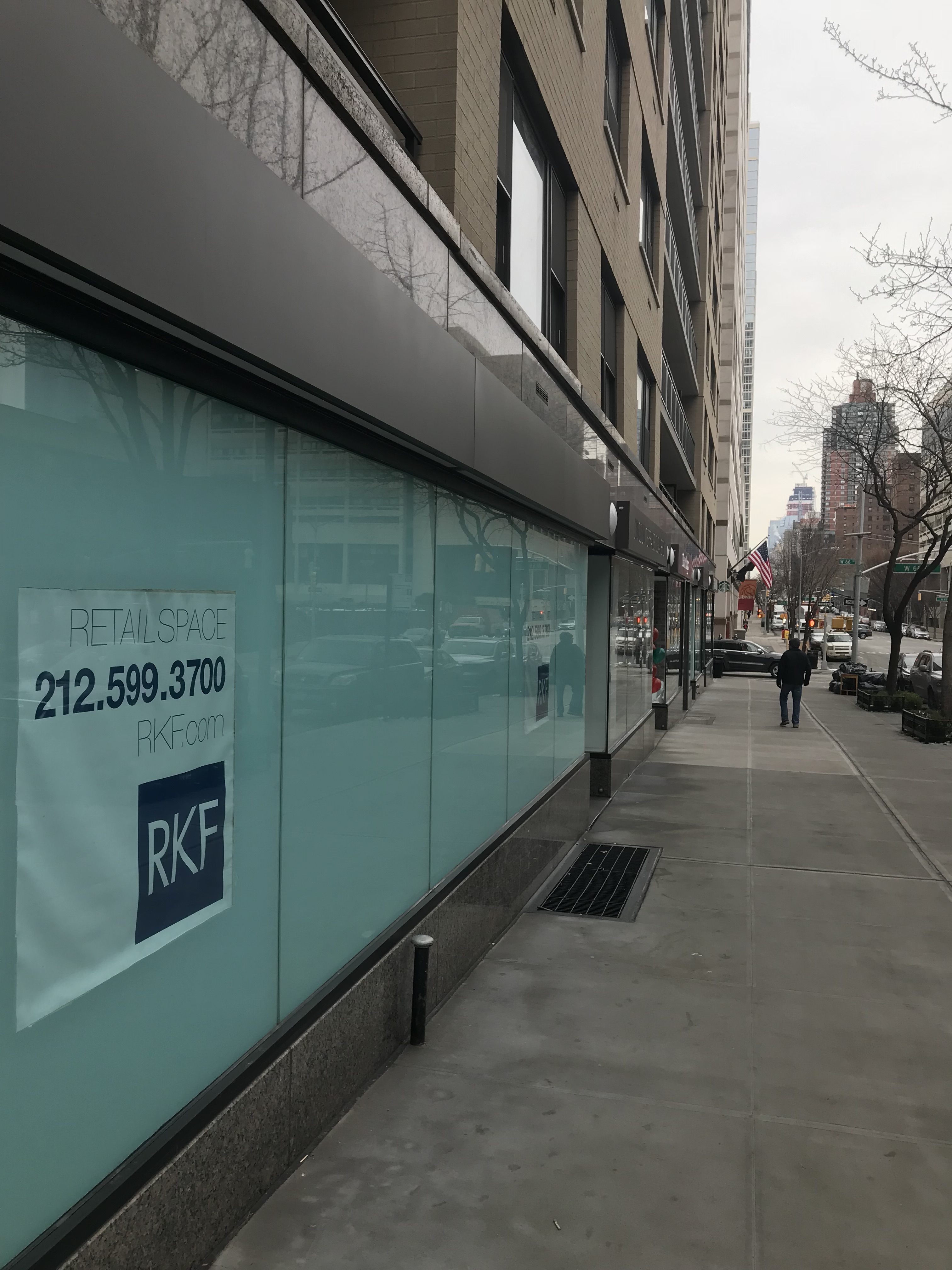
A desolate block right behind Lincoln Center: the east side of Amsterdam Avenue between 66th and 67th Streets. There are two large retail stores on this block that are empty with for rent signs — an indicator that rents are too expensive and the neighborhood cannot support commercial establishments (hence, they are going out of business).

IMG_3950.jpg

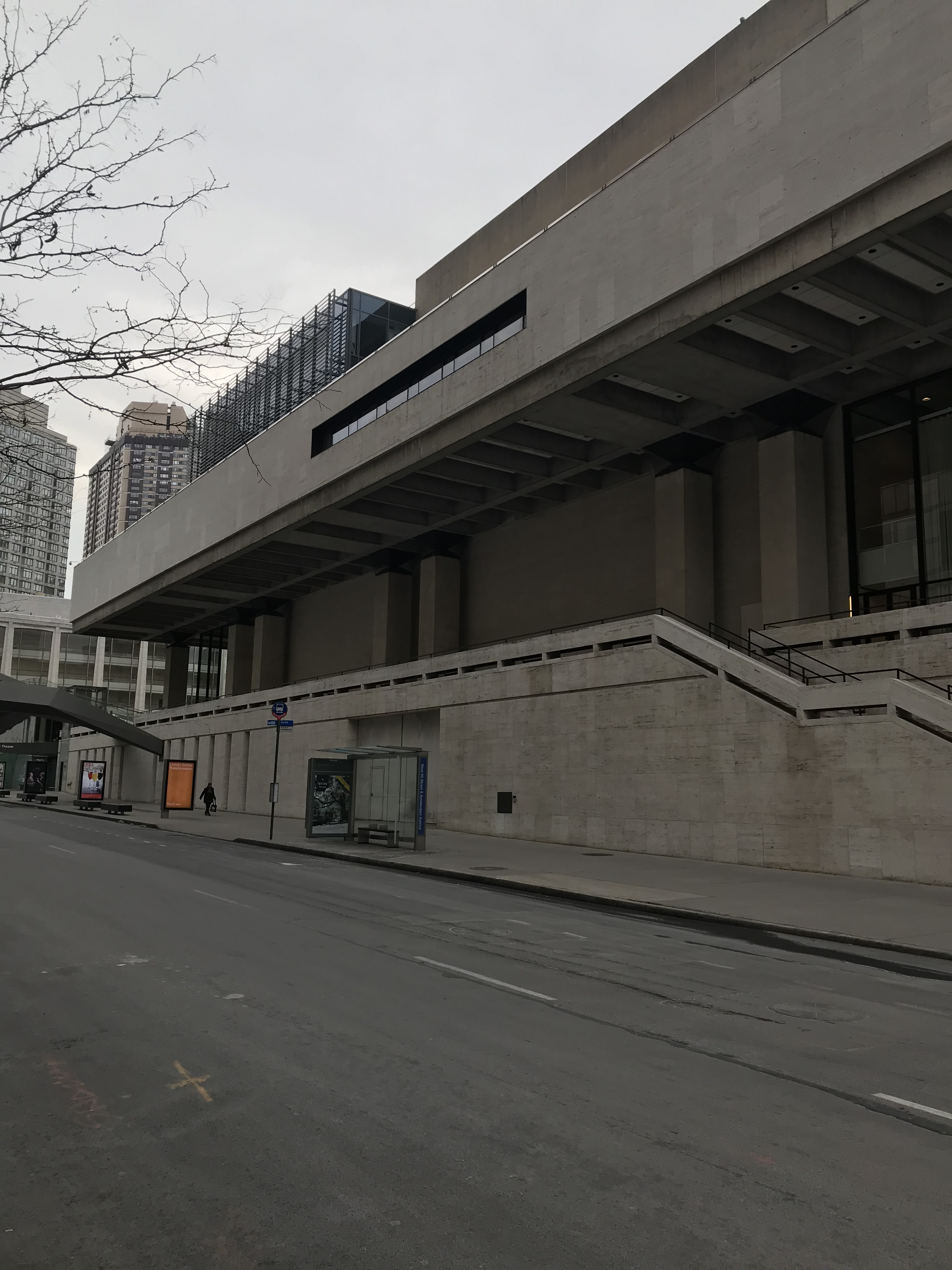
An “inviting” “arts center”? Entrance to Lincoln Center at 65th Street between Amsterdam Avenue and Broadway.

IMG_3967.jpg

Welcome! The steps from Amsterdam Avenue.

IMG_3987.jpg

Warm and fuzzy. Entrance passageway, with 67th Street on left.

IMG_4009.jpg

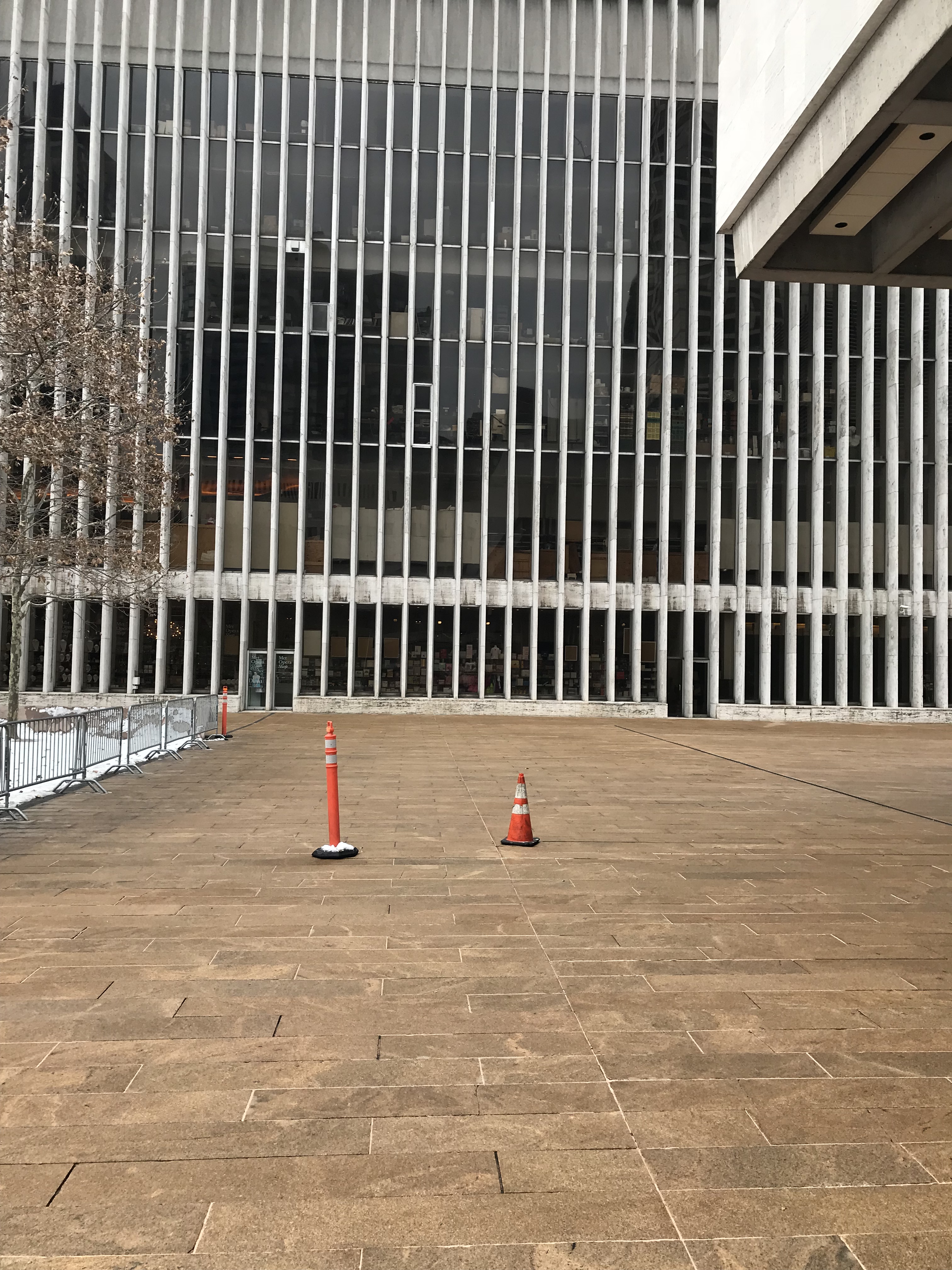
Ramesses II would have been proud.

IMG_4022

A public friendly space? (“All are welcome.”)

IMG_4051.jpg

62nd St between Amsterdam and Columbus Avenues. (Lincoln Center on left.)  Note the vibrant street life.

IMG_4054.jpg

Happy clusters of people congregate like flocks in front of Lincoln Center.

Feb 9, 2018 (2).jpg

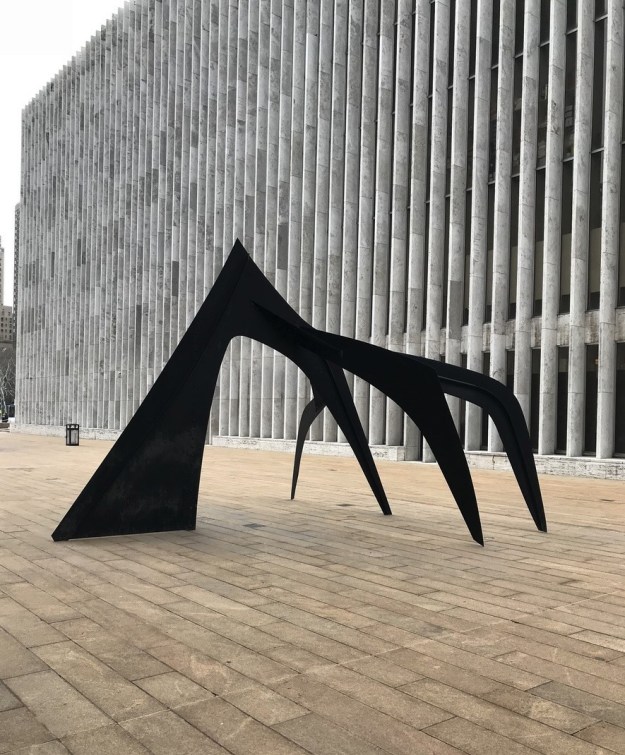
art befitting an “arts center”

Feb 9, 2018.jpg

an enchanted forest


*****************************************************

Addendum: The construction of Lincoln Center for the Performing Arts, which was opened in 1959, destroyed a neighborhood on New York City’s West Side. The project encompassed 53 acres and involved demolishing 2,100 households as well of hundreds of businesses. Something very similar happened with the United Nations headquarters, which created another urban dead zone with no vitality or street life. Jane Jacobs put it best when she described Lincoln Center as “a piece of built-in rigor mortis.”

the snow shovelers


Our front doorbell just rang while I was busy on my computer. Somewhat annoyed, since it was the umpteenth time today (lots of Christmas deliveries), I trundled downstairs and answered the door. Saw no one on the doorstep.

Within a second or two, two boys were in front of my stoop. Nice looking boys with cherubic faces. About age eleven, I would guess. Snow shovels in hand. A few inches of snow had just fallen.

Without giving them a chance to speak, figuring I didn’t want to waste their time, I told them, peremptorily (and recalling a few times when we have gotten ripped off in the past by boys we agreed to let shovel our driveway), “No, thanks. Don’t need shoveling.”

They politely left.

I was thinking about how, in Cambridge, Massachusetts, when I was about the same age, my friends and I used to go around knocking on doors asking to shovel people’s front porches and walks. What a golden opportunity a snowstorm presented to make pocket money. Fifty cents to shovel their front steps and walk. A whole two dollars sometimes for a driveway.

I ran upstairs to tell our tenant about the cute kids I had just seen. My wife wasn’t home; I couldn’t tell her.

“No, she [our tenant] won’t care,” I thought.

What to do with my good holiday feelings? Let them shovel our walk!

I ran downstairs to see if the boys were still around. No one in sight. I shouted as loud as I could, “Boys! Snow shoveling!” They reappeared.

“How much to shovel our stoop and walk?” I asked. They didn’t have a figure in mind.

“Would five dollars be all right?” I asked. They nodded yes.

A few minutes later, my bell rang again. The boys were standing there, wishing to discuss some “technicalities” regarding ice (or something of that sort) on the sidewalk. Handsome lads with ruddy faces, one with a parti-colored knit cap. Obviously wanting to do a good job. Impressive conscientiousness.

“Looks like you did a good job,” I told them. “Here’s two more dollars.”

I asked them what school they attended, and they told me they were both in the sixth grade.

I felt like Ebenezer Scrooge on Christmas Day. When he asks a boy whom he espies through his upstairs window to buy a prize turkey for the family of his clark.

— Roger W. Smith

  December 15, 2017


*****************************************************

‘It’s Christmas Day!’ said Scrooge to himself. ‘I haven’t missed it. The Spirits have done it all in one night. They can do anything they like. Of course they can. Of course they can. Hallo, my fine fellow!’

‘Hallo!’ returned the boy.

‘Do you know the Poulterer’s, in the next street but one, at the corner?’ Scrooge inquired.

‘I should hope I did,’ replied the lad.

‘An intelligent boy!’ said Scrooge. ‘A remarkable boy! Do you know whether they’ve sold the prize Turkey that was hanging up there? — Not the little prize Turkey: the big one?’

‘What, the one as big as me?’ returned the boy.

‘What a delightful boy!’ said Scrooge. ‘It’s a pleasure to talk to him. Yes, my buck!’

‘It’s hanging there now,’ replied the boy.

‘Is it?’ said Scrooge. ‘Go and buy it.’

‘Walk-er!’ exclaimed the boy.

‘No, no,’ said Scrooge, ‘I am in earnest. Go and buy it, and tell them to bring it here, that I may give them the direction where to take it. Come back with the man, and I’ll give you a shilling. Come back with him in less than five minutes and I’ll give you half-a-crown!’

— Charles Dickens, A Christmas Carol, Stave Five

Lincoln Center; the ruminations of a “genius”


I emailed the following comment to my wife last month: “Do you realize that you married a genius?”

Don’t worry, I said it in jest. Or at least half in jest. It’s okay to make such comments, jesting or not, to one’s spouse.

She responded, “Let’s not get carried away, dear.” She tends to keep me from getting a swelled head. She is never awed by me. Admires me, yes. Knows my weaknesses all too well. Takes me with a grain of salt. Isn’t given to making exaggerated claims about anyone, including herself.


*****************************************************

In a previous post

“a Carnegie Hall concert”

a Carnegie Hall concert

I wrote, about Lincoln Center:

I have never liked Lincoln Center. It’s a sterile “arts center” with worse seating and acoustics than Carnegie Hall. The architecture is typical 1960’s (think Shea Stadium): functional but uninspiring. Lincoln Center ruined a neighborhood; the surrounding streets have no street life. There are hardly any restaurants, watering holes, cafes, or places of interest, other than one or two rip-off restaurants on the other side of Broadway, across the street from the main entrance.


*****************************************************

Further thoughts of mine re Lincoln Center (since my post):

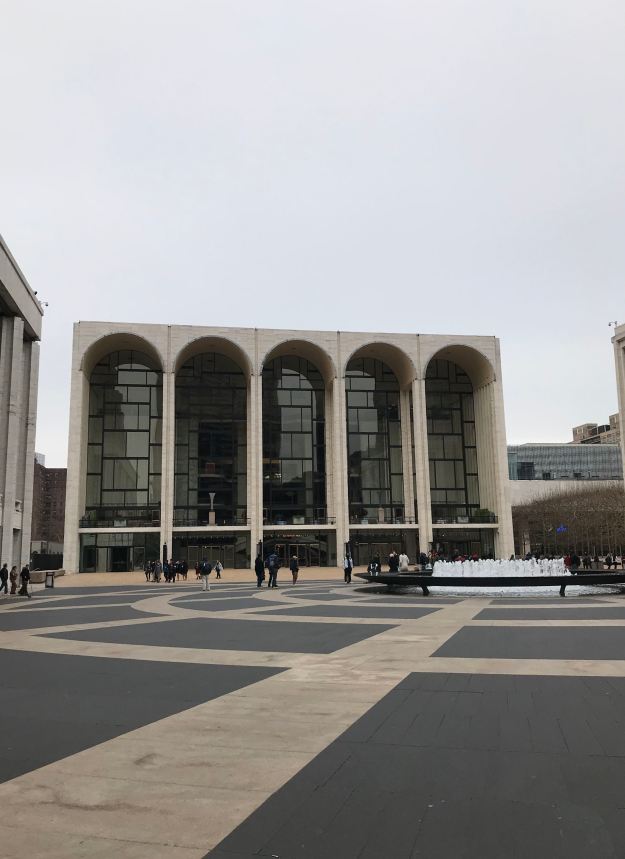
the main plaza is dreary … it’s raised above street level … one has to walk up a stairway to get to it

there are always few people on the main plaza … they don’t look happy

there is no “through traffic” (pedestrian, that is) … it is not welcoming

there is no life, no animation to the horrid “arts center’ or the surrounding area

See my photos below.

IMG_2904.JPG

Lincoln Center; photo by Roger W. Smith; December 2017

IMG_2889.JPG

Lincoln Center; photo by Roger W. Smith; December 2017


*****************************************************

Guess what? The pioneering urban theorist and writer Jane Jacobs, who became famous for her book The Death and Life of Great American Cities, said essentially the same thing:

… the street, not the block, is the significant unit. … When blight or improvement spreads, it comes along the street. Entire complexes of city life take their names, not from blocks, but from streets — Wall Street, Fifth Avenue, State Street, Canal Street, Beacon Street.

… Believing their block maps instead of their eyes, developers think of downtown streets as dividers of areas, not as the unifiers they are. … The Lincoln Center for the Performing Arts in New York is a case in point. This cultural superblock is intended to be very grand and the focus of the whole music and dance world of New York. But its streets will be able to give it no support whatever. Its eastern street is a major trucking artery where the cargo trailers, on their way to the industrial districts and tunnels, roar so loudly that sidewalk construction must be shouted. To the north, the street will be shared with a huge, and grim, high school. To the south will be another superblock institution, a campus for Fordham.

And what of the new Metropolitan Opera, to be the crowning glory of the project? The old opera has long suffered from the fact that it has been out of context amid the garment district streets, with their overpowering loft buildings and huge cafeterias. There was a lesson here for the project planners. If the published plans are followed, however, the opera will again have neighbor trouble. Its back will be its effective entrance; for this is the only place where the building will be convenient to the street and here is where opera-goers will disembark from taxis and cars. Lining the other side of the street are the towers of one of New York’s bleakest public-housing projects. Out of the frying pan into the fire.

— “Downtown Is for People,” Fortune, April 1958

… New York consists of an intricate, living network of relationships–made up of an enormously rich variety of people and activities. … Consider the interdependence, the constant adjustment, and the mutual support of every kind which must work, and work well, in a city like ours.

This cross-crossing of relationships means, for instance, that a Russian tea room and last year’s minks and a place to rent English sports cars bloom well near Carnegie Hall. …

All that we have in New York of magnetism, of opportunities to earn a living, of leadership of the arts, of glamor, of convenience, of power to fulfill and assimilate our immigrants, of ability to repair our wounds and right our evils, depends on our great and wonderful criss-cross of relationships. …

This is all so obvious it should be unnecessary to mention. But it is necessary, for our slum clearers, housing officials, highway planners and semi-public developers have been treating the city as if were only a bunch of physical raw materials – land, space, roads, utilities. They are destroying New York’s variety and disorganizing its economic and social relationships just as swiftly and efficiently as rebuilding money can destroy them.

The most direct destruction is, of course, associated with clearance, and this is a painful aspect of slum elimination of which we are becoming aware. It was described well by Harrison Salisbury, in his New York Times series on delinquency. “When slum clearance enters an area,” says Salisbury, “it does not merely rip out slatternly houses. It uproots the people. It tears out the churches. It destroys the local businessman. It sends the neighborhood lawyer to new offices downtown and it mangles the tight skein of community friendships and group relationships beyond repair.”

…. Our rebuilders have no idea of what they are destroying, and they have no idea of repairing the damage – or making it possible for anyone else to do so. The entire theory of urban rebuilding rests on the premise that subsidized improvements will catalyze further spontaneous improvement. It is not working that way in New York. Living communities, portions of living commercial districts, are so ruthlessly and haphazardly amputated that the remnants, far from improving, get galloping gangrene.

Furthermore, the newly built projects themselves stifle the growth of relationships. We are now conscious that this is true of the huge public housing projects. What we may not be so aware of is that this stifling of variety and of economic and social relationships is inherent in the massive project approach itself, whether public or private housing or anything else.

Take the Lincoln Center for Performing Arts for example. It is planned entirely on the assumption that the logical neighbor of a hall is another hall. Nonsense. Who goes straight from the Metropolitan Opera to the Philharmonic concert and thence to the ballet? The logical neighbors of a hall are bars, florist shops, non-institutionalized restaurants, studios, all the kinds of thing [sic] you find on West Fifth-seventh Street or along Times Square or generated by the off-Broadway theatres down here in the Village. True, halls and theatres are desirable to each other as nearby neighbors to the extent that their joint support is needed to generate this kind of urbanity and variety. But Lincoln Center is so planned and so bounded that there is no possible place for variety, convenience and urbanity to work itself in or alongside. The city’s unique stock-in-trade is destroyed for these halls in advance, and for keeps, as long as the Center lives. It is a piece of built-in rigor mortis. [italics added] …

Lincoln Center shows a brutal disregard for still another type of urban relationship. It will have a catastrophic effect on Amsterdam Houses, a ten-year-old, 800-family public housing project. Amsterdam Houses is now bordered by factories, railroad tracks. garages and institutions except on its eastern side. On that one side, fortunately, it faces, across the street, forty-eight lively neighborhood stores, part of a non-project, ordinary community. The stores and the non-project community will be cleared out to make way for Lincoln Center. The tenants of Amsterdam Houses will therefore no longer have neighborhood stores or any contact with non-project community life, which they desperately need. Instead they will have the Metropolitan Opera. This project will be utterly shut off to itself and isolated. I should think its people would explode. What kind of irresponsibility it this that deliberately and at great expense, makes intimate neighbors of public housing and the Opera, depriving each of the neighbors it needs?

— “A Living Network of Relationships”; speech at The New School for Social Research, April 20, 1958


*****************************************************

Jane Jacobs and I both think, see, and say the same things. I am convinced she was a genius. She stood urban planning and the way people think about cities on its head.

Ergo, I am a genius.

Just kidding.

But, I see in her writing and views similarity to my own writing and cast of mind. For example:

We are both by nurture and nature contrarians.

We are liberal on many social and political issues, but we have a deep, ingrained strain of conservatism. Some commentators perceived Jacobs, who was arrested for anti-government and antiwar protest activities, as being reactionary.

We both rely on good old plain thinking more than education or professional credentials. We try to think everything through anew, to see it for ourselves — through our own eyes — to examine it “from the ground up.” We don’t tend to be influenced by accepted doctrines.

We both distrust big government and social engineering.

We are both essentially apolitical, but apt to be attacked for our views.

She is refreshingly jargon free. She writes simply and clearly (and, persuasively).

Does my writing compare? I will leave it to the judgment of readers of this blog. But, you know what, I think it does. So there!


— Roger W. Smith

   December 2017
the demise of Lord & Taylor


IMG_8168.jpg

Lord & Taylor's

Lord & Taylor, New York City; photo by Roger W. Smith

IMG_5749.jpg

photo by Roger W. Smith

The following is an exchange of emails from today between me and the poet and essayist/writer Luanne Castle, host of the popular website (of which I am a fan)

https://writersite.org/


*****************************************************

hi, Luanne

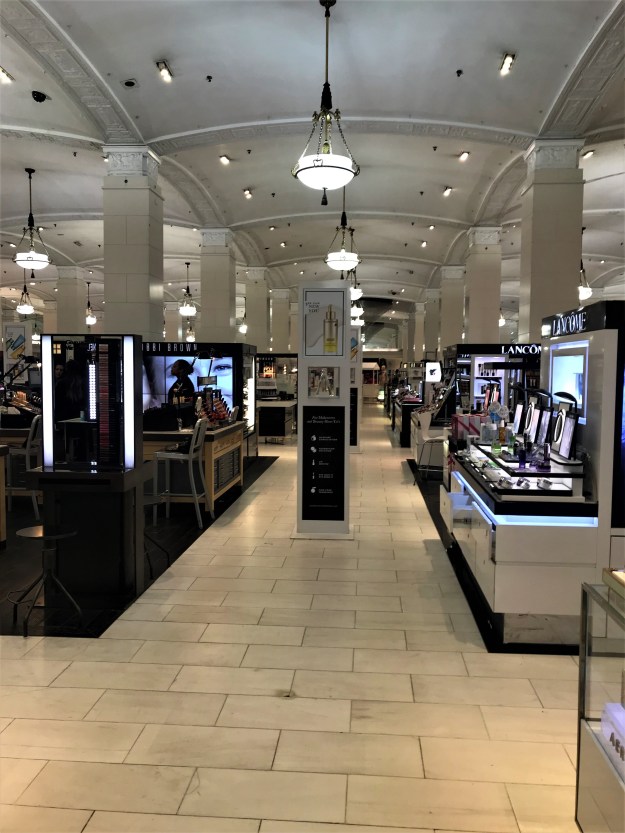
I am in the Lord and Taylor’s department store (great store) shopping for a pair of gloves, and I suddenly thought of your great post about the closing of stores.

Apropos this, see link to NY Times article from October below

“Lord & Taylor Building, Icon of New York Retail, to Become WeWork Headquarters”

by Michael J. De La Merced and Michael Corkery

The New York Times

October 24, 2017

best wishes,

Roger


*****************************************************

from Luanne Castle to Roger Smith

Ugh, I really hate to hear that (the article’s story). So sad. And what a beautiful old ceiling in the photo you shared. Thanks, Roger.

I watched a 20-year-old movie the other day and was astonished at how rapidly the world has changed in the past 20 years!

Best,

Luanne

*****************************************************

from Roger Smith to Luanne Castle

Thanks, Luanne.

I don’t know if you know New York City or have been there.

I grew up in Greater Boston, have lived in NYC since my early 20’s; my wife is a native New Yorker.

I am not a clothes horse (I’m actually the opposite) and I’m not a shopper, but my wife introduced me to Lord and Taylor’s department store and I love it.

It’s located on Fifth Avenue between 38th and 39th Streets, two blocks from the New York Public Library, my home away from home … people come to see the Christmas display in the front windows at the Fifth Ave entrance.

It’s such a nice store to just be in … I will go there on breaks from the library and get a coffee and snack in the cafe … sometimes will do a little shopping or hang around … the staff is so pleasant.

It’s an oasis … my wife and I are so disappointed that it’s essentially closing next year (shrinking from the current ten floors to two).

My wife loves to shop there … she goes on Sundays when there’s parking in midtown Manhattan.

I loved to go Christmas shopping with my Dad and siblings in Jordan Marsh, the main department store in Boston, when I was growing up. They had wonderful displays of toys, such as a big, elaborate electric train display.

We have family photos of my older brother and my sister with the Jordan Marsh Santa — my brother was sitting on his knee … they both have that starry-eyed look of wonderment.

The demise of Lord and Taylor’s is a real disappointment. There is a Macy’s in a mall near where we live; shopping there is downright unpleasant.

Roger


— posted by Roger W. Smith

   December 13, 2017


*****************************************************

addendum:

Check out Luanne Castle’s post

“RIP Dreamland”

RIP Dreamland

about the decline of retail over the years as viewed by Luanne through the prism of her family’s experience and hers growing up.

*****************************************************

My friend Ella Rutledge commented as follows on Facebook:

Ella Rutledge, December 14, 2017:

You probably know that Jordan Marsh was long ago replaced by Macy’s and the Filene’s across the street has also been closed down. No more Filene’s Basement! I agree with you and your wife about department stores. Japan does them really well, and I used to love wandering through the many floors of beautiful things and smelling the perfume when I walked in the front door. Too bad about Lord & Taylor. [All of the US stores Ella mentions are in Boston, except for Lord and Taylor.]


Roger Smith:

Really interesting input, Ella. I was vaguely aware that Filene’s Basement was gone, didn’t know what had happened to Jordan Marsh (or Filene’s itself). Then, there was the bargain clothing store Raymond’s, where I bought a favorite sport jacket I had forever (wouldn’t fit me now) in college for $19. Interesting about the Japanese department stores. Wish I could visit them. I was in Tokyo once in the 1990’s. Strolled along Ginza but didn’t actually go into any of the department stores with the dazzling window displays, unfortunately.

crowd control on the Brooklyn Bridge


I read with dismay and consternation an article in the New York Times a day or two ago:

“Want Fewer Crowds on the Brooklyn Bridge? You’re Not Alone”

By Winnie Hu

The New York Times

December 8, 2017


Winnie Hu Brooklyn Bridge


Some assertions made by the article, and my thoughts, follow.


*****************************************************

My thoughts are in boldface.


“New York City is releasing a report on Friday aimed at easing congestion on the Brooklyn Bridge, which has become known as the ‘Times Square in the Sky.’ The Brooklyn Bridge has become as famous for its outsize crowds as its sweeping views of the New York skyline — earning it the distinction of the ‘Times Square in the Sky.’ “

Oh, no. Another report coming. Already, I am dubious. The Brooklyn Bridge is indeed famous, as a beautiful bridge and an engineering marvel, for its promenade and views. But, “Times Square in the Sky”? That appellation (can the word appellation be used with a structure?) doesn’t fit. It’s like calling Barack Obama “the Donald Trump of the Democratic Party.”


“The elevated promenade of the iconic bridge is clogged with selfie-posing tourists, vendors hawking water and souvenir knickknacks, and harried commuters just trying to get to work or back home.”

There is some truth to this all. Yes, the bridge is clogged — at peak hours, such as during rush hour and often during the day — but it depends on weather and other factors.

With tourists, many leaning over the sides to admire the view or taking “selfies.” This is a bad thing? Not whatsoever. That the bridge is a tourist attraction — as is Central Park — is actually wonderful, in many respects. It means that the bridge is special and is so recognized. The tourists add so much to the vitality of the pedestrian throng. (More about this below.)

The vendors do NOT present a problem. They are unobtrusive and are mostly located at the Manhattan entrance to the bridge. That they are selling water to me is a plus, since I often walk the bridge on hot summer days. There are few “vendors hawking … souvenir knickknacks,” and those that are, are not a bother to me; they are also unobtrusive. The writer of this article, Winnie Hu, who has the Times “pedestrian transportation” beat, exaggerates and distorts for the sake of a story. You would think this is the Grand Bazaar. Far from it.


“Cyclists constantly brake for pedestrians overflowing into the bike lane. Pedestrians yell at cyclists for going too fast, or coming too close.”

This is true. It’s a fact of life on the bridge, when it’s crowded (which is not always). But it’s not a serious problem — it’s a consequence of having the elevated walkway (which is mostly a boardwalk) of the bridge shared by pedestrians and cyclists. If you are going to have this, you are going to have some jostling of each group for the right of way.

I cross the bridge as a pedestrian. Sometimes, I stray a bit into the bike lane, sometimes owing to absent mindedness, at other times because the pedestrian lane is crowded. Bikers ring their bells or shout at me to get out of the way. I can bear it. The bikers seem to me to be too aggressive. They regard “errant” walkers like me as a nuisance. It’s the kind of tradeoff and interaction that regularly occurs in a big city, and it’s one I can live with. I am sure there are unobstructed jogging, bike, and equestrian paths somewhere in idyllic regions beyond the city limits.


“In response, the New York City Department of Transportation is taking a series of steps to relieve congestion on the Brooklyn Bridge, including possibly creating a separate bike-only entrance to the bridge on the Manhattan side and limiting the number of vendors and where they can sell on the promenade.”

Beware the New York City Department of Transportation. Social engineers, not many of whom, I suspect, actually walk the streets and bridges, as I do. Congestion on the bridge (pedestrian congestion, that is; there are also traffic lanes on a lower level) is a FACT on certain days and certain hours (such as rush hours, weekends, during nice weather, and so on), but it is not a PROBLEM.

Limiting the number of vendors or taking measures to control them is entirely uncalled for. The vendors bother no one. To repeat, they are not obtrusive. They are an asset because of things like bottled water which they sell, at moderate prices. They are making a living. What is really going on here is common to policy initiatives taken by social engineers: attack the problem at the “lowest level” by picking on the easiest targets, which means those lowest on the socioeconomic scale who have no one to advocate for them.


“These steps were outlined in a report released Friday that was based partly on the findings of an engineering study by a consulting firm, Aecom, which was hired by the city in 2016 to look for ways to relieve overcrowding and improve safety on the promenade.”

Beware of such studies. The firm hired gets a hefty fee for a producing a report that was and is entirely unneeded in the first place. It’s incumbent upon the firm to find “problems” that need to be corrected or rectified, and to come up with nonessential recommendations. So, they find, for example, that vendors are a problem, which they are not. Or that, more seriously, there are too many pedestrians, which there are not.

Here’s the truth. The crowds on the bridge are exhilarating. That there are so many people on a high, as it were, from walking over the bridge, makes it fun to be part of the crowd. (The reason people live in cities: because they like to directly or vicariously interact with and experience other people and to be part of what Walt Whitman called the “democratic En-Masse.”)

I sometimes walk over the Queensboro Bridge to get to Manhattan — it’s closer to my home. Even on nice days, the Queensboro Bridge has very few pedestrians. When it is cold or the weather isn’t anything to rave about, there are hardly any pedestrians. Walking over the bridge is, consequently, not uplifting. And, the views, which could be spectacular, are nothing great because of a barrier on either side of latticework that restricts one’s view. And, the promenade is a cold cement walkway.

Walking the Brooklyn Bridge is the opposite type of experience, and the crowd makes it fun. People always seem to be in great spirits, as is the case with Central Park. It’s fun to see all the attractive people, most of them young and vibrant, not only getting exercise but reveling in the atmosphere. Many of them are chatting, taking photos. Couples are having a wonderful time together.

Sometimes I stop to chat with the tourists. There are so many of them. They add so much to the atmosphere (of the walking throng, that is). They are often taking photos of one another. This is a problem that social engineers should be concerned about? (And what about the fact that tourists contribute mightily to the local economy?) Sometimes I will ask one of them to take a photo of me. They are invariably obliging. And, usually, it happens that this leads to me striking up a conversation with them to find out where they come from and what they think of New York. You can only have these experiences frequently in a great metropolis like New York.

The tourists are not taking “selfies.” They are taking photos of one another (this is a crime?), as is often the case with young couples, and young people in general, such as a girl posing for a friend taking a photo of her.


“The Brooklyn Bridge, which opened in 1883, once carried far more people when railroad cars and trolleys used the bridge. But today, traffic is limited to six lanes for passenger vehicles and the wood-and-concrete promenade overhead that narrows to just 10 feet across in places, barely wide enough to fit the side-by-side pedestrian and bike lanes.”

Yes, the pedestrian promenade is narrow at spots; at other points along the walkway, it’s wide. So what? Some city sidewalks are narrow; others are much wider. PEOPLE MANAGE.


“Several vendors said that they did not want to give up their spots on the bridge. ‘I don’t want to move, I want to stay,” said M.D. Rahman, who was selling hot dogs and water on a recent afternoon.’‘I have my family to take care of — this is my bread. If I move, where do I go?’ “

Good for him! I hope the vendors prevail, but I am dubious about the prospect. The MTA did the same thing, opening subway stations without the usual newsstands selling newspapers, sodas, and candy which are missed by subway riders. Why are amenities such as vendors selling water and hot dogs and newsstands gotten rid of? Because the bloodless policy wonks could care less about what actual living, breathing people want. It’s a sort of perverse exercise in control and “crowd management” by efficiency experts run amok. As if crowds were a priori a problem in a metropolis. Crowds define it, make it what it is Crowds are the protoplasm of cities.


“… transportation officials have postponed any decision on whether to widen the promenade itself, including one option to build decks on top of the girders that run directly above the car lanes. The new report cited Aecom’s finding that a larger promenade would attract even more people and add more weight to the bridge, which could be a problem.”

The bridge was completed in 1883. Vehicles and walkers (yes, people!) have been crossing it ever since. It was and is an engineering marvel and is a beauty to behold. It doesn’t’ need fixing!


— Roger W. Smith

   December 2017


*****************************************************

See also  my previous posts:


“Is the Brooklyn Bridge boardwalk too crowded?”

Is the Brooklyn Bridge boardwalk too crowded?


“New York’s Sidewalks Are So Packed, Pedestrians Are Taking to the Streets”

“New York’s Sidewalks Are So Packed, Pedestrians Are Taking to the Streets”


“A Plan to Destroy Fifth Avenue”

A Plan to Destroy Fifth Avenue

“I hear and behold God in every object”


I hear and behold God in every object, yet I understand God not in the least,

Nor do I understand who can ever be more wonderful than myself.

— Walt Whitman, Leaves of Grass


*****************************************************

I am not sure how the last part of the assertions made by Whitman might apply to me. But, I felt the truth of what he says about God’s presence everywhere during a day long ramble yesterday on Staten Island.


— Roger W. Smith

   November 26, 2017


***************************************************

SI 1

IMG_1514.jpg

SI 2

SI 3.JPG

photographs by Roger W. Smith

a Manhattan jaunt


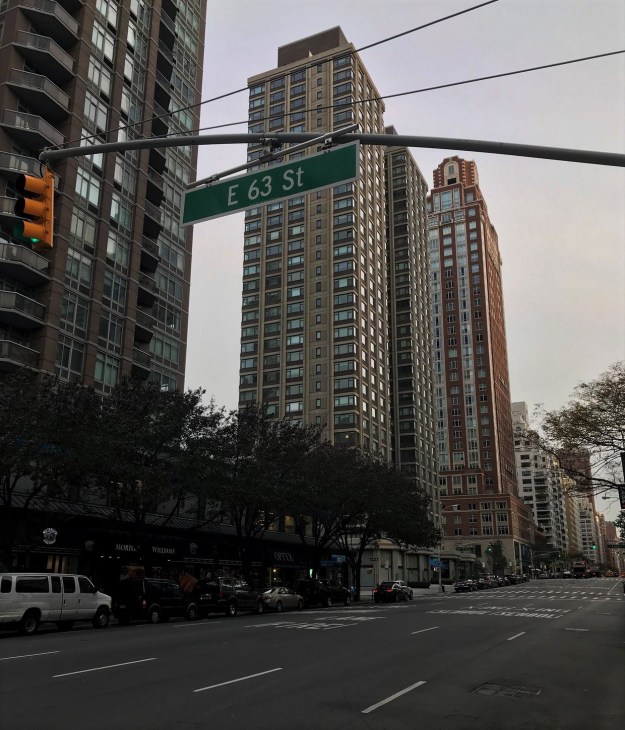
Yesterday, Sunday, November 12, I set out from my house, intending to walk the whole perimeter of Manhattan. It is a walk of around 32 miles and is said to take 12 to 15 hours. I started from 63rd Street and Second Avenue at around 7:30 a.m.

I didn’t make it. I stopped a couple of times for coffee breaks. This extended the length of my walk. By late afternoon, as darkness was coming on, I had only gotten about halfway. I was also getting tired. I would guess that I did around half the distance, a bit less. Maybe 13 or 14 miles.

If I had kept going, I would not have gotten back to my starting point, 63rd Street and Second Avenue, until probably around midnight.

Below are some photos from my jaunt.

— Roger W. Smith

  November 13, 2017

Addendum: I have commented in several posts about what I perceive to be the beneficial health effects of walking. Yesterday was a very nice day, cold but clear and sunny. I had been feeling under the weather. For me, the best medicine for a cold is exercise and, especially, fresh air.


*****************************************************

photographs by Roger W. Smith

9954584 (2).jpg

starting point; Second Avenue at 63rd Street

IMG_9507 (2).JPG
East River, early Sunday morning

IMG_9506 (2).jpg

East 74th Street

*****************************************************

Carl Schurz Park and Gracie Mansion; Yorkville

Carl Schurz Park is located in the Yorkville neighborhood of Manhattan. The mayor’s residence, Gracie Mansion, is located there.

IMG_9529 (3).jpg

Carl Schurz Park

IMG_9541 (2)

Carl Schurz Park

1240772 (4).jpg

Gracie Mansion

IMG_9542 (2).JPG

Yorkville

IMG_9545 (4).jpg

York Avenue at 90th Street


*****************************************************

Harlem

As one progresses along First Avenue, one eventually runs into a roadblock of sorts. Not an actual roadblock, but at around 125th Street, the Harlem River impedes one’s northerly progress. One has to start veering west following the curvature of Manhattan Island. One proceeds northerly through Harlem, continually veering west.

The area of First Avenue (and avenues slightly to the west) from around 90th Street to 125th Street is very bleak. There are hardly any restaurants, business establishments, or places of interest. The occasional gas station (a rarity in most of Manhattan).

One might expect such an area to become gradually gentrified, as the rest of the City has. What seems to prevent this are the bleak housing projects, built during the 1950’s in the “slum clearance” era when the poor and minorities were as a matter of policy moved to Soviet style housing projects favored by misguided (to put it kindly) city planners. These housing blocks have no personality and are grim architecturally. There are no commercial establishments nearby.

Harlem proper, which is to say the blocks in the part of Harlem further west, is a very nice area; it is becoming (and already has become, for the most part) gentrified.


IMG_9551 (3).jpg

DSCN0005 (3).JPG


*****************************************************


Polo Grounds Towers

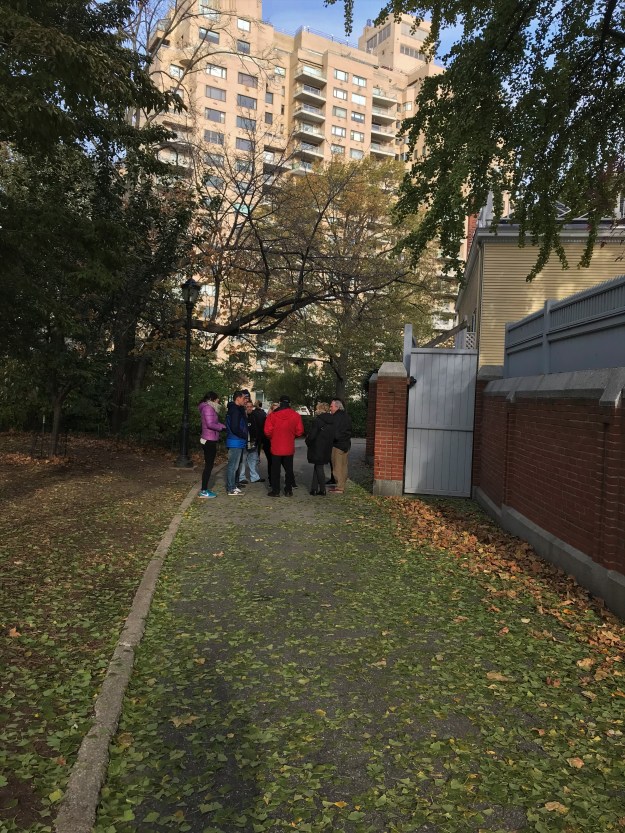
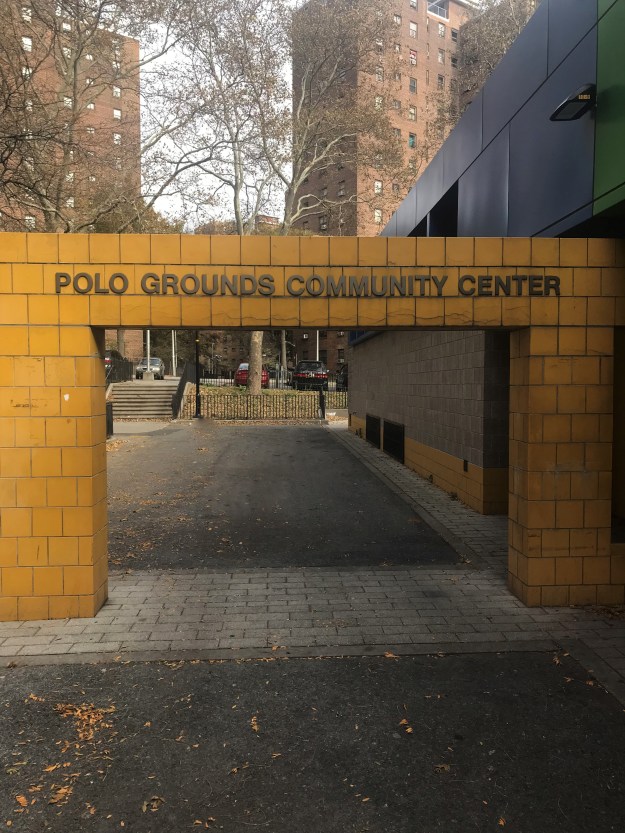
Around 155th Street as I kept veering west, I took what I thought was a through street and ended up in a cul-de-sac. I realized I was in the midst of housing project. It turned out to be the Polo Grounds Towers, site of the home of the former New York Giants baseball team. The Polo Grounds stadium, home of the Giants, was demolished in 1964.

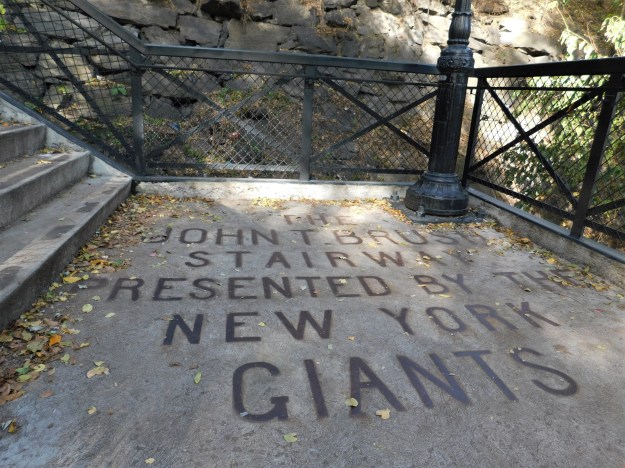
As I emerged from the housing project, I walked up a long, very steep stairway on which were painted the following words: “The John T. Brush Stairway Presented by the New York Giants.” John T. Brush (1845-1912) was one of the first owners of the New York Giants baseball team.

At the top of the stairway was Edgecombe Avenue. There was no traffic and not a pedestrian in sight. Across the street was a promontory which, though I had never been in this area before, I realized had to be Coogan’s Bluff. As noted in a Wikipedia entry, “A deep escarpment descends 175 feet from Edgecombe Avenue to the river, creating a sheltered area between the bluff and river known as Coogan’s Hollow. For 83 years, the hollow was home to the legendary Polo Grounds sports stadium.” Sportswriter Red Smith called Bobby Thomson’s homerun to clinch the 1951 pennant for the New York Giants “the miracle of Coogan’s Bluff.”


IMG_9564 (2).JPG

DSCN0009 (2).JPG

IMG_9565 (3).jpg

Coogan’s Bluff


*****************************************************


Washington Heights


IMG_9604 (2).JPG

IMG_9611 (2).JPG

Fort Tyron Park

IMG_9592 (2).JPG

Broadway, Washington Heights; Broadway extends the whole length of Manhattan, and further


*****************************************************

Inwood

IMG_9687 (2).JPG

Dyckman Street

IMG_9702 (2).JPG

IMG_9705 (2).JPG

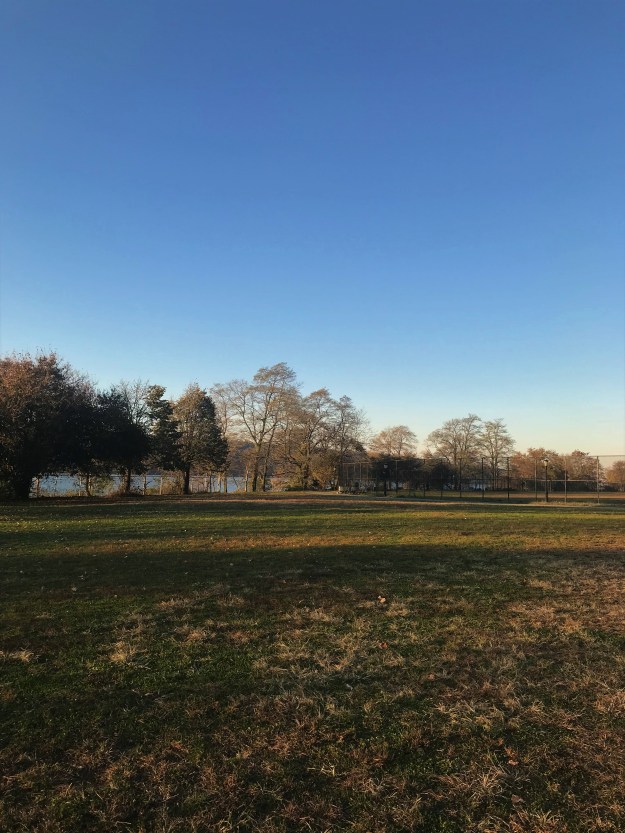
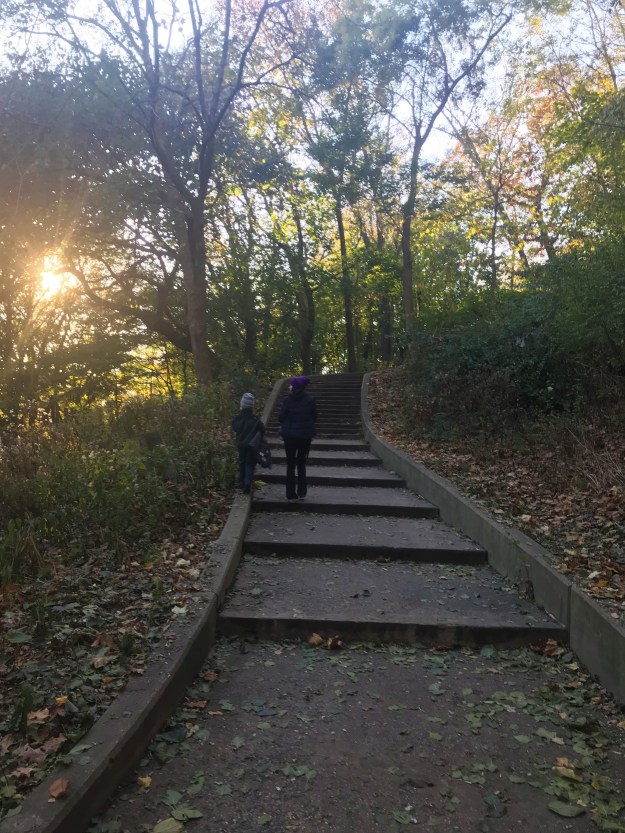
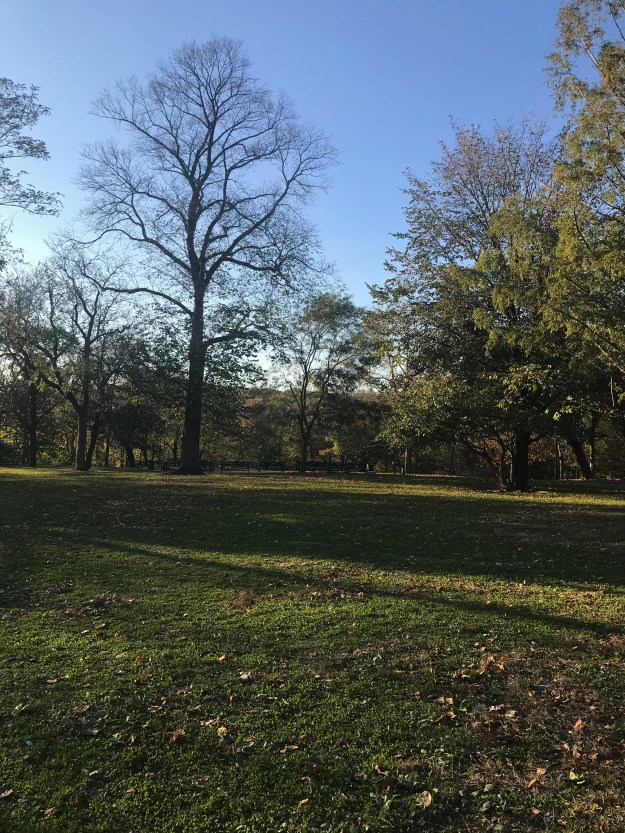
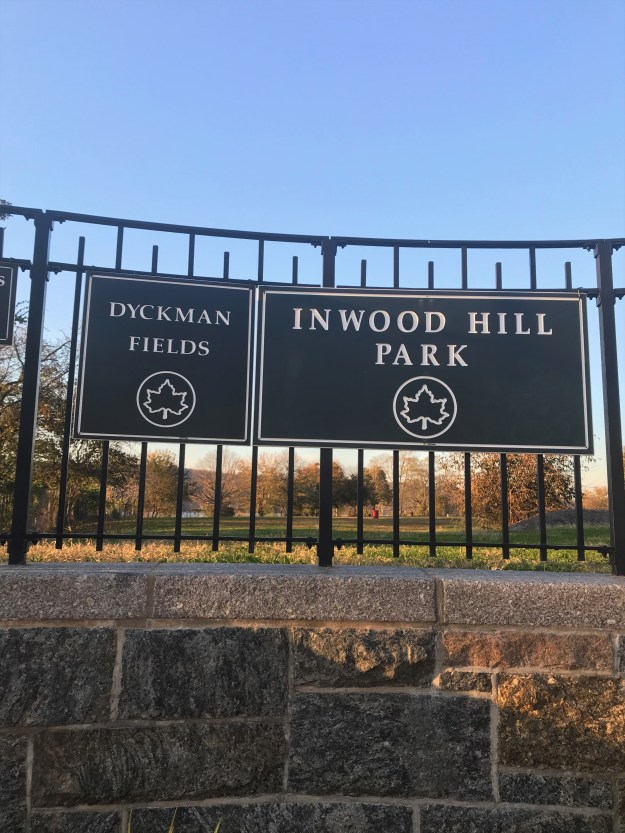
Inwood Hill Park

IMG_9758 (2).JPG

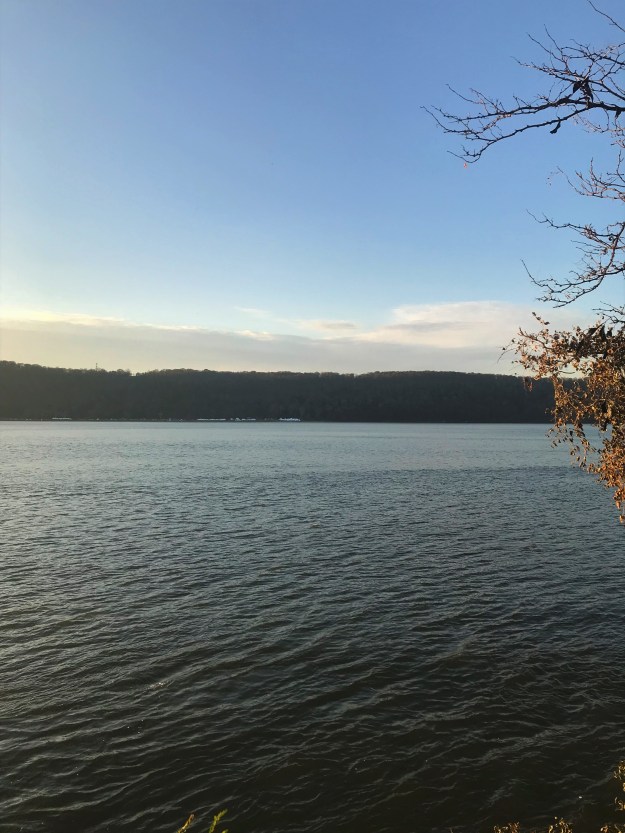
Hudson River from Inwood Hill Park

IMG_9620 (2).JPG

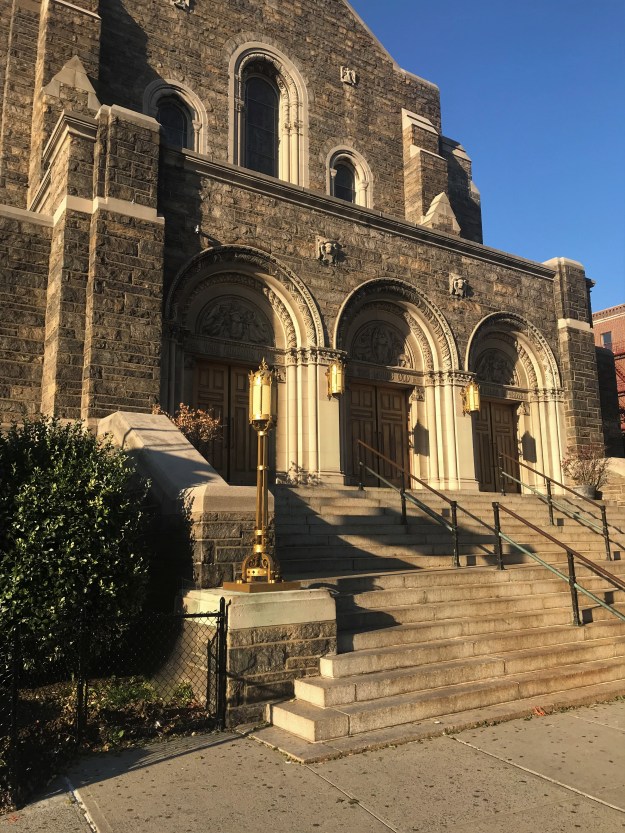
The Capuchin Franciscans of Good Shepherd church, Inwood

985952 (3).jpg

IMG_9629 (2).JPG

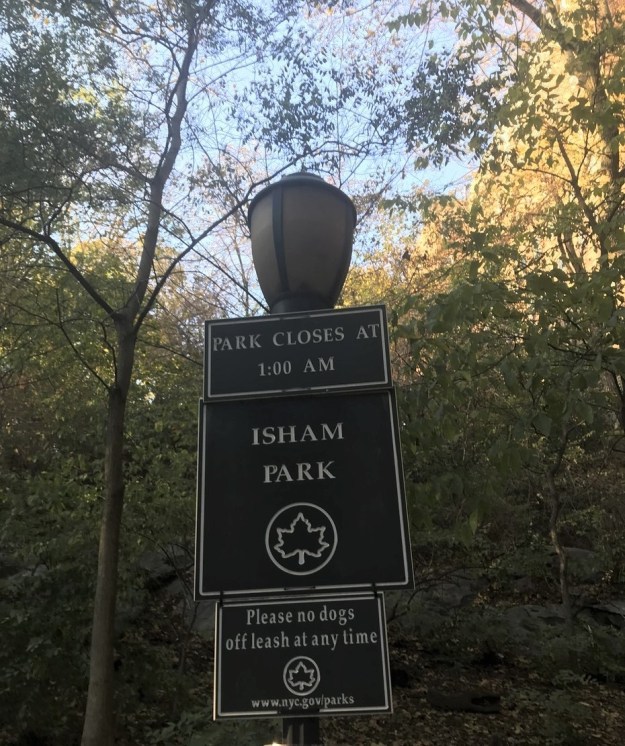
Isham Park, Inwood

IMG_9644 (2).JPG

Isham Park

IMG_9666 (4)

Broadway and 218th Street; the northernmost point of Manhattan, at the boundary between Manhattan and The Bronx