Category Archives: my city and neighborhood

a significant (glaring) omission


I recently saw the documentary film Citizen Jane: Battle for the City, about urban theorist and activist Jane Jacobs (1916-2006) and her epic battle during the 1960’s against city planner Robert Moses (1888-1981) over urban renewal projects in New York City.

I was surprised that a film that would seemingly be of great interest and relevance to New Yorkers was not better attended. The theater, the Lincoln Plaza Cinema on Manhattan’s West Side, was practically empty.

The New York Times gave the film and a more or less favorable but lukewarm review.

There was an interesting article about the making of the film in Vogue:

“Citizen Jane Is a Primer on How to Resist Authoritarianism” by Julia Felsenthal, Vogue, April 21, 2017

http://www.vogue.com/article/jane-jacobs-documentary-citizen-jane-matt-tyrnauer

The article was based on an interview with the director, Matt Tyrnauer.

Felsenthal: “Jane Jacobs isn’t mentioned in Caro’s book [a biography of Robert Moses]. Is that an erasure? Why would he leave her out?”

Tyrnauer: “It’s unclear. Caro has spoken to this, and he’s said that the manuscript when he turned it in was double the length of the published book. He has said there had been mention of Jacobs that was cut out. Whether it was a purposeful erasure or not, it is in a way an erasure. She was an important figure who had written about this city in that period. She probably wrote the greatest book about the city [The Death and Life of Great American Cities], and she’s not mentioned in this other book [Caro’s biography] about power and the city. She was involved in key battles against Moses and not mentioned as an activist either. So I think this film serves as another part of the narrative of the period that you don’t find in The Power Broker [Caro’s book about Moses] for whatever reason. I think it’s important to have that history told, to have it be accessible. [italics added]

********************************************************

Robert A. Caro wrote a groundbreaking, award winning book about Moses: The Power Broker: Robert Moses and the Fall of New York (1974).

Caro is known as the consummate investigative journalist, an admired biographer who leaves no stones unturned in his research, which is exhaustive and prodigious. He writes massive tomes that answer every conceivable question about his subject. (He has done the same thing with Lyndon Johnson.) He unearthed incriminating information about Robert Moses that was unlikely to have otherwise ever been discovered.

So, I keep asking myself, how could Jane Jacobs have gotten completely left out of his 1246-page biography of Moses? She is not in the index.

Jacobs was the key figure in organizing opposition to and defeating Moses’s plans to extend Fifth Avenue through Washington Square Park in Manhattan; to designate the West Village as a “slum,” which would have meant essentially razing the neighborhood; and, most importantly (and most frightening), to build a Mid-Manhattan Expressway that would have destroyed the character of much of Lower Manhattan and, in the final analysis, of Manhattan itself. It was the beginning and then the apotheosis of Moses’s downfall.

As one film critic has observed, “Jane Jacobs was the David to Robert Moses’s Goliath.” She succeeded against what seemed to be impossible odds.

What is the excuse for Jane Jacobs not even being mentioned in Caro’s book?


— Roger W. Smith

   May 2017


The Ecchoing Green


Central Park, April 10, 2017

photo by Roger W. Smith


Central Park 6-02 p.m. 4-10-2017


The sun does arise,
And make happy the skies.
The merry bells ring
To welcome the Spring.
The sky-lark and thrush,
The birds of the bush,
Sing louder around,
To the bells’ cheerful sound.
While our sports shall be seen
On the Ecchoing Green.

— William Blake, “The Ecchoing Green”

New York City; advice for a first time visitor


(to a friend)

Like most people, I am a “transplanted” New Yorker. I have lived here for a long time and love the City.

The following are some of the things I love about my adopted city.

WALKING

Walk Fifth Avenue, from, say the 40’s, up to the Metropolitan Museum, which is at around 81st Street. The stretch of Fifth Avenue from 59th Street to around 96th Street is beautiful. It is residential and borders Central Park.

Walk downtown via Park Avenue South; get onto Broadway at around 14th Street and keep going downtown, thru the East Village and Soho. Go all the way down to City Hall. Right next to City Hall is the Brooklyn Bridge. Walk over it; it’s cool. There is a boardwalk and there will be lots of happy people. Great view.

Visit SoHo (a neighborhood in Lower Manhattan).

Walk up Broadway on the West Side, past Lincoln Center, to Broadway in the 70’s and 80’s.

Go to Central Park! A must.

Stay away from Times Square — sucks.

CULTURAL INSTITUTIONS

The Morgan Library (a museum at 36th Street and Madison Avenue). They currently have an Emily Dickinson exhibit. They feature art and old manuscripts. A very nice place.

The Metropolitan Museum of Art. Hang out there. You can relax in the cafeteria in the basement.

A visit to the New York Public Library is a must; it is located at Fifth Avenue between 40th and 42nd Street. Beautiful building. Great cultural institution.

I would say avoid the Modern Museum of Art — nothing great; overpriced.

The Metropolitan Museum of Art is open on Friday and Saturday evenings until 9 p.m. It’s best time to visit, is not crowded at those times. Most people do not know that you do not have to pay the “suggested” admission price of $25. The official museum policy is that visitors can pay whatever they wish as an entrance fee. A dollar, twenty-five cents. No problem.

SHOPPING

If you like to shop, Lord and Taylor’s at 38th and Fifth Avenue is a very nice store. Nice snack bar on the sixth floor. Clothing is pricey, but not that expensive. Most of the other clothing stores in the City are rip-offs. I would advise staying away from Herald Square and Macy’s. Herald Square is not in a nice neighborhood.

I don’t like Bloomingdale’s.

FOOD

Try the Oyster Bar if you like seafood. It is located on the lower level of Grand Central Station at 42nd and Lexington Avenue. Walk around Grand Central; awesome building.

Also, El Quijote (continental Spanish cuisine) on 23rd Street between Seventh and Eighth avenues. Order the paella.

TRANSPORTATION

Subways are the best way to get around. Or walking.

The subways can be confusing (an understatement) because there are so many lines and such a variety of connections. But, ask someone for help. You would be surprised how willing New Yorkers are to help strangers find their way. I discovered this myself many years ago.

CINEMA

Film Forum (West Village) — the best.

Angelika on Houston Street.

Lincoln Plaza Cinemas (Broadway at 62nd Street).

BOOKS

If you want to get great cheap used books, visit the Strand Bookstore at Broadway and 12th Street. There’s no other bookstore like it.

ALSO

Some people like the High Line. It’s okay; it’s is fun to walk it once. It runs from 14th Street West to the West 30’s. Good view of Manhattan from an elevated perspective.

Some parts of Brooklyn have become trendy – e.g., Williamsburg. Greenpoint is fairly close to Manhattan; it provides an interesting change of pace.

— Roger W. Smith

   April 2017


********************************************************

Addendum:

Bill Dalzell of Salem, MA, a longtime friend of mine who read this post, reminded me of one of his and also my favorite things to do in New York City in the past: take the Staten Island Ferry to Staten Island and back.

My friend Bill used to live in Manhattan, but no longer does. He was one of the first people I got to know after moving here, and he would often suggest New York things to do, such as taking the ferry.

Indeed, it was a wonderful trip. It cost only a nickel each way then (in the late 1960’s).

You would have a great view of New York Harbor and the Statue of Liberty. You could stand outside on the deck and get not only a close up view, but also experience a refreshing breeze, welcome in New York City summers.

I told my friend Bill that I haven’t taken the ferry in a while. I’ll have to do it again. But, from the last few times I took it (and I used to do it quite often), which was at least ten years ago, the boasts had changed — it was a disappointment. The new style boats (which did not LOOK so new) had little or no deck space and it was no longer an option to stand outside. Well, you could, sort of, but the only available deck space, so to speak, was a very small area at the prow. It did not provide a good vantage point and it was a very tight space that could accommodate only five or six people. The design of the boats having changed, the ferry is less fun to take nowadays. Or, so it seems to me.

A footnote: In 1953, when I was age seven, my parents took me on a three day trip to Manhattan, which was a thrill. It was oppressively hot summer weather. Among other things we did was take the Staten Island Ferry to cool off.


********************************************************

Addendum:

Sadly, the Metropolitan Museum of Art’s admissions fee, discussed above, may be changing. The museum, which has tried in the past to deceive visitors about the fee, is said to be contemplating a change its policy which would mean that out of town visitors would be required to pay a fee. See

“Visit to the Met Could Cost You, if You Don’t Live in New York,” The New York Times, April 26, 2017

Walt Whitman’s watering hole


whitman-in-pfaffs


Pfaff’s beer cellar, a bohemian watering hole and a center of literary life in Manhattan in the mid-nineteenth century, was located at 647 Broadway in what is now called Lower Manhattan.  (At the time, most of Manhattan was below 14th Street.)

The building in which Pfaff’s was located still stands. It is now occupied by a deli (see photograph below) and is on Broadway between Bleecker and Bond Streets.  Access to the cramped cellar where Pfaff’s was located is still possible.

— Roger W. Smith

   February 2017; updated June 2019


*************************************************

–The vault at Pfaffs where the drinkers and laughers meet to eat and drink and carouse
While on the walk immediately overhead pass the myriad feet of Broadway
As the dead in their graves are underfoot hidden
And the living pass over them, recking not of them,
Laugh on laughers!
Drink on drinkers!
Bandy the jest!
Toss the theme from one to another!
Beam up–Brighten up, bright eyes of beautiful young men!
Eat what you, having ordered, are pleased to see placed before you–after the work of the day, now, with appetite eat,
Drink wine–drink beer–raise your voice,
Behold! your friend, as he arrives–Welcome him, where, from the upper step, he looks down upon you with a cheerful look
Overhead rolls Broadway–the myriad rushing Broadway
The lamps are lit–the shops blaze–the fabrics vividly are seen through the plate glass windows
The strong lights from above pour down upon them and are shed outside,
The thick crowds, well-dressed–the continual crowds as if they would never end
The curious appearance of the faces–the glimpse just caught of the eyes and expressions, as they flit along,
(You phantoms! oft I pause, yearning, to arrest some one of you!
Oft I doubt your reality–whether you are real–I suspect all is but a pageant.)
The lights beam in the first vault–but the other is entirely dark
In the first

— “The Two Vaults,” unpublished poem by Walt Whitman

*************************************************

A GLIMPSE through an interstice caught,
Of a crowd of workmen and drivers in a bar-room around the
stove late of a winter night, and I unremark’d seated in a
corner,
Of a youth who loves me and whom I love, silently approaching
and seating himself near, that he may hold me by the hand,
A long while amid the noises of coming and going, of drinking
and oath and smutty jest,
There we two, content, happy in being together, speaking little,
perhaps not a word.

— Walt Whitman, “A Glimpse”

*****************************************************

I am glad to see you are engaged in such good work at Washington. It must be even more refreshing than to sit by Pfaff’s privy and eat sweet-breads and drink coffee, and listen to the intolerable wit of the crack-brains. I happened in there the other night, and the place smelt as atrociously as ever. Pfaff looked as of yore

— John Swinton to Walt Whitman, February 25, 1863

*****************************************************

“After the publication of “Leaves of Grass” Mr. Whitman became acquainted with most all of the younger generation of literary men across the river in New York, and especially with those who eventually enrolled themselves under the good fellowship of old Henry Clapp, who had been living a free and easy life in Paris and longed to establish a Bohemia in New York like Henry Murger’s “Vie de Boheme” in Paris. The headquarters — still well remembered — was at Pfaff’s restaurant in Broadway, near Bond st.

“I used to go to Pfaff’s nearly every night,” Mr. Whitman went on. “It used to be a pleasant place to go in the evening after taking a bath and finishing the work of the day. When it began to grow dark Pfaff would politely invite everybody who happened to be sitting in the cave he had under the sidewalk to some other part of the restaurant. There was a long table extending the length of this cave; and as soon as the Bohemians put in an appearance Henry Clapp would take a seat at the head of this table. I think there was as good talk around that table as took place anywhere in the world. Clapp was a very witty man. Fitz James O’Brien was very bright. Ned Wilkins, who used to be the dramatic critic of the Herald, was another bright man. There were between twenty-five and thirty journalists, authors, artists and actors who made up the company that took possession of the cave under the sidewalk. Pfaff himself I took a dislike to the first time I ever saw him. But my subsequent acquaintance with him taught me not to be too hasty in making up my mind about people on first sight. He turned out to be a very agreeable, kindly man in many ways. He was always kind to beggars and gave them food freely. Then he was easily moved to sympathise with any one who was in trouble and was generous with his money. I believe he was at that time the best judge of wine of anybody in this country.”

— interview with Walt Whitman by F.B.S., Brooklyn Eagle, July 11, 1886

*****************************************************

hans-deli-grocery-july-2016 (3)

The former Pfaff’s was located in this deli on Broadway near Bleecker Street. Photo by Roger W. Smith.

Han’s Deli Grocery, 645 Broadway,  New York, NY, through within which one can can gain access to the former beer cellar (photograph by Roger W. Smith).


“Trump Takes Manhattan”


re:

“How Fifth Avenue Is Coping,” by Matthew Schneier, The New York Times, November 23, 2016

How Fifth Avenue Is Coping


*******************************************************

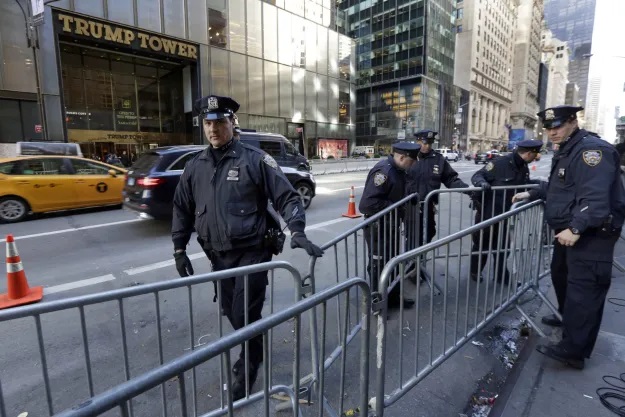
The above referenced New York Times article is about the massive traffic headaches that have already been created – and which are looming – mainly on Fifth Avenue and on streets and other avenues in Manhattan in the vicinity of Trump Tower. Trump Tower, the main residence, for the time being, of President-elect Donald Trump, is located on the east side of Fifth Avenue between 56th and 57th Streets.

A couple of points that I would like to make before discussing the contents of this particular article, which thoroughly describes the problem.

— New York City, it goes without saying, has always attracted people with star power: celebrities and magnates. Yet I have always thought and felt that it’s the sort of place which nobody can dominate. It is such a huge and such a great city that it cuts everyone down to size. I know that when I first moved to New York, as a young adult, I was awed by it. It seems to have that effect on everyone. It’s a welcoming place in many respects in that the atmosphere is so tolerant, of different races, lifestyles, ethnicities, persons high and low, and so forth. It’s welcoming, it’s also overwhelming. It seems to have that effect on everyone. It attracts; it excites; and, it intimidates. It has a way of cutting people with big egos down to size.

— New York is one of the world’s greatest cities for walking. Fifth Avenue is among the best places to walk. Stretches of Fifth Avenue include some of the most expensive residences in the world and luxury stores. Yet, the avenue is accessible to all. The sidewalks are wide, the pedestrian traffic is not limited by any means to one social class, and it’s a just plain fun avenue to stroll on. It is aesthetically pleasing, rarely gets overcrowded (to the point where passage is difficult; an exception might be right in front of Rockefeller Center, where there is a giant tree on display during Christmastime; crowds are found there at this particular time of the year at certain times on certain days). The glamor, elegance, and upbeat quality of the avenue and its denizens from around the 30’s to around 100th Street seem to rub off on everyone; the pedestrians always seem to be cheerful and unstressed. You rarely seem to see something depressing.

It looks like this is changing. It makes me very unhappy. Actually, angry.


*******************************************************

What the Times article says:

— The “festive spirit” normally observed on Fifth Avenue during the holiday shopping season has been “dampened a bit by the long guns of stationed police officers and the regular presence of bomb-sniffing dogs.”

— Famous stores on the avenue have been blocked by police barricades.

— Anti-Trump protests have shut down traffic. (Perhaps the protests are abating now.)

— Gawkers loitering on the sidewalk outside Trump Tower have presented a problem, both for pedestrians and security.

— Pedestrian access to the east side of Fifth Avenue between 56th and 57th Streets, where Trump Tower is located, has been restricted.

— When Trump moves to the White House, the situation is not likely to ease. It is expected that he will still be spending considerable time at his Trump Tower residence. And, Trump’s wife, Melania Trump, and the couple’s son, Barron, are to stay in New York in the near term.


*******************************************************

Last week, I had an appointment at the Apple Store at Fifth Avenue and 59th Street to have my iPhone battery checked. It was raining hard. I was doing a shopping errand for my wife at a department store at Fifth Avenue and 39th Street.

I love to walk in Manhattan, and having to go from one place to another gives me a reason and incentive to walk. So, I headed north on Fifth Avenue, my preferred route and the most direct one. An alternate route would not make sense, and I much prefer Fifth Avenue to Madison or Park.

But, I had to make a detour at Fifth Avenue and 56th Street. There were barriers on both sides of the avenue (east and west) which served the purpose of a sort of funnel. Pedestrians were lined up on either side of the avenue, awaiting an ID check that would enable them to pass. A depressing sight. I have never seen this before in New York.

I was thinking what are they lining up for? It’s not worth it. Probably they wanted to be able to walk past Trump Tower and get a glimpse of it. Big thrill!


*******************************************************

I was reminded of an experience I had somewhere between fifteen and twenty years ago. I was walking during midday in Bryant Park, which is right behind the New York Public Library. The park runs between Fifth and Sixth Avenues and between 40th and 42nd Streets.

I was on a gravel pathway right behind the library which abuts the park. There were few people around, and my path crossed that of ex-mayor Ed Koch, who was strolling the other way on the same pathway. Neither of us was in a hurry.

We made eye contact.

I did not speak to Mr. Koch. I probably should have said, “Good day, Mr. Mayor.” But I kept going without speaking.

I had the distinct feeling that he knew that I knew who he was – in short, recognized him.

He peered at me. I had the feeling, intuition that he was thinking to himself, looks like an interesting face, an intelligent person (me).

We exchanged congenial glances.

I was reminded about something I read about Walt Whitman when Whitman was working and living in Washington, DC during the Civil War. Whitman often spotted President Lincoln riding by on horseback for business or pleasure. “I see the President almost every day. We have got so that we exchange bows, and very cordial ones,” Whitman wrote in 1863.

Mayor Koch, when I encountered him on my stroll, similar to the experience Whitman had when he saw President Lincoln riding by, seemed to be an ordinary citizen, no different than any other New Yorker. That’s the way it should be. Donald Trump is not larger than life. He should not be allowed to shut down Manhattan.

— Roger W. Smith

   December 2016


*******************************************************

Addendum:

See also

“With Trump Using Tower as Base, Fifth Avenue Grinds to a Halt,” The New York Times, November 16, 2016

“Donald Trump Loves New York. But It Doesn’t Love Him Back,” The New York Times, December 9, 2016

“Businesses Near Trump Tower Say Security Is Stealing Their Christmas,” The New York Times, December 23, 2016

“One-Man Traffic Jam Will Hit City When Trump Visits,” The New York Times, January 27, 2017

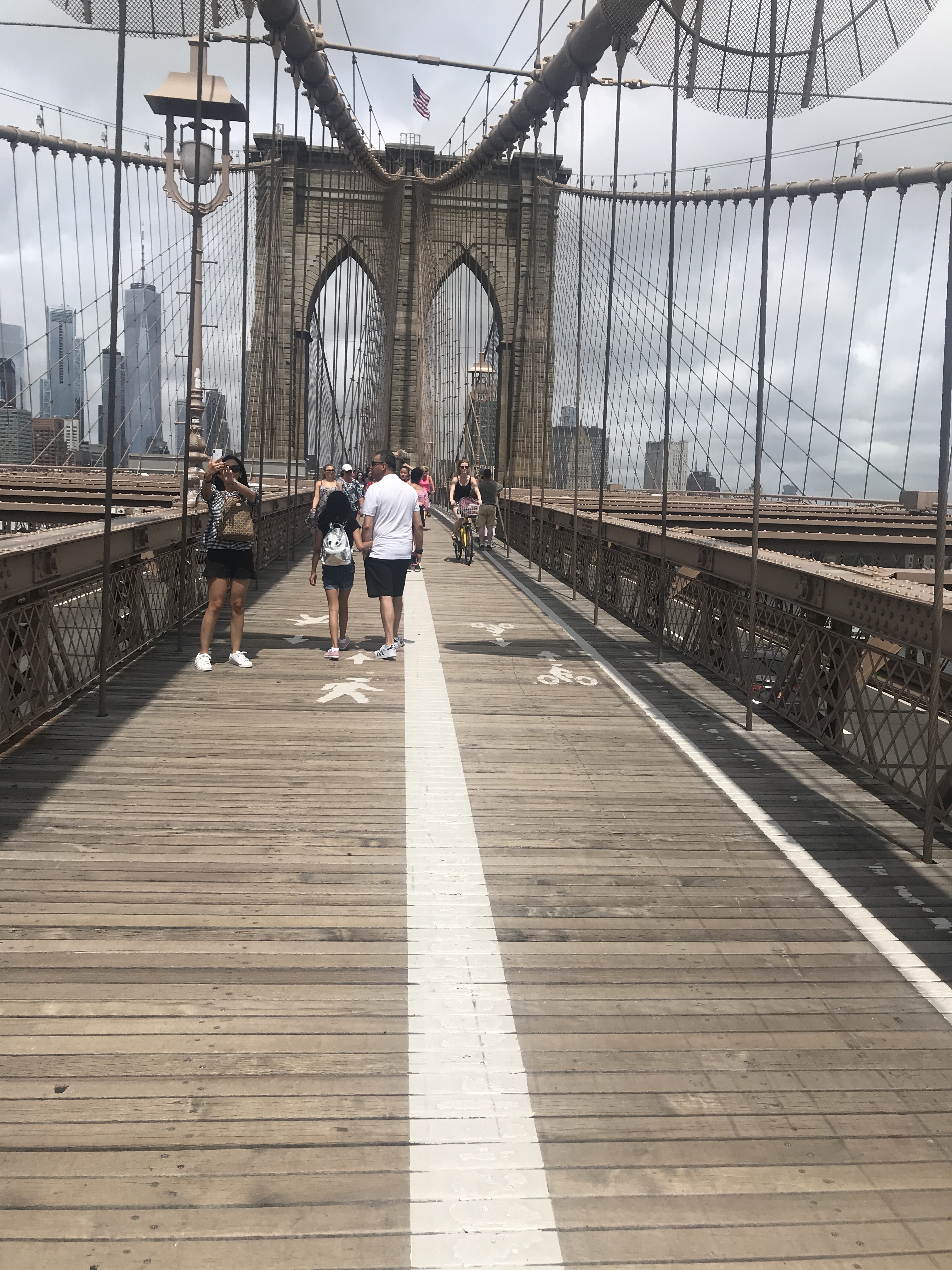
Is the Brooklyn Bridge boardwalk too crowded?


walking the Brooklyn Bridge.JPEG

walkers on Brooklyn Bridge, August 2016; photo by Roger W. Smith

IMG_8250.JPG

Brooklyn Bridge boardwalk at 11:36 a.m. on a beautiful summer day; Tuesday, July 24, 2018. This is too crowded?


****************************************************

re:

Brooklyn Bridge, the ‘Times Square in the Sky,’ May Get an Expansion

by Winnie Hu

The New York Times

August 8, 2016


In the above referenced article re pedestrian traffic on the Brooklyn Bridge, New York Times reporter Winnie Hu notes:

New York City has commissioned a $370,000 engineering study of the bridge’s walking and biking promenade to address crowding.

An unnecessary study and a waste of money.

The Brooklyn Bridge promenade is very crowded. As noted in the article, the pedestrian walkway is thronged with walkers, including lots of tourists, who (along with the locals), besides walking, often at leisurely pace, are often loitering to take in the view, fraternize, take photos, and so forth. Aggressive bikers on what is supposed to be a separate pathway are often ringing their bells or shouting for pedestrians to get out of the way.

Sound chaotic and unruly? Indeed, it is. But this is not a problem, nor is it a cause for alarm, in my opinion. It’s actually kind of fun. The fact that the bridge is thronged with cheerful pedestrians — besides its aesthetic appeal and “walker friendly” construction (the boardwalk, which is raised above the traffic lanes; the benches) — is what make walking over the Brooklyn Bridge such fun.

Cities are crowded places by definition. Don’t like it? There are smaller cities, exurbs, suburbs, small towns, and so forth where, I would imagine, one can find uncrowded streets and thoroughfares to walk on.

To get back to the stampede on the Brooklyn Bridge that the Times reporter describes (accurately): I like it — I should say, LOVE it. I am not alone among walking enthusiasts who love the experience of walking across the bridge.

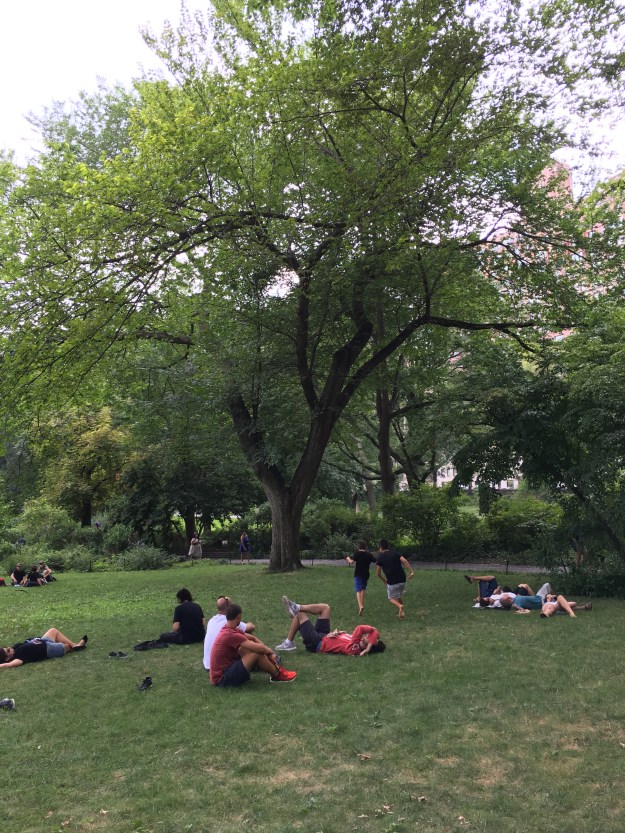
If one wants seclusion or a place to walk without hardly anyone else around — in the City, that is — such places can be found. Central Park, believe it or not, often feels uncrowded — in some spots is virtually empty — during many times: weekdays, for example.

I frequent a park in Queens that is one of the most beautiful in the City. It is in a residential neighborhood, is quiet, and is almost always uncrowded. Not just uncrowded, but practically empty. (And, yet it is not a scary place to be in; on the contrary, it feels safe and always has a core of dog walkers and neighborhood residents.)

I frequently walk across the Queensboro Bridge to Manhattan and back because is it is the shortest route for me to walk to Manhattan. The Queensboro Bridge is not a scenic or fun walkway. There are no good views. There is no boardwalk. There are no benches. There are few pedestrians. Sometimes, I don’t care. I am lost in my own thoughts. But, on “aesthetic” and “experiential” grounds — as a walker who loves walking for its own sake — I prefer the Brooklyn Bridge by far. It’s no contest. And, I like the crowds. One gets such good vibes from them. Everyone seems cheerful and friendly.

A final point: pedestrian crowding on the Brooklyn Bridge is a seasonal thing. The bridge is thronged with pedestrians mainly on the nicest days and during the warmest times of the year. At other times, it is less crowded. Not that crowding during the good weather is a problem. It’s anything but, in my opinion, as I have argued above.

Depend upon it. The “traffic engineers,” pedestrian traffic engineers, besides pocketing a hefty fee, will mess things up. They will make the experience of walking the bridge worse at the minimum — whatever “solution” they come up with to address the “problem” of pedestrian overcrowding — and could ruin it.

The boardwalk has been there since the bridge was originally opened in 1883. Leave it alone!


— Roger W. Smith

    August 2016


***********************************************************

See also

Walking the Brooklyn Bridge

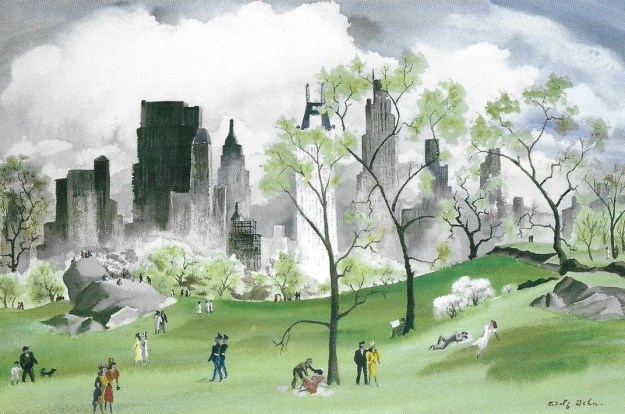
Central Park


Adolf Dehn, 'Spring in Central Park'.jpg

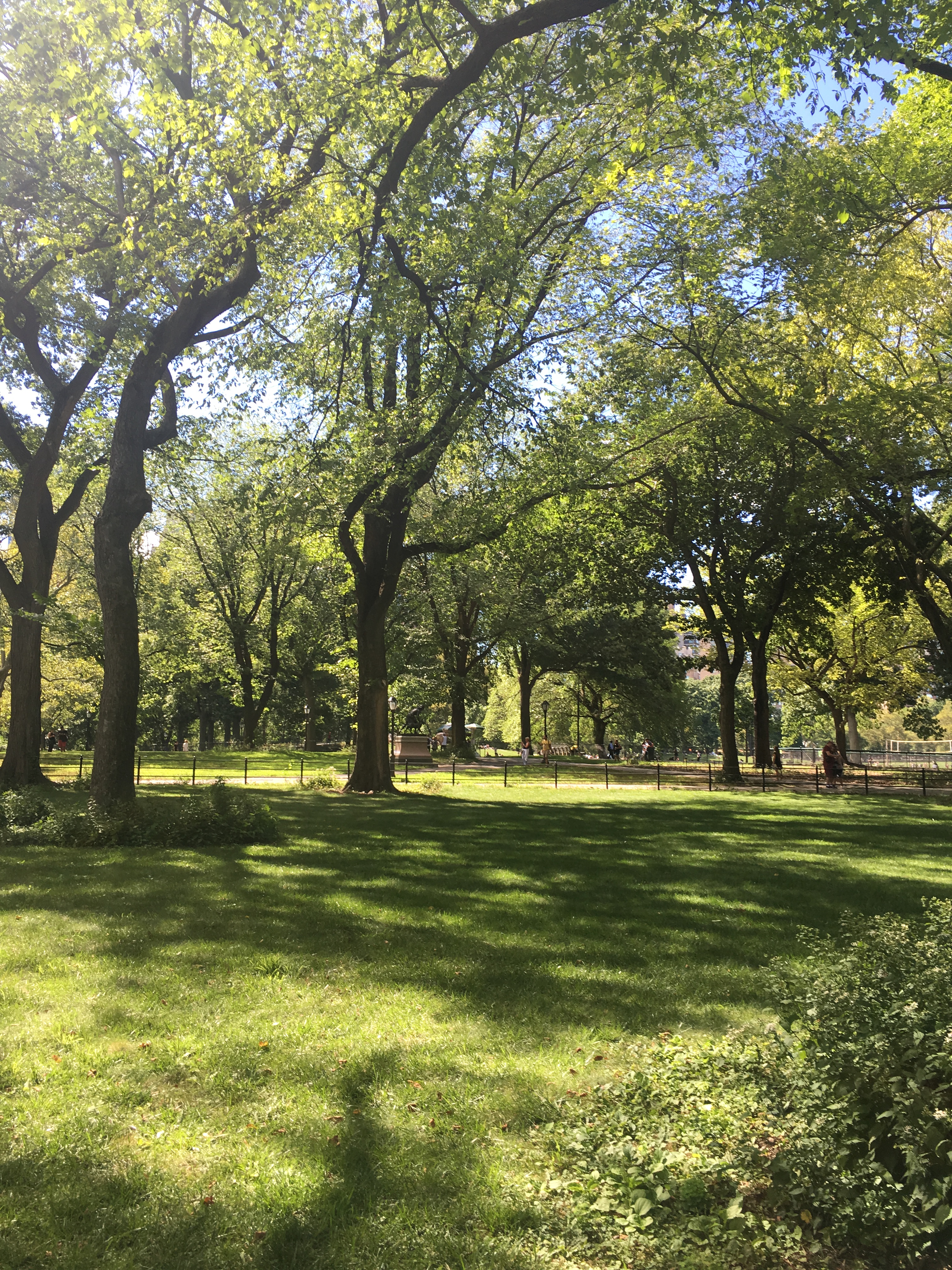
Yesterday was a beautiful late summer day. Central Park was uncrowded, quiet, and peaceful. Whole parts of it were virtually empty. It’s hard to believe that you are in the midst of Manhattan, cheek by jowl with some of the priciest neighborhoods.

Such an urban space could never be created today; the real estate developers would never allow it. But, then, no one can touch Central Park (though the developers would love to).

It’s sacrosanct, thank God.


— Roger W. Smith

  September 14, 2016


footnote: Central Park was established in 1857 on 778 acres of city owned land in part of Manhattan that was at that time undeveloped.
 

*****************************************************

photographs by Roger W. Smith

IMG_9111.JPG

central-park-4-04-p-m-8-8-2016

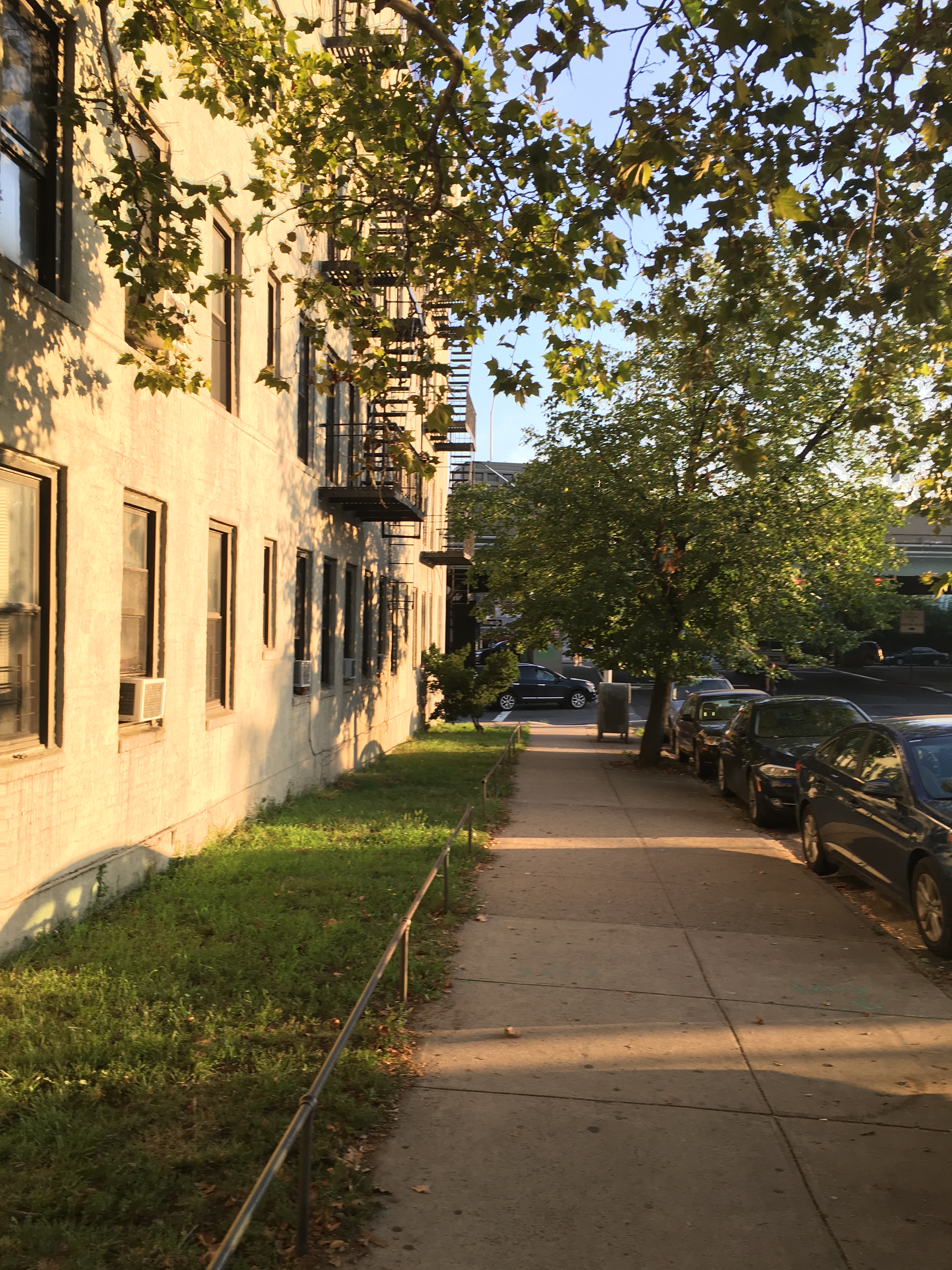
early morning light, Queens, NYC


I am not, by any stretch of the imagination, a great photographer (my niece Alison B. Smith is), but I love — am fascinated by — the quality of light on a summer morning, whether it’s in the city or the country.

Today, I made a point of going for a walk very early to see if I could catch the early morning light.


— Roger W. Smith

   August 4, 2016


photographs by Roger W. Smith

IMG_7408

6-49.JPG

also 6-54.JPG

IMG_6685

Woodside 6-52 am 8-16-2016.JPG

136591521

My Manhattan


Now I am curious what sight can ever be more stately and
admirable to me than my mast-hemmed Manhatta

— Walt Whitman


****************************************

photographs by Roger W. Smith

“New York’s Sidewalks Are So Packed, Pedestrians Are Taking to the Streets”


re:

“New York’s Sidewalks Are So Packed, Pedestrians Are Taking to the Streets,” by Winnie Hu,  The New York Times, June 30, 2016

*************************************************

New York is indeed, as is stated in this article, a “world-class walking city.”

It’s kind of a fun article. The reporter, Winnie Hu — is there such a thing as a BAD reporter on the Times? – does a very good job.

But the supposed problem of overcrowded sidewalks in New York City is really not a problem, in my opinion — it’s a non issue.

I am always walking, practically everywhere, in the city, it seems (that’s admittedly hyperbole). I occasionally do step off the curb and walk in the street to avoid obstacles. Usually, it’s not pedestrians that are blocking the way. It could be cars or trucks illegally parked jutting out onto the sidewalk, or perhaps (often) a construction site.

Yes, certain areas are particularly crowded with pedestrians: Times Square; the Penn Station area; lower Manhattan (Broadway) in the vicinity of Houston Street and SoHo; Flushing, Queens.

But, most areas aren’t. Take Fifth Avenue, for example. It’s a major thoroughfare for locals and tourists alike with many shops and attractions and lots of pedestrians, but it’s almost always pleasant and not onerous to stroll on. This is also true of most of Broadway (with the exception of Times Square), particularly in the Upper West Side.

I walk everywhere and almost never experience pedestrian gridlock. Even on the most crowded streets.

The only such experience I’ve had in recent memory was a few months ago when the police roped off and shut down a stretch of 58th Street in Maspeth, Queens for a couple of days due to a criminal investigation. (There had a near abduction and robbery at a local business establishment.)

The traffic engineers should turn their attention elsewhere.

Some people love to fret, complain, and worry about any and all perceived inconveniences, but, believe me, the walkers can and will continue to do just fine.


— Roger W. Smith

   June 2016