
New York Harbor; photo by Roger W. Smith
Watched the Twelfth-month sea-gulls, saw them high in the air floating with motionless wings, oscillating their bodies, — Walt Whitman, “Crossing Brooklyn Ferry”
— posted by Roger W. Smith
August 2025

New York Harbor; photo by Roger W. Smith
Watched the Twelfth-month sea-gulls, saw them high in the air floating with motionless wings, oscillating their bodies, — Walt Whitman, “Crossing Brooklyn Ferry”
— posted by Roger W. Smith
August 2025
Robert Moses, ‘What’s the Matter with New York’ – NY Times 8-1-1943
Posted here (PDF above):
Robert Moses
“What’s the Matter With New York?: What’s the Matter With New York?”
New York Times Sunday Magazine
August 1, 1943
The article speaks for itself.
— posted by Roger W. Smith
June 2025
Prior to publication in book form, Robert A. Caro’s The Power Broker was serialized in The New Yorker. The original New Yorker articles are posted here.
— posted by Roger W. Smith
August 2024
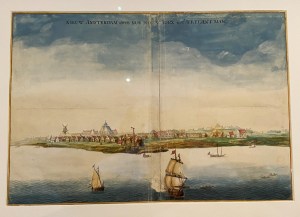
Johannes Vingboons, view of New Amsterdam (1644)

David Johnson. Bowling Green, New York City (1868)

Anthony Quintano. Manhattan skyline in downtown New York City (2014)
— posted by Roger W. Smith
June 8, 2024
‘Hunker Explores New York’s York’s Subway’ – NY Times 9-13-1914
‘Huneker Explores New York’s Subway’ – NY Times 9-13-1914
Posted here (see above):
“Huneker Nervously Explores New York’s Subway”
By James Huneker
The New York Times Magazine
September 13, 1914
James Huneker (1857-1921) was an literary, theater, and arts critic for the New York Sun.
— posted by Roger W. Smith
April 2023
I thought of this post today when I met a homeless woman in a subway station.
It seemed applicable to NYC as one experiences it,
It’s on my rogersgleanings.com site:
“in minute particulars”
— Roger W. Smith
March 14, 2023
Joan Didion – Saturday Evening Post 1-4-1967
Reading Joan Didion’s obituaries this week, I was reminded in particular of an essay of hers I had heard about. I don’t think I have read it before. (It is posted here above.)
Joan Didion
“Farwell to the Enchanted City” (subsequently republished as “Goodbye to All That”)
Saturday Evening Post
January 4, 1967
I desired to read it. I wanted to see what she thought about New Yok City when she first moved there from California, in the late 1950s. About ten years later, I myself first relocated to New York and settled there.
What things about the City attracted and delighted her? Repelled her?
*****************************************************
When I moved to New York, it both fascinated (I found it intoxicating) and overwhelmed me with a sort of fear or numbness (emotional deadness). Meaning that it was so impersonal; the buildings were so tall, dominating the streetscapes; there was no nature; the people were all in a hurry and seemingly cold and impersonal, too busy and goal oriented to talk to you.
Everything depended on having money, of which I had very little.
I had been to New York a very few times before. The first time was in 1954 when my parents took me to visit the City for a few days. We stayed in the Edison Hotel in Times Square. (Rooms were four dollars a day. We must have been able to park our car.) I could not get over the experience of the Empire State Building. Being on the observation deck on the top and looking down at the cars on Fifth Avenue, which seemed like toy cars. The Automat. The little windows where you would put a dime or nickel in a slot and get a piece of pie. My mother wanted to see Greenwich Village. We drove around the crooked streets. I don’t think we ever got out of the car. I recall the cobblestones and that the car was jolting.
We took the Staten Island Ferry to cool off. It was July or August and one of those sweltering NYC hot spells.
*****************************************************
As a young man and adult, I grew to love and appreciate — so much — New York. See my post
“I went to the school of New York.”
for one way in which this was true.
The art movie theaters. The bookstores. Libraries. Most of all, the intellectual energy and appetites of the people I got to know.
In Massachusetts, as a young man, I would have been embarrassed to go to a movie by myself. In Connecticut, where I worked briefly, I was once asked to leave a folk music coffee house because I was sitting at table by myself. In NYC, no problem. I went to movies almost always by myself. Good way to spend an evening or a Sunday afternoon if you felt lonely.
Sit at a restaurant table by oneself? No problem. It was the same with half the other customers.
I would go to Central Park on Sunday afternoons and sit on a park bench feeling a bit lonely but like I was an amorphous participant in something. The bars were an oasis. A glass of beer twenty cents. Every third one free. The bartender was your and everyone’s friend.
One day in a subway station, I asked some people a question of some sort (maybe directions). They answered politely and helpfully. I told a friend of mine from college who lived in Flushing, Queens about this.
“Someone was actually nice to me in the subway,” I said.
“New Yorkers are people, too,” he replied.
Indeed.
Wonderful people. So full of energy. So interesting. Except when I first came the people on the subway all seemed so pale and sickly to me.
So what was Joan Didion’s experience?
Read her famous essay (attached).
It’s really about her — instead of, at bottom, the City. It is very self-centered. It is surprising how much it seems to be built upon – – to be a tissue of — generalities. Of musings, inner thoughts. It does not convey much INFORMATION, substance.
You learn hardly anything about what New York was like when she was there.
*****************************************************
“Joan Didion: Only Disconnect”
From Off Center: Essays by Barbara Grizzutti Harrison
I do not find Joan Didion appealing. … I am disinclined to find endearing a chronicler of the 1960s who is beset by migraines that can be triggered by her decorator’s having pleated instead of gathered her new diningroom curtains. … more …. of a neurasthenic Cher than of a writer who has been called America’s finest woman prose stylist. … her subject is always herself. …
Didion uses style as argument. … for Didion, only surfaces matter. … Didion tells us, many times, and in many ways, that her mind “veers inflexibly toward the particular.”
To what in particular?
*****************************************************
Enough said. Read Joan Didion’s essay if you feel like it.
— posted by Roger W. Smith
December 25, 2021
*****************************************************
Facebook comments
December 25, 2021
Pete Smith
Interesting thoughts. But don’t most writer’s thoughts relate largely to themselves? Think of Truman Capote’s short stories, like Dazzle. Or Melville, talking as himself (Ishmael) throughout Moby-Dick. I don’t object to your objecting to Didion but were she still alive she might have the same complaints about those of your posts, including this one, that borrow heavily on your own experience. I think this is what makes your posts interesting, and don’t see why it wouldn’t also apply to Didion’s writing.
Roger W. Smith
Barbara Grizzutti Harrison’s essay is dead on. You should read it. You are wrong about my writing. Of course everyone writes about and from the perspective of themselves and their own experience. This post insofar as it relates to me is built on experiences I had that readers can relate to.
Pete Smith
Roger, I think your reply was hidden for some reason but you missed my point. I was not criticizing you for writing about your own history or own perspective; I was basically saying that that is what everyone usually does and that I found it odd that you were criticizing Joan Didion for doing so — and I was acknowledging that this did not mean you had to like her writing. . . .
Roger W. Smith
I was criticizing her writing — from a certain point of view (view of her writing); which of course does not mean that writers should not write about themselves. Harrison’s essay articulates what I was trying to say; I had not read it before. By the way, Melville created a character, Ishmael, that was sort of his alter ego, but to say that amounts to writing about oneself is not correct. I guess the best way to put it is that Didion’s writing seems overly self-absorbed and there is something missing content- or sustenance-wise that a reader wants to be able to take away. I read some Didion before, including one of her novels. I was sort of impressed then, but now have come to the opinions of my post.
Pete Smith
All I meant was that Melville’s writing, like Truman Capote’s and like much of yours, was based on his own personal experience — in his case, whaling. I can understand your comment about Didion’s self absorption but when she’s writing a book all about the tragic and terrible year of her husband’s death, I would guess it would be difficult for any passionate observer to accuse her of self-absorption.
Roger W. Smith
I have not read [Joan Didion’s] The Year of Magical Thinking. I began this post with one essay of Didion’s which disappointed me and, based upon which, I drew inferences about her writing which seem valid. She always wrote about herself in a way that Melville didn’t.
Pete Smith
Got it, but of course you understand that I wasn’t suggesting in any way that Melville and Didion wrote about themselves in the same way.
Roger W. Smith
No, I don’t think that (your first sentence).
Ella Rutledge
I’m no fan of Didion’s either. The only thing of hers I have read is The Year of Magical Thinking. (I think a negative review at amazon.com called it “A Lifetime of Magical Thinking.”) She is a member of the NY literati and so they all praise her writing because she writes from their point of view. You, Roger, on the other hand, document and record NYC life from an “everyman” perspective. I hated that book. So shallow, so limited, in its view of grief, grieving, loss, death, faith, belief in anything other than the material world, of which she constantly reminded us with references to the best hospitals (reached by helicopter), the best doctors, Brooks Brothers suits, Hollywood and the Beverly Hills Hotel. Death is final and any tendency to hope for anything beyond is “magical” (or in her view deluded) thinking.
Roger W. Smith
Thanks very much for the incisive comments, Ella, What you say about The Year of Magical Thinking confirms what I have said. I based my comments (mainly) on the essay I read this morning and on Harrison’s devastating article about Didion. And, yes, I did see what I felt was a distinction between my own writing and hers — or do now — it wasn’t my main point, and I was thinking about her writing, not mine, but when I read her essay about leaving New York, I felt empty; and I realize now, in retrospect, that that is more or less how I felt years ago when I read “Play It As It Lays.”
OH, FOR A LODGE IN SOME WARM WILDERNESS!
The Cry of Many a New-Yorker Whose Business Worries are Aggravated by a Bad Cold.
New-York Tribune
February 21, 1904
Doubtless, this winter, when the North River,* overhung with mist and full of huge cakes of ice, resembled a scene on the coasts of Labrador, and the streets have seemed never to be free from snow and ice, many a New-Yorker with a cold has found the Psalmist’s words: “Oh, that I had the wings of a dove; for then I would fly away and be at rest,”** highly expressive of his feelings. Forgetting that one of the great characteristics of the human being which most widely differentiates him from other animals is his ability to adapt himself to the rigors of any climate, and that, therefore, he ought to give proof of his superiority by gloriously braving it out, he would gladly take wing and follow the birds to the warmer climates where there is no pneumonia, where the furnace troubleth not and the walks are fringed with green instead of covered with white. This winter has been more trying than previous winters for a number of years. The constantly recurring snowstorms and cold waves, almost clasping hands with one another, have worn down the patience of many persons who cannot get away. The very cough syrup, with its reminder of the wholesome, aromatic atmosphere of the great pine forests of the gentle tempered South, has tantalized while it performed its work of healing. If one could only adopt the mind cure and imagine himself in some semi-tropical isle in the Spanish Main, what a consolation it would be as one sits back at one’s desk, every window tightly closed to prevent draughts and keep out the fog laden air, twisting one’s nose with moist handkerchief! A vision of
The slender coco’s drooping crown of plumes,
The lightning flash of insect and of bird,
The lustre of the long convolvuluses,***
rises in one’s mind and feels how pleasant it would be to lazily loll for a few weeks in that country, with its changing tropical lights.
If the climate of New York in winter is not an ideal one, there is the consoling thought that within the confines of the United States one may experience any kind of climate one desires, from the arctic temperature of Alaska to the semi-tropical of Florida. Of course, one does not wish to think of the former, with its frozen temperatures. It is much pleasanter to dream, if one cannot realize it, of “the South where the gulf breezes blow.” To know that one may enjoy in March strawberries, ripe and red on the table; violet blossoms in the woods, the breath of jasmines in the air, and glimpses of the passion flower, scarlet trumpet creeper, wild honeysuckle, blossoming blackberry vines; delicate hued lichens, is enough to make a New-Yorker desire to sell his business and go instantly to such a favored clime with his family. While a New-Yorker is breathing the stuffy air of his office, in another part if his “native land” myriads of orchids are perfuming the air of dense forests with no man near to appreciate their beauty and fragrance. Forests of live oaks with hanging banners of Spanish moss; cypresses and blossoming magnolias invite the eye, and strange birds with tropical melodies entice the ear as they dart through the darkened recesses of the woodland. And if a little adventure is desired, it may be had by awakening an alligator lazily sunning himself at the edge of the stream.
Or, in another part of country, thousands of miles away, where once the indolent dons cultivated their ranches, flaming poppies, ranging from bright yellow to scarlet, violets, primroses, sweet clover, yellow and purple; the blue larkspur and the scarlet silene are mingling with the green of the fields and making an entrancing carpeting. There the mercury remains almost stationary in the tube. and the rain falls almost never.
* The North, now Hudson, River.
** I never knew where the words “wings of the dove” come from.
** * The lines are from Alfred, Lord Tennyson’s poem “Enoch Arden.”
— posted by Roger W. Smith
December 2020
*****************************************************
Addendum:
I myself have seen the “huge cakes of ice” on the Hudson, viewed from Riverside Park, during one particularly cold winter when the river partly froze over. It was beautiful. You could hear the ice hissing as the chunks broke up.
I live in the borough of Queens in New York City.
In a metropolitan area with the most ethnically diverse zip codes in the nation, and in a City where far more languages are spoken than in any other city in the world — in public; on the streets and in parks; in stores and restaurants; on buses and the subway; and so on.
To hear the variety of languages spoken in NYC is exhilarating.
I love to hear foreign languages.
Their musicality.
To hear the wonderful sonorities of Spanish being spoken. To hear Russian, and to be able to recognize it. To be able to recognize Polish, which I hear spoken very often in my neighborhood.
To guess at other languages that I hear being spoken during my peregrinations.
To me, it’s just another reason to WELCOME IMMIGRANTS. If only others — some do, but I fear, and in fact know, it’s far too few — could see this.
— Roger W. Smith
August 2018
*****************************************************
photos taken in Manhattan by Roger W. Smith



Observed a father and his daughter in a Dunkin’ Donuts a little before six this morning.
They looked so in sync and happy to be together. You don’t see that in public so often.
The father looked to be in his thirties and had a neatly trimmed beard. He was wearing a T-shirt. He was drinking a large coffee. When he left, he put on a black quilted jacket with a hood.
The girl, who also had a drink, had black hair (like her father) and was wearing a jersey and slacks, both of the same material (cotton or flannel?), both red. She was animated and was happily chattering away. I would guess she was around seven years old. Her legs were dangling; her feet didn’t reach the floor.
The father would break into a laugh. He was giving his daughter his full attention. You could sense how much they were enjoying each other’s company.
When they got up to leave, I almost felt disappointed — they had made the place especially cheerful. The father zipped up her coat. It was light blue polyester. She was clutching a rag doll.
I watched them through the big plate glass windows as they left and turned a corner, chattering away, and disappeared from sight.
They were like two best friends.
— Roger W. Smith
May 6, 2018
 Roger Smith's New York